
MORE, Sir Thomas.
QUAKER PROVENANCE: CLARKS FOOTWEAR
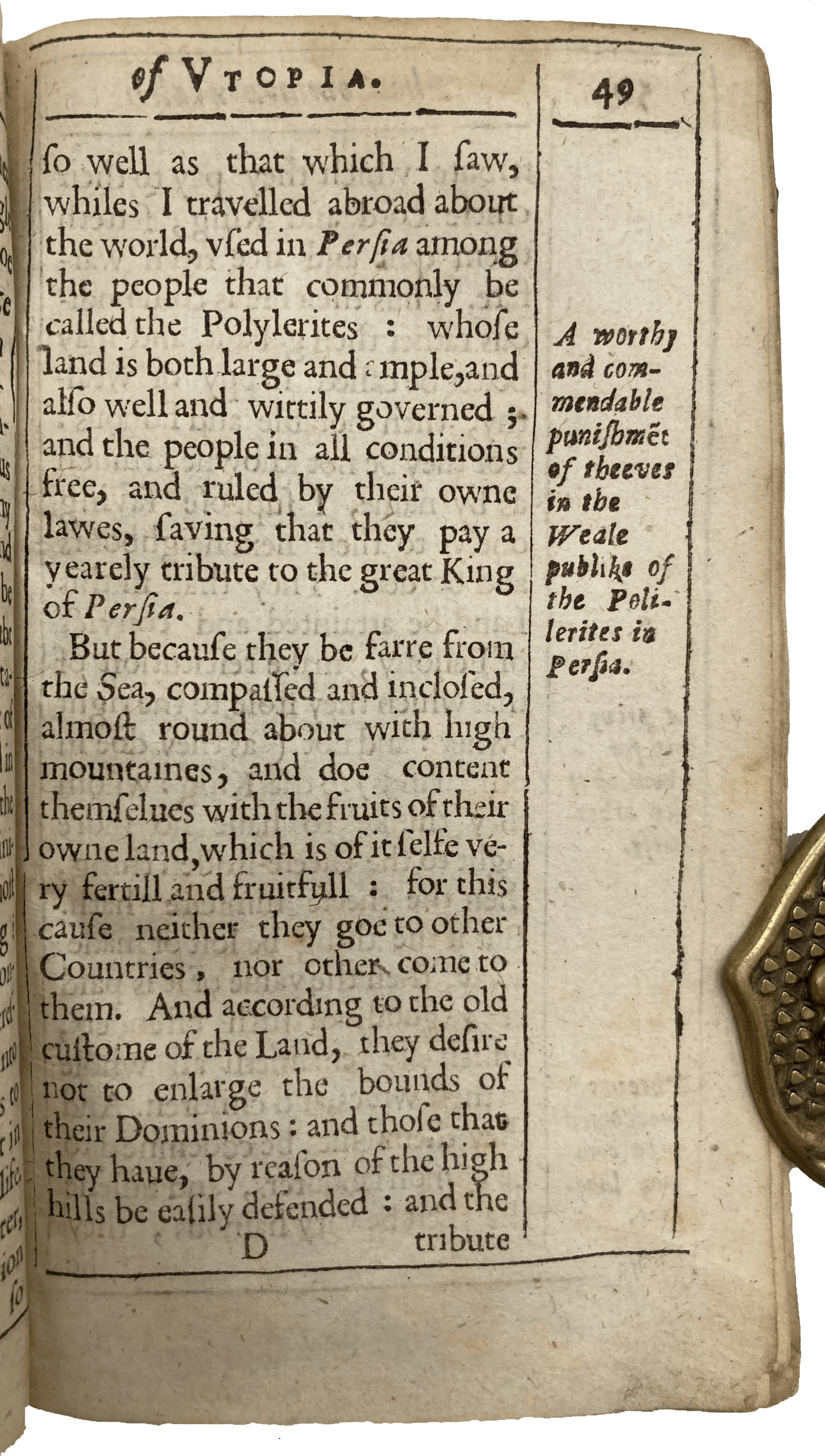
The Common-Wealth of Utopia.
London, Printed by B[ernard]. Alsop and T. Fawcet for Wil. Sheares, 1639£3,250.00
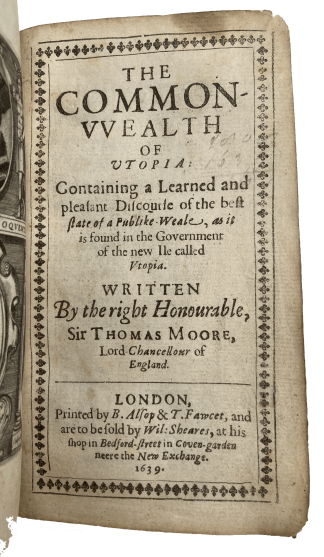
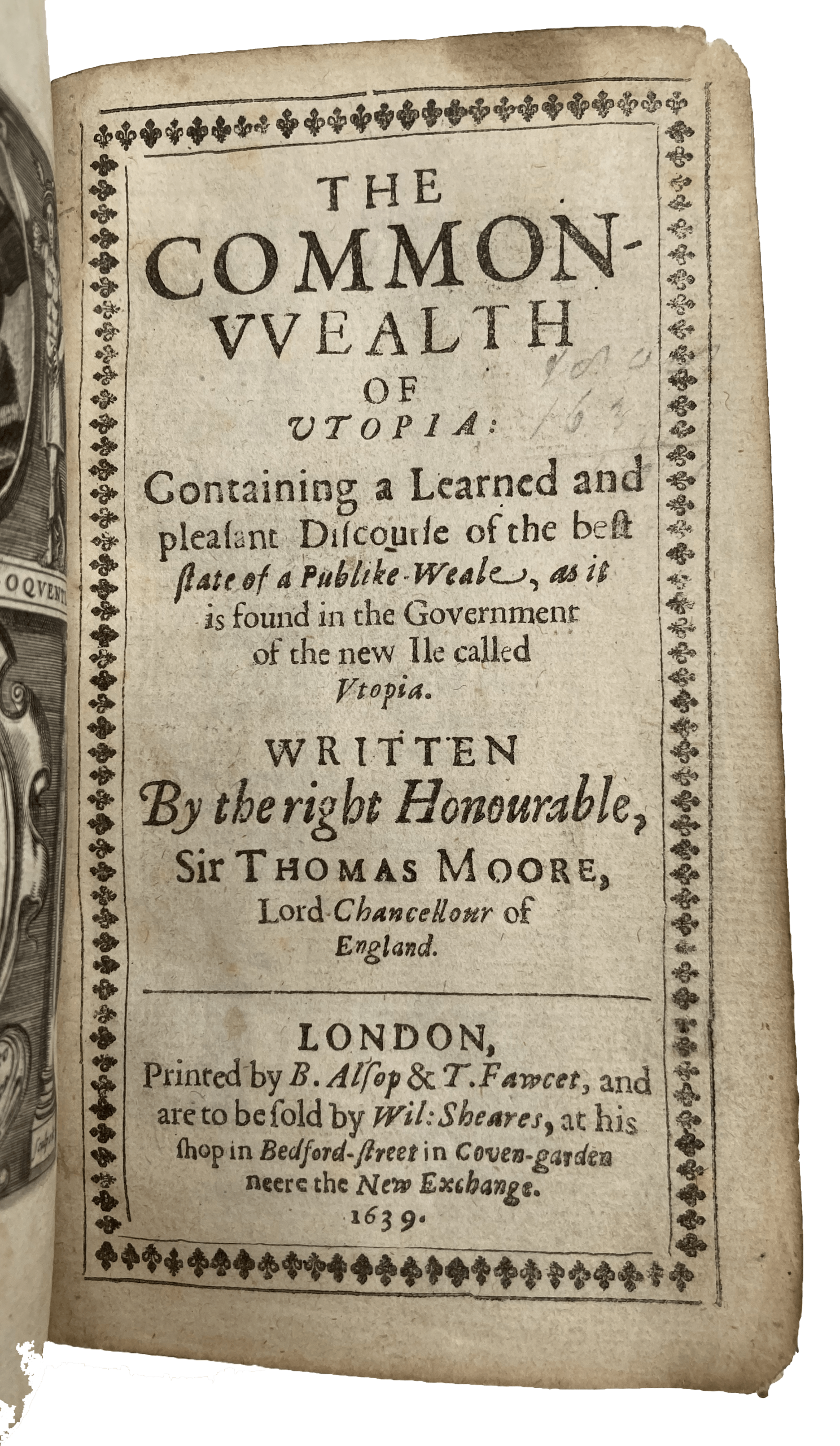
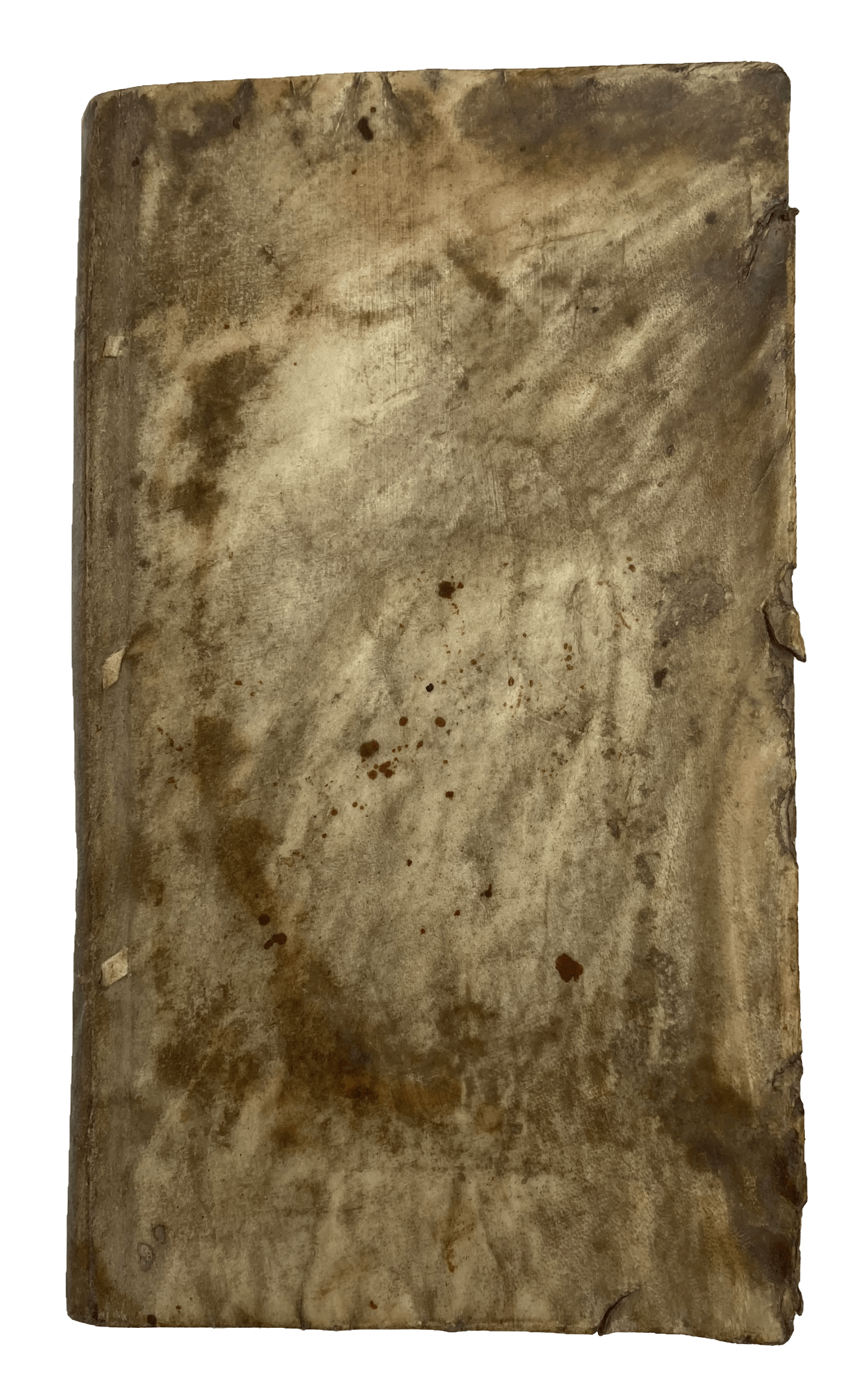
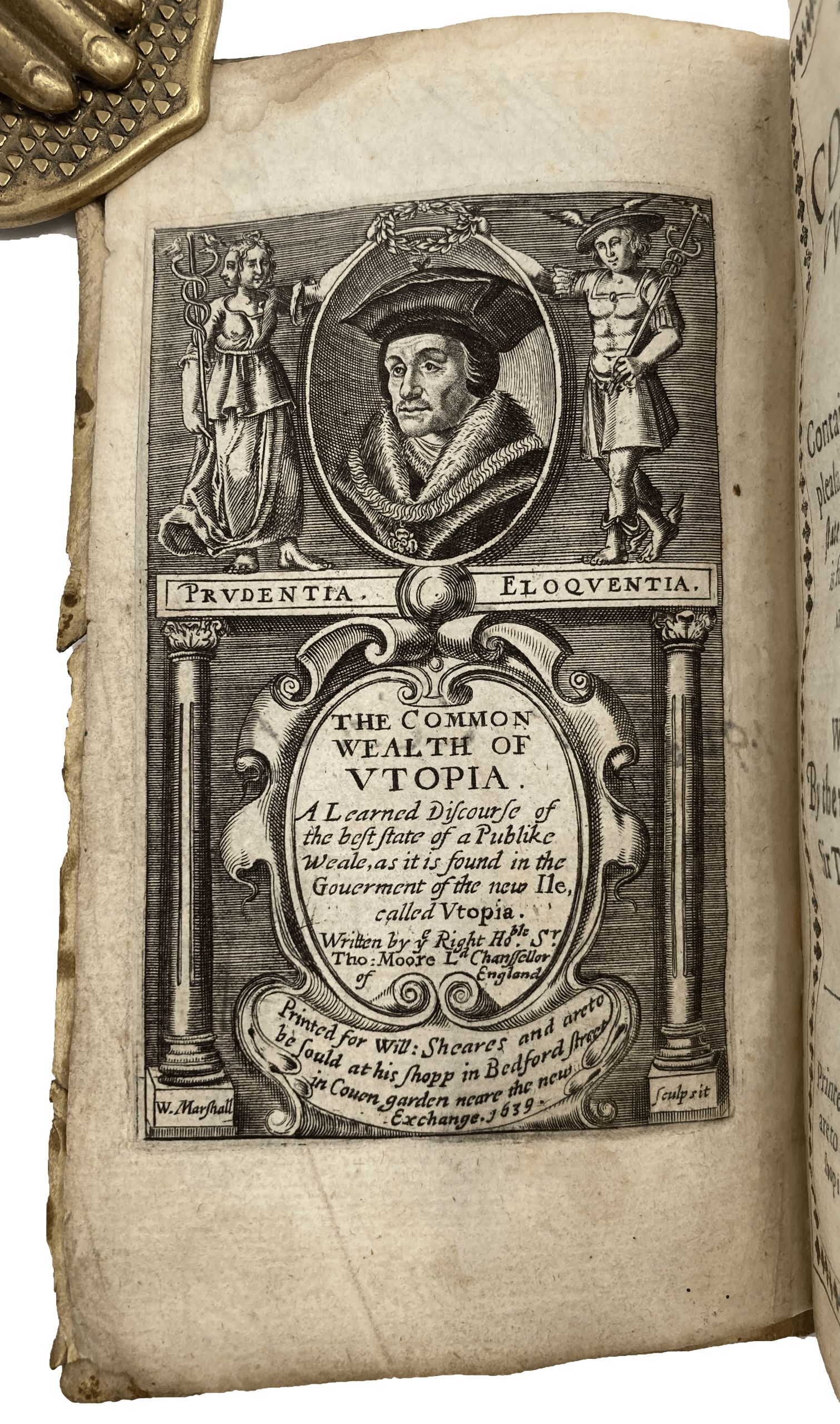
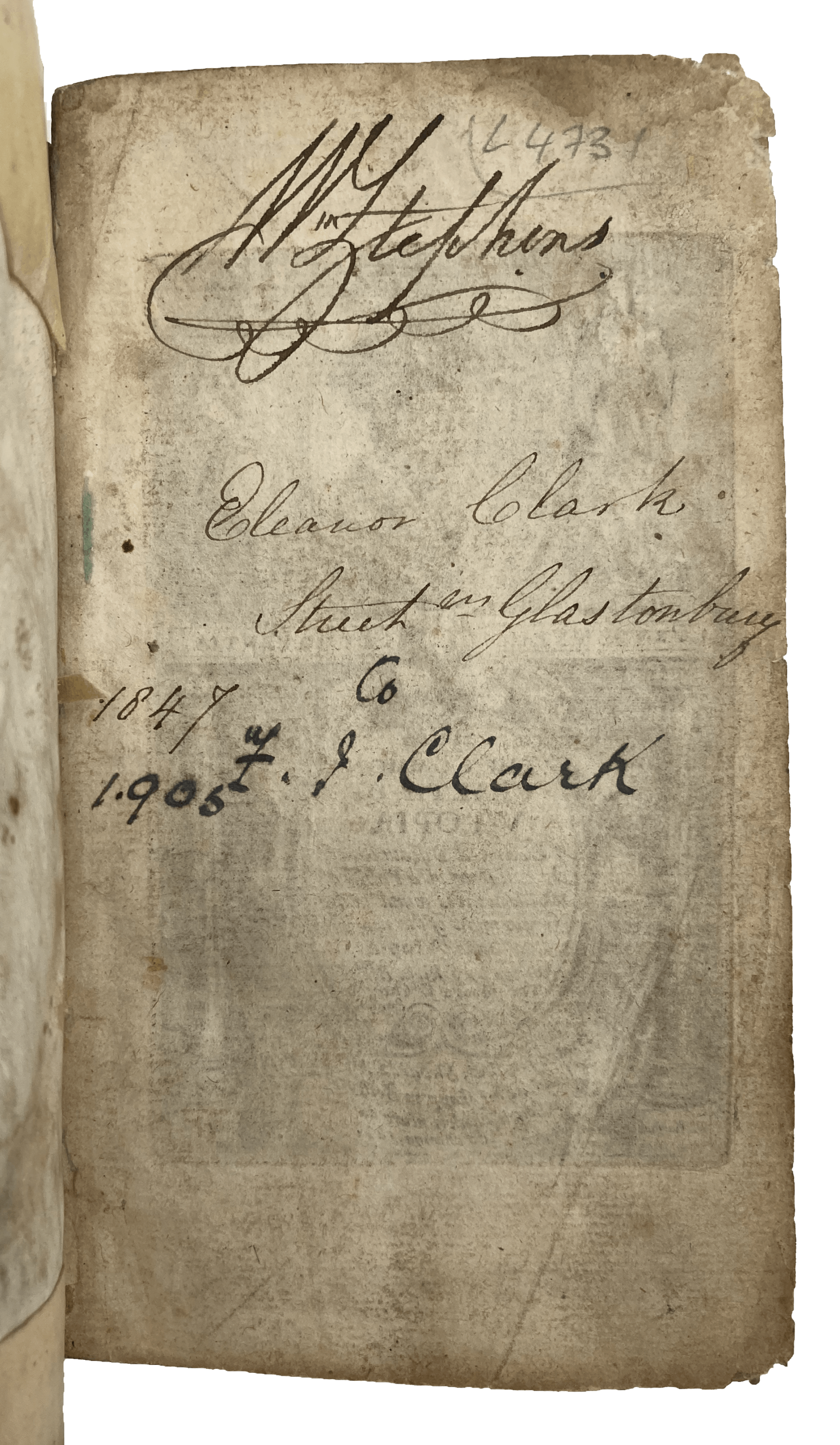
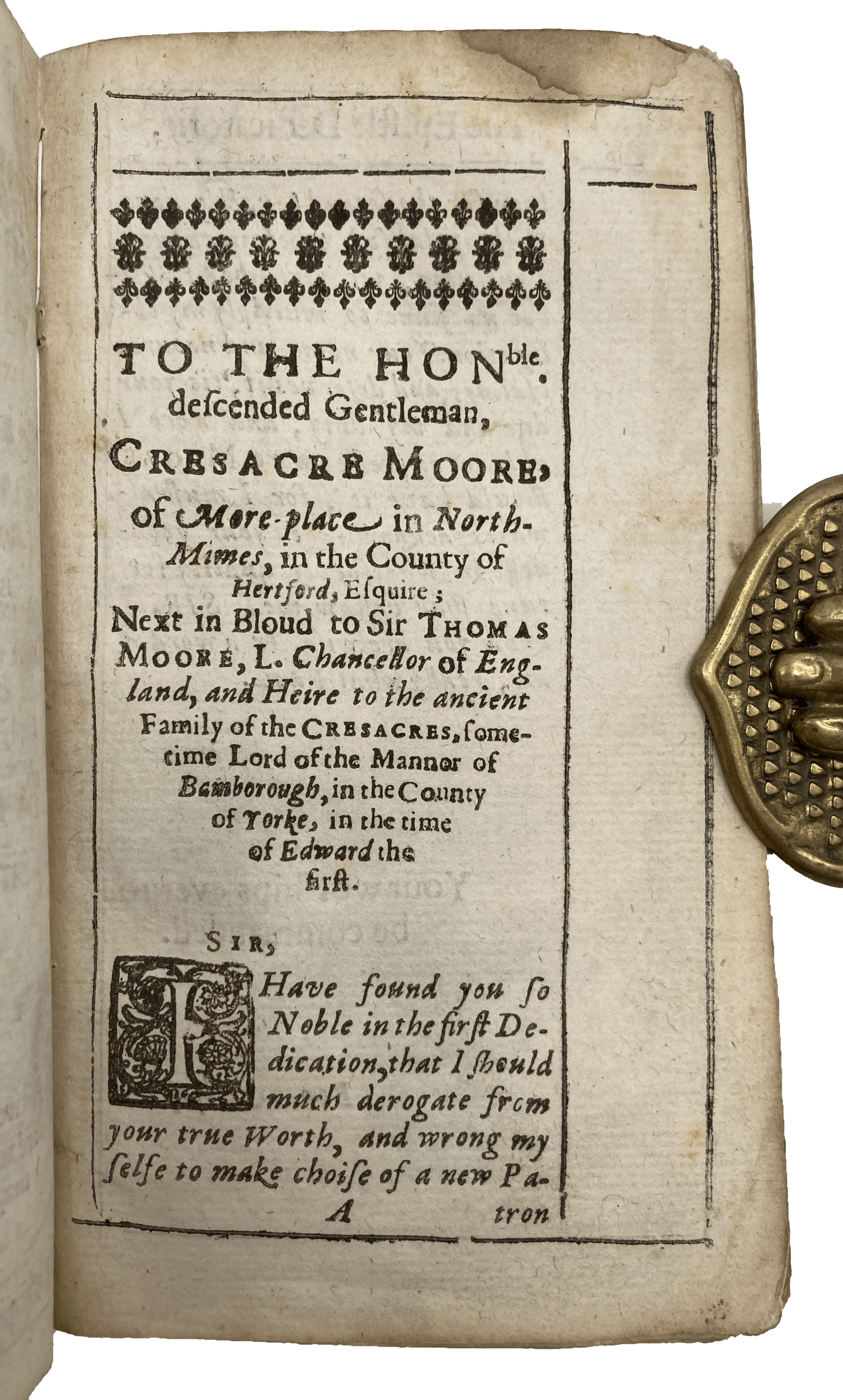
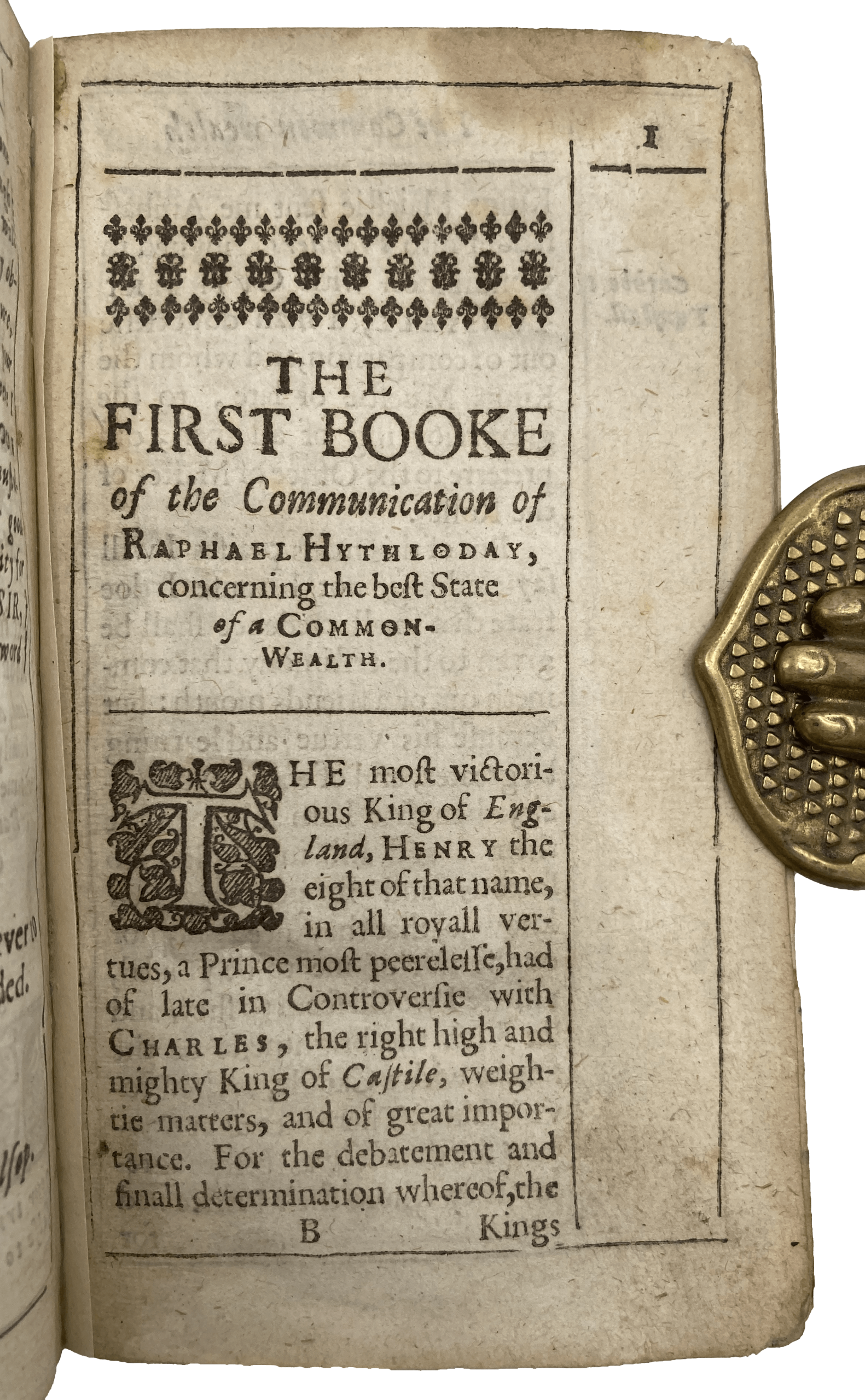
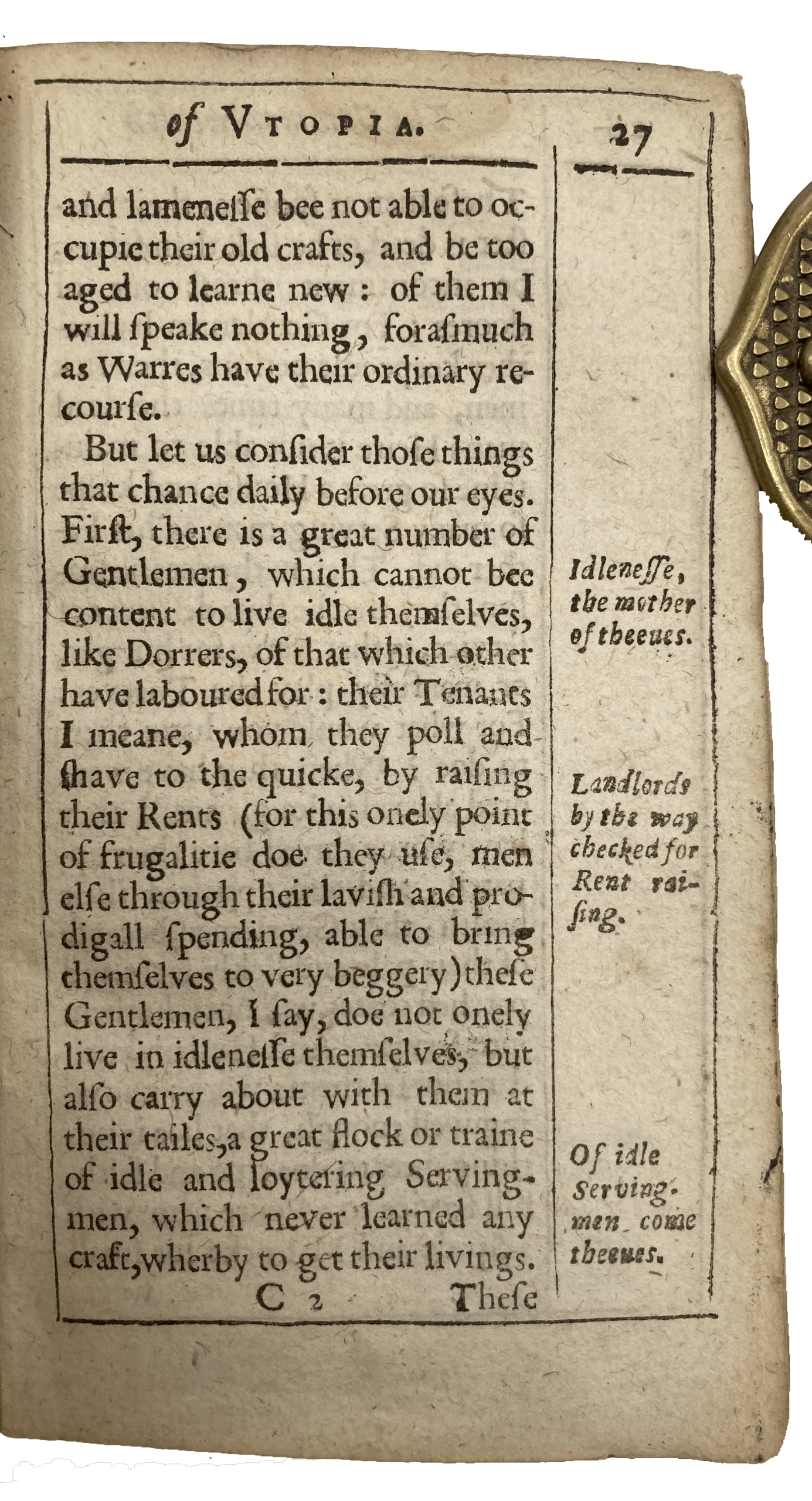
12mo. ll. (iii) 305. Roman letter. Verso of first with engraved title between two columns below oval portrait of More crowned by Prudence and Eloquence, facing letterpress t-p within typographical border. Woodcut initials, typographical head- and tailpieces. Small oil splash to blank upper margin of first few quires, diminishing, occasionally affecting running header, intermittent light waterstaining to blank outer and lower edges towards rear, marginal oil splash to quire O. Miniscule worming to blank upper outer margin at middle. Slight loss at outer edge from last few ll., not affecting text. A good, clean copy in original vellum, soiled. C19 inscriptions of William Stephens and Eleanor Clark, ‘Street in Glastonbury’, ‘to F[rancis]. J[oseph]. Clark 1905,’ of Clarks footwear.
Fifth English edition of Sir Thomas More’s Utopia, the second Alsop edition of Ralph Robinson’s English translation, first published 1551, dedicated by the publisher Bernard Alsop to Cresacre More (1572-1649), the author’s great-grandson and biographer. This copy has excellent Quaker provenance, being associated with the founders of Clarks footwear.
Utopia is certainly the most famous work of English humanism of the sixteenth century. Taking the form of a dialogue between scholars and diplomats meeting in Antwerp, it describes the journey of the Raphael Hythlodaeus to the fictional island of Utopia in the New World. A satire on the politics and mores of his own day, More’s Utopia has been hugely influential and inspired the genre of utopian fiction, though in his own day he was perhaps better known for his translations of Lucian’s satires, with Erasmus. ‘Utopia was published in the great year of Erasmian reform, when the new enlightenment seemed about to carry all before it … It was written as a tract for the times, to rub in the lesson of Erasmus; it inveighs against the new statesmanship of all-powerful autocracy and the new economics of large enclosures and the destruction of common-field agriculture, just as it pleads for religious tolerance and universal education’ (PMM, p. 28). More’s true intentions in writing Utopia have been the subject of much debate, especially regarding his opinions on traditional Catholicism, monarchy, and the ownership of private property as well as slaves.
Clarks was founded in 1825 by two Quaker brothers, Cyrus and James Clark, in Street, near Glastonbury in Somerset, where it is still headquartered. The Stephens and Clarks became linked through the marriage of James Clark to Eleanor Stephens, daughter of William Stephens, a Quaker draper from Bridport, Dorset. She was engaged in anti-slavery activities, running the Free Labour Cotton Depot in Street during the 1850s, which sold cotton produced by free rather than enslaved families in America (see Anna Vaughan Kett, ‘Quaker Women, Antislavery Activism, and Free Labour Cotton Dress in the 1850s’ in Carey and Plank, eds, Quakers and Abolition (Oxford: 2014), pp. 56-72). Eleanor and James had fourteen children, one of whom was Francis Joseph Clark. This copy passed, therefore, through at least three generations of two Quaker families: William Stephens to his daughter Eleanor Clark, née Stephens, to her son Francis Joseph Clark.
ESTC S112890. Gibson 29. Gillow V, p. 107. Lowndes IV, p. 1067 (‘a very erroneous edition’).In stock