

Description
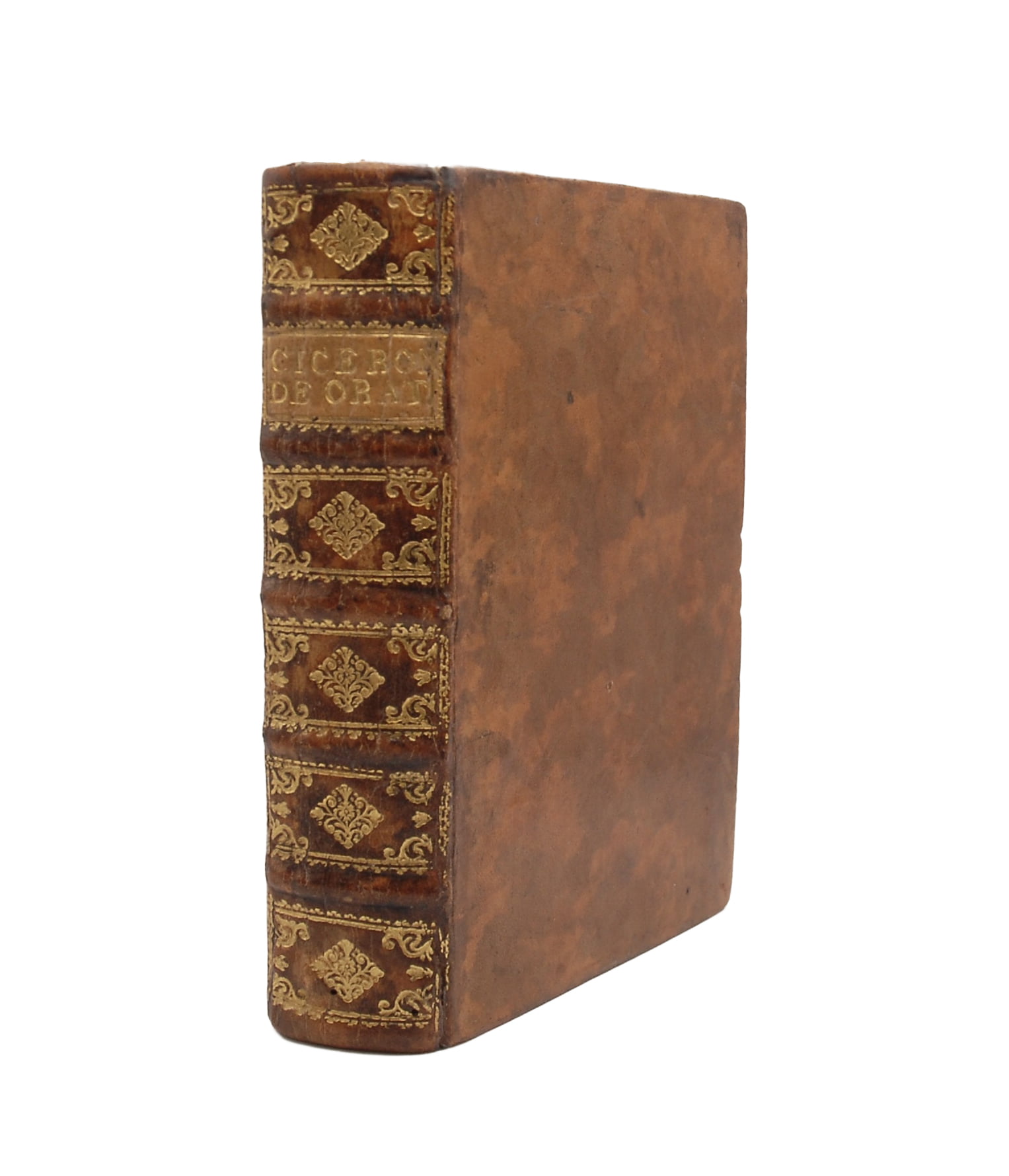
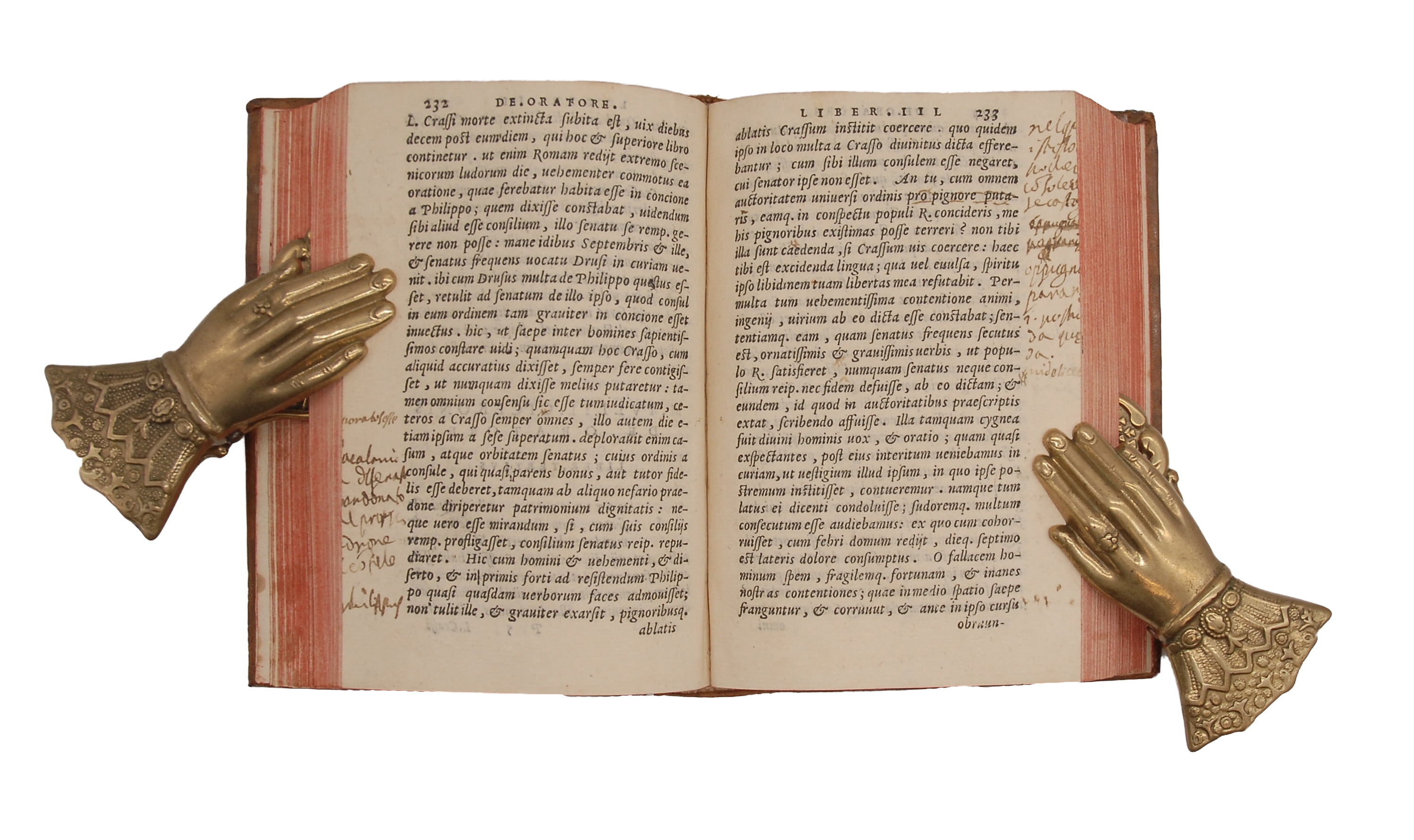
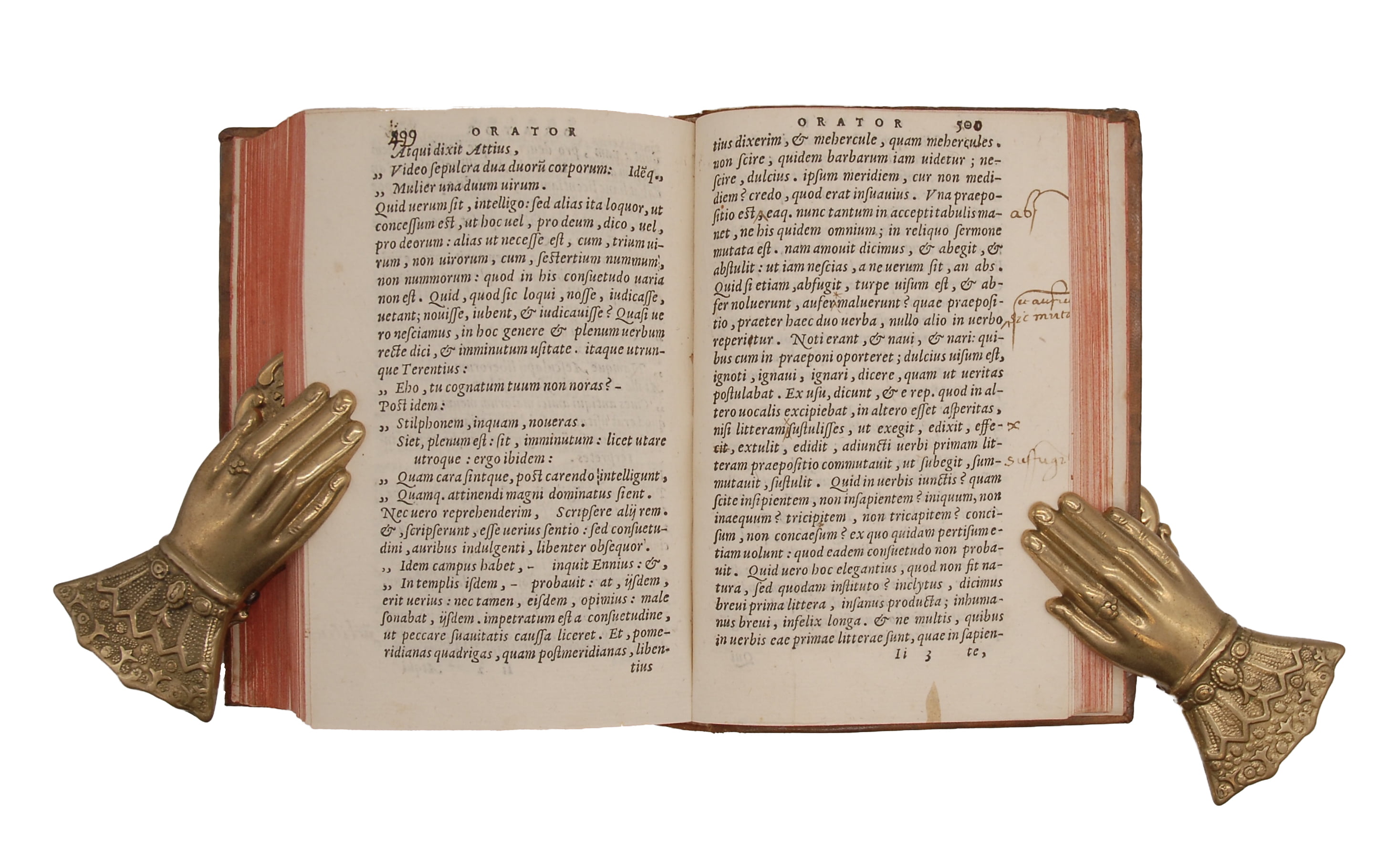
Charming Aldine edition of Cicero’s rhetorical works, including a detailed commentary (scholia) by Paulus Manutius. The youngest son of Aldus, Paulus (1512-1574) was a very influential publisher and one of the most prominent humanists of the Late Italian Renaissance. He was especially engaged in Latin literature, and a passionate Ciceronian. His outstanding reputation as a scholar was built upon his editions and commentaries on the works of Cicero: “no man had a juster conception of the beauties of this great Roman orator and philosopher, and no man has more successfully imitated his style” (Dibdin). The text of Cicero, revised and corrected by Paulus, is reproduced from the 1546 edition, and the commentary from 1564.
The greatest orator of the Late Republic, Marcus Tullius Cicero (106-43BC) was a Roman statesman, lawyer and scholar. Although he was a ‘homo novus’, namely the first in his family to achieve public office, he soon became one of the leading political figures of the era of Julius Caesar, Pompey, Marc Antony and Octavian. Defined by Quintilian as ‘eloquence itself’, he put his legal skills to the service of politics. This volume is a remarkable collection of his works on rhetoric, in which he presents the canons of this complex discipline, its history, and teaches how to use it. The first three works are often referred to as Cicero’s “Rhetoric Trilogy”. ‘De Oratore’ (55 BC), a platonic dialogue in three books, is a detailed exposition of the moral qualities, skills and techniques required by the ideal orator, as well as a presentation of rhetoric as a form of art. ‘De Claris Oratoribus’ (46 BC), also a dialogue, is a history of eloquence which illustrates the personalities of great orators, predecessors and contemporaries of Cicero. More commonly known as ‘Brutus’, one of its protagonists is Marcus Brutus who, less than two years later, stabbed Julius Caesar to death. ‘Orator’ (46 BC) is a continuation of the debate between Cicero and Brutus, in which the author defines the three goals of rhetoric as “docere, delectare, et movere”, that is, ‘to teach, entertain and move’ the audience. The fourth and last work is ‘De optimo genere oratorum’ (46 BC), a brief treatise in which Cicero defends his oratorical style and anticipates some of the ideas developed and expanded in his later ‘De Oratore’.