

STRABO
INITIALS BY HOLBEIN
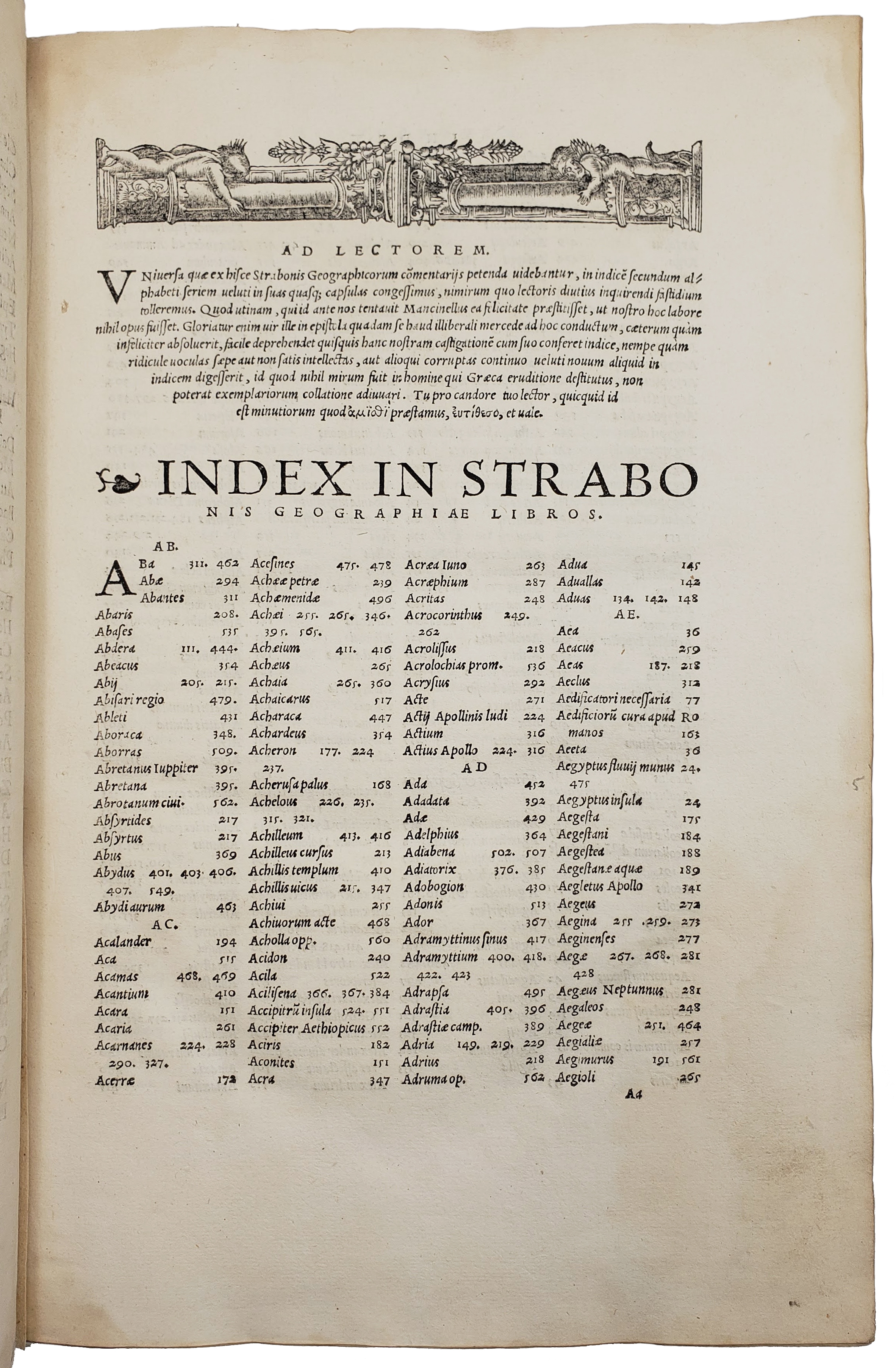
Strabonis geographicorum commentarios.
Basel, In aedibus Valentini Curionis, 1523£9,500.00
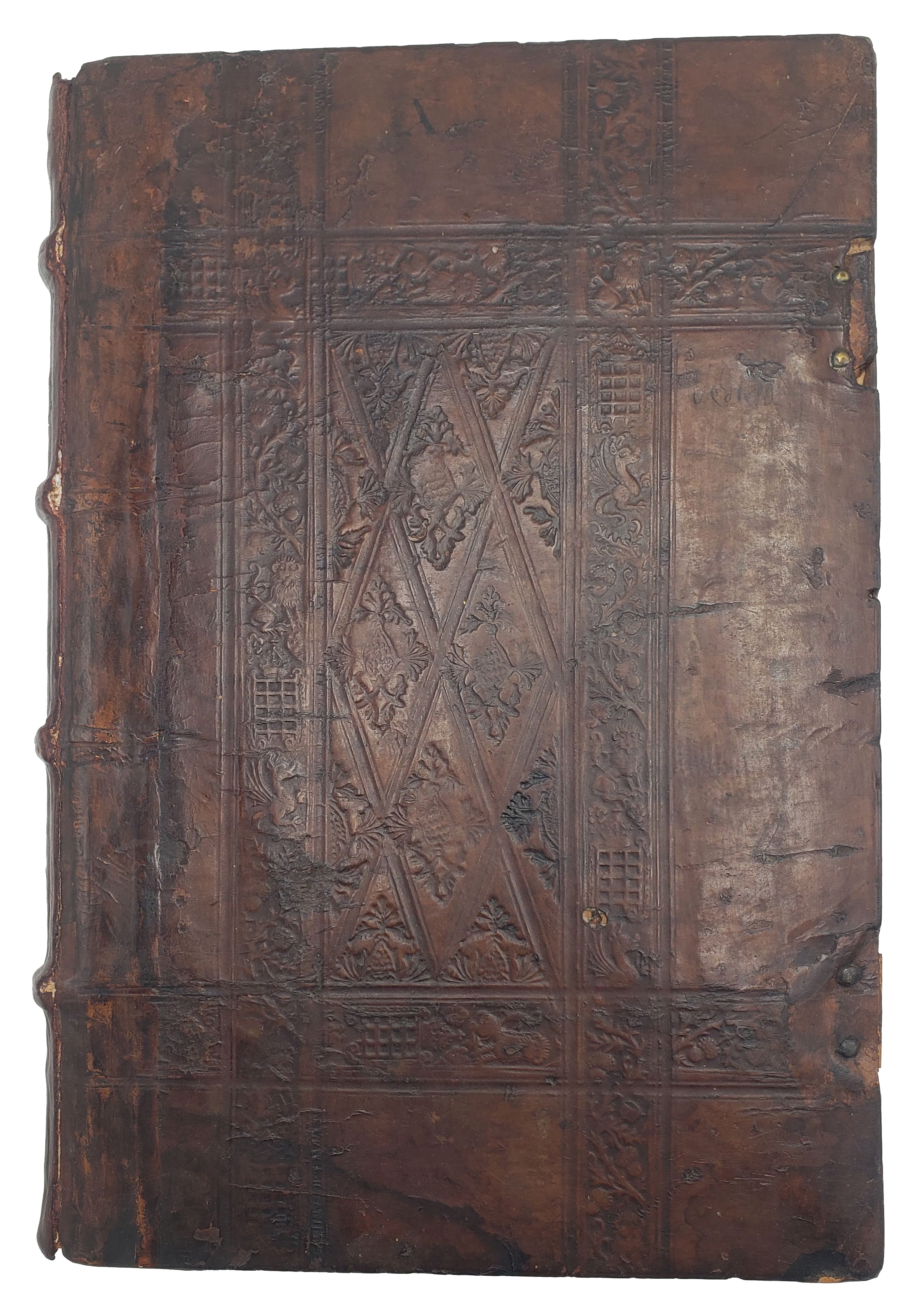
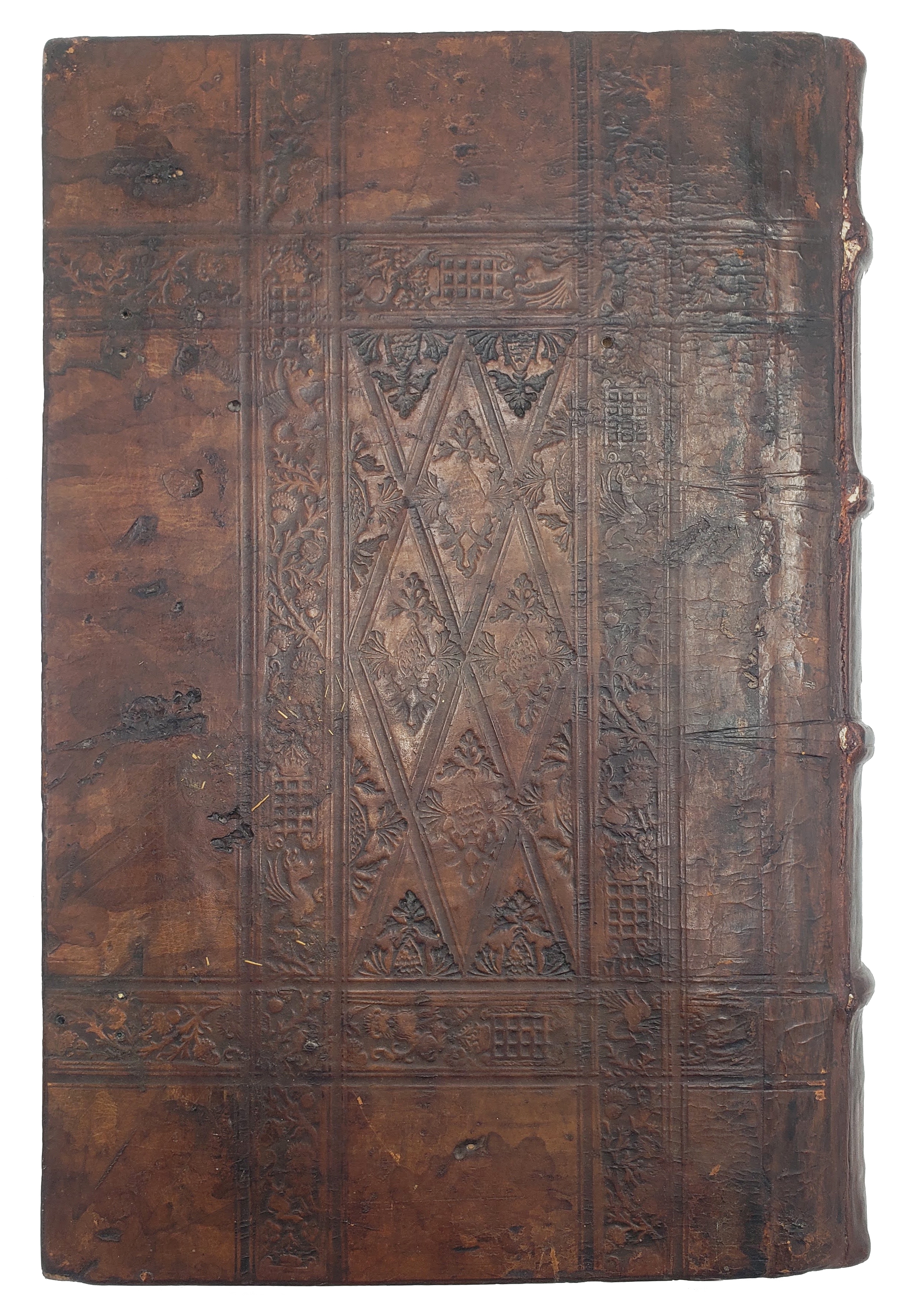
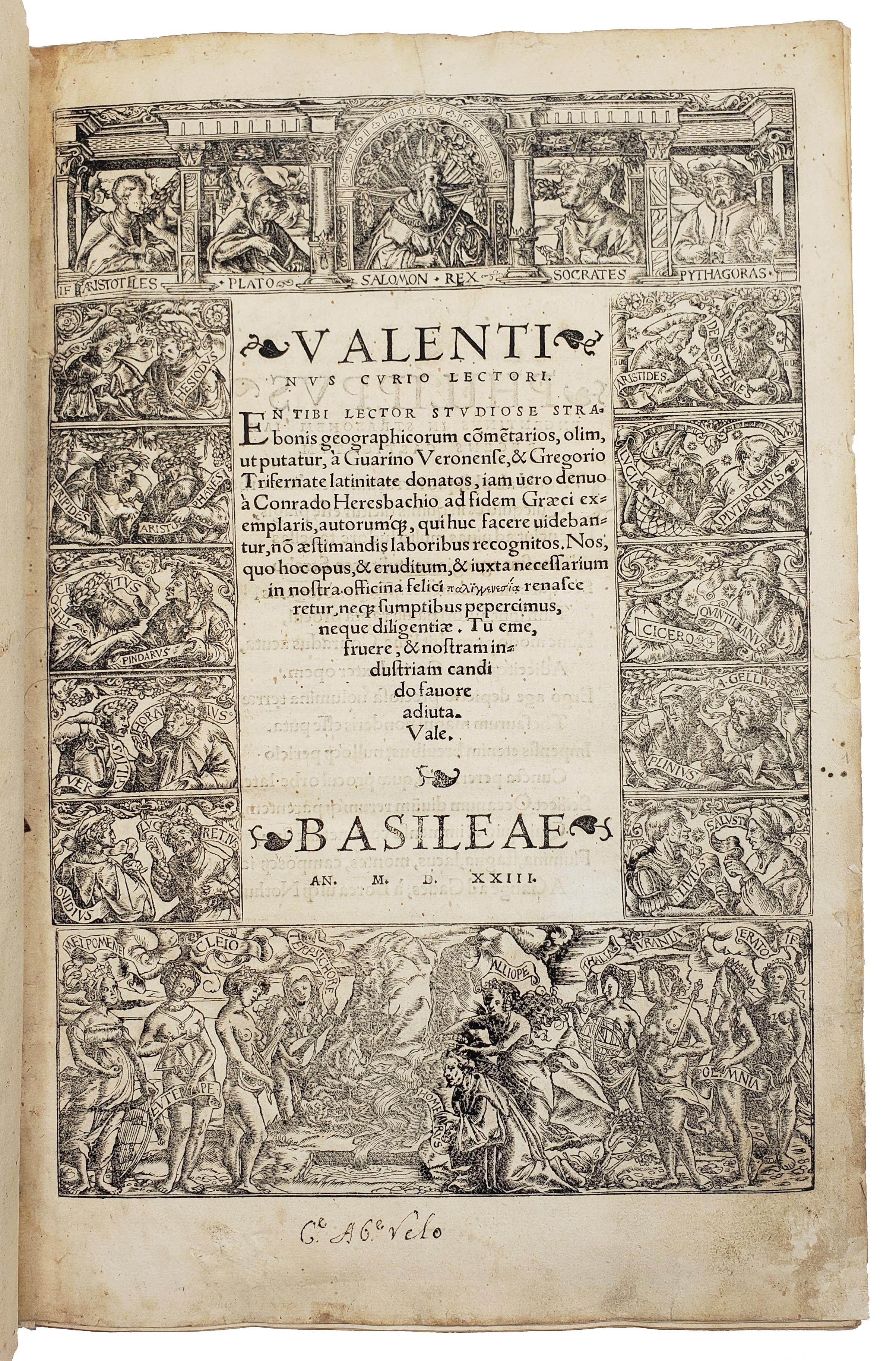
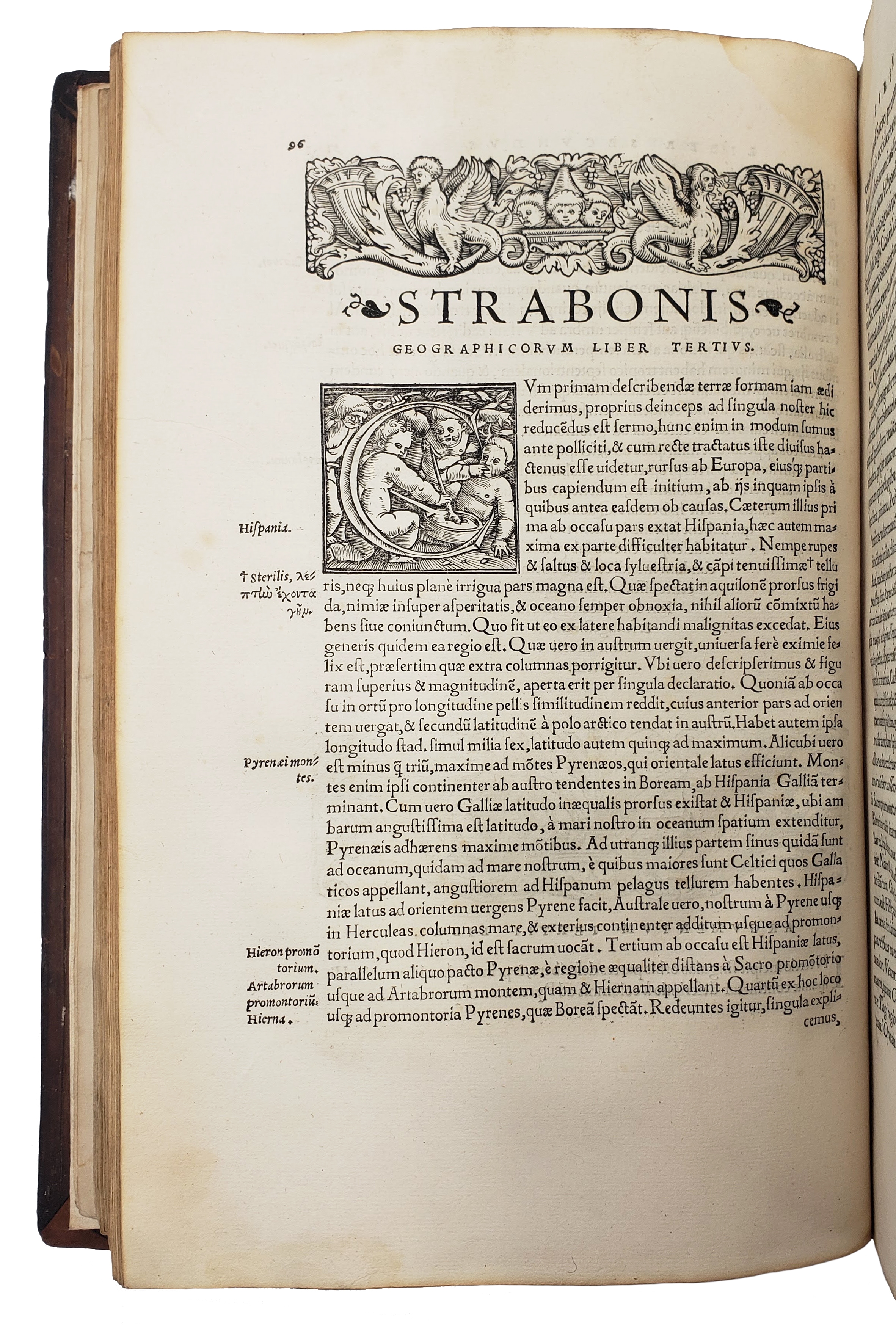
FIRST EDITION thus. Folio. pp. (xxxvi) 566 (ii). Roman letter. T-p with woodcut border by Johann Faber, next also with woodcut border and initial with putti, the latter by Holbein, seventeen further woodcut initials by Holbein, woodcut head-pieces, final verso with woodcut printer’s device. Contemp. English (London) blindstamped calf, central panel of diapered fillets and floriated diamond full- and half-stamps (Oldham B. (3)), within border of portcullis, wyvern, lion and acorn roll (Oldham AN. g (1)), rebacked, remains of clasps, the odd mark or wormhole with slight loss, later ms. shelfmark to boards, contemp. ms. edge title. Occasional contemp. ms. annotations and underlining, page ref. to final verso. T-p repaired along gutter, two closed tears, slight restorations at lower outer corner and edge, *4 with closed tear to outer margin. A few ll. with slight browning probably from wet sizing, occasional light foxing to margins, a couple of marginal wormholes to last few quires, the odd light spot or smudge, a very good, clean, wide margined copy.
First edition of this Latin translation of Strabo’s Geography by Konrad Heresbach, produced at the bequest of the humanist printer Valentin Curio and attractively decorated, including woodcut initials by Holbein showing putti in various attitudes. The first Latin edition of Strabo’s was Guarino Veronese’s translation, published in Venice in 1469; the Aldine press published the editio princeps in 1516. The English blindstamped binding, almost certainly produced in London, is undoubtedly contemporaneous with the book (Oldham, p. 43).
Strabo’s Geography, his only surviving work, contains a wealth of information about the ancient Roman world, and is one of the earliest comprehensive works of geography. Born in the first century BC in Pontus, Strabo studied in Rome and Alexandria and travelled extensively in Italy, eastern regions including the Black Sea, Asia Minor, Egypt as far as Ethiopia, and parts of Greece, mostly during the peaceful reign of Augustus (this edition contains a brief life of the author). His Geography preserves and is an invaluable source of information on earlier ancient Greek geographers, including Eratosthenes, the first systematic or mathematical geographer, Hipparchus and Posidonius.
The first introductory book firmly establishes Homer as Strabo’s most important source, praising the poet and quoting liberally from his Iliad and Odyssey. In the second book, by contrast, Strabo is critical of the systems established by Eratosthenes and Hipparchus. Strabo broadly followed Eratosthenes’s system but also delineated separate countries with physical, political and historical details. Aimed at civil servants rather than students (and with an emphasis on civil good), Strabo emphasises geographical features, dangers posed by natural disasters, and natural resources of various regions. Strabo was one of the earliest authors to describe fossil formation and volcanic eruptions, both in Book 3. Books 3 and 4 deal with Spain and Gaul; 5 and 6 with Italy and Sicily; 7 with northern and eastern Europe; 8-10 with Greece, 11-14 with Asia and Asia Minor; 15 with India and Iran; 16 with the Middle East; and 17 with Egypt and Africa.
USTC 700252. Graesse VI. 506. BM STC Ger., p. 835. Not in Adams.