
MACHIAVELLI, Niccolò
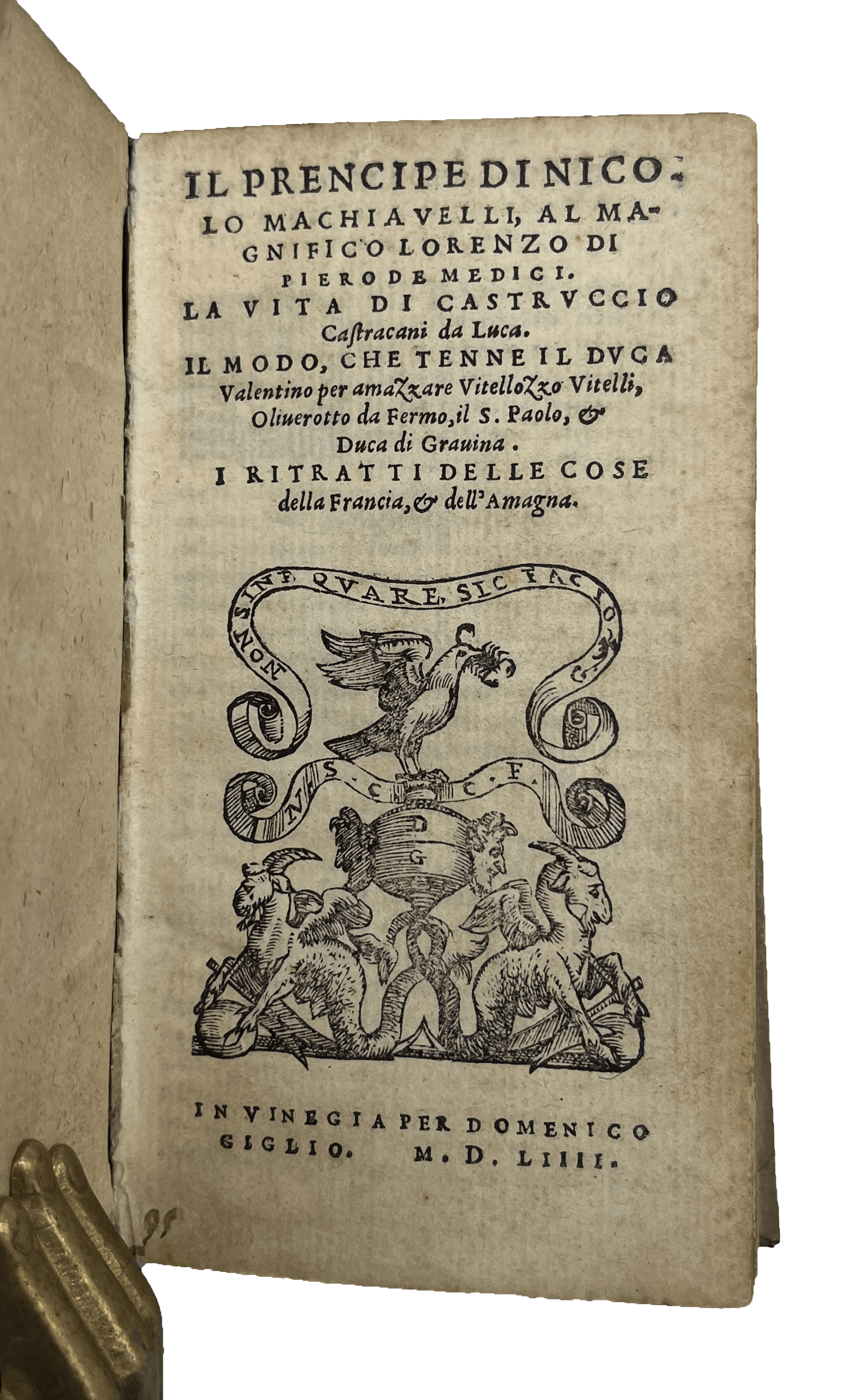


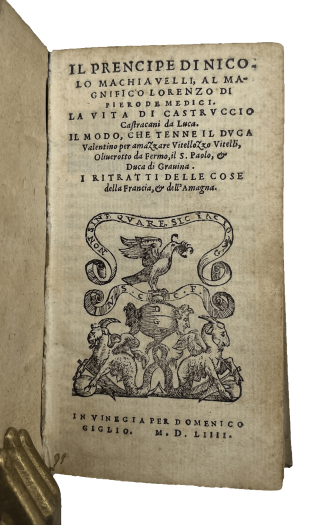
Il prencipe.
Venice, Per Domenico Giglio, 1554£4,350.00
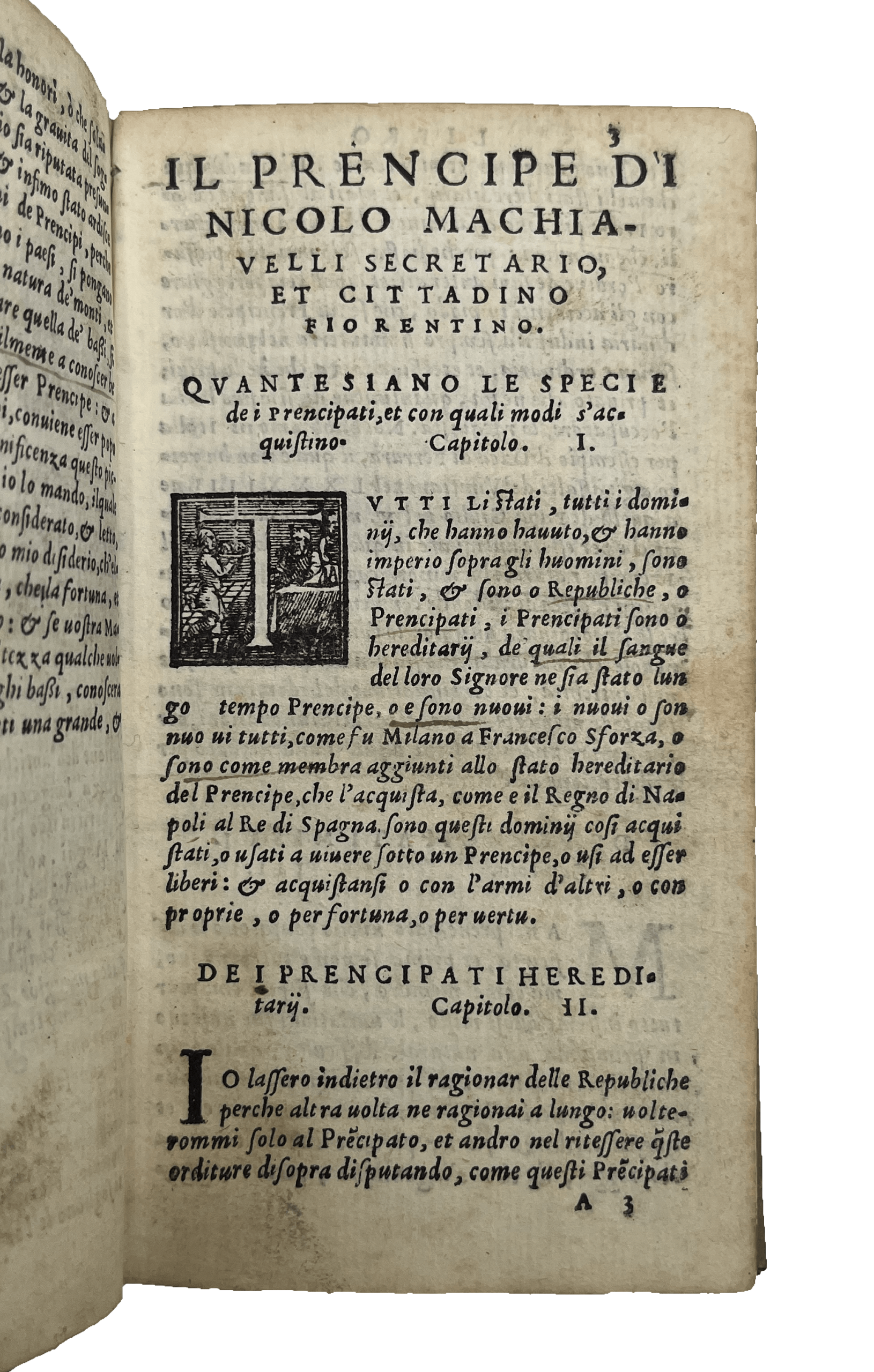
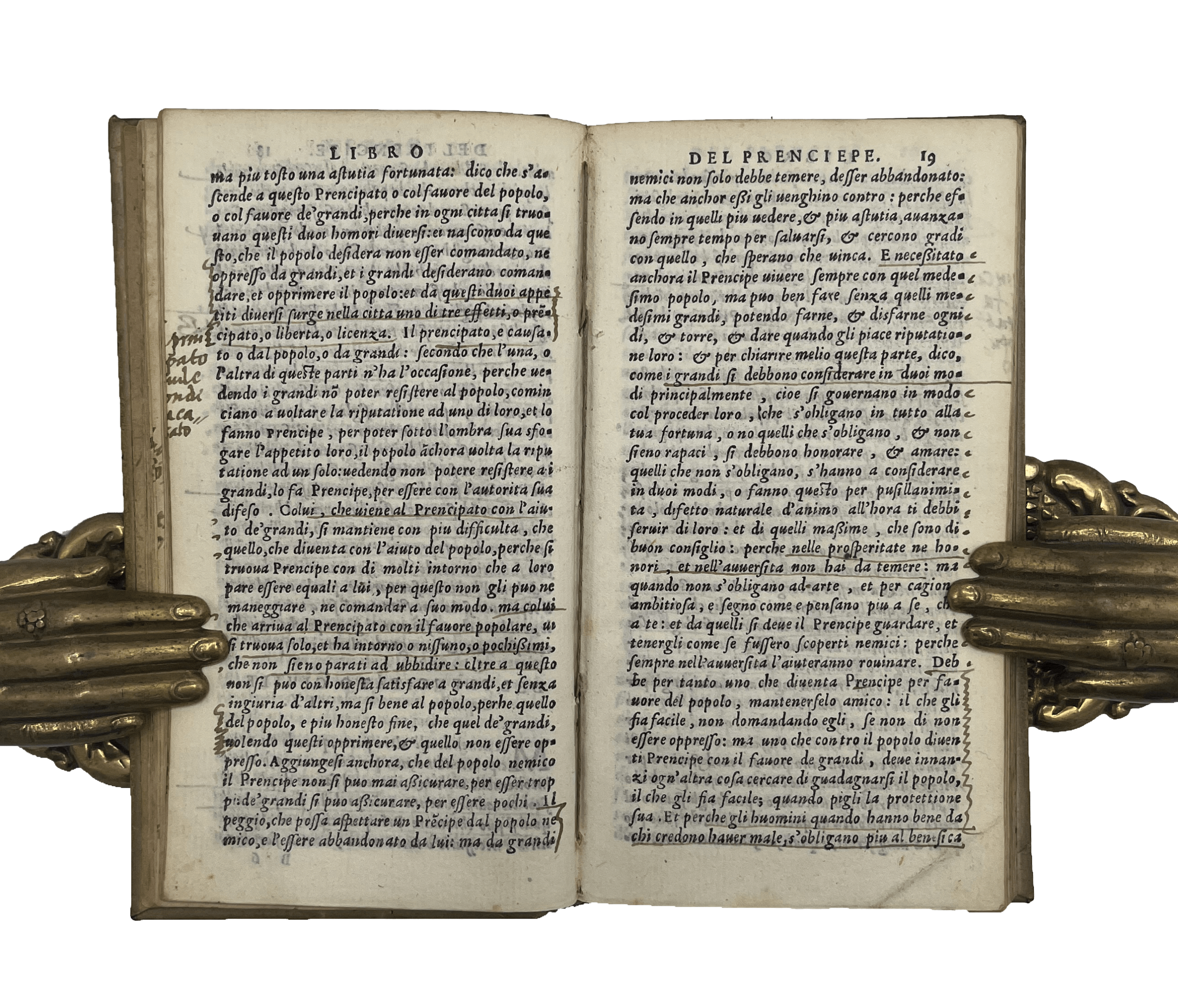
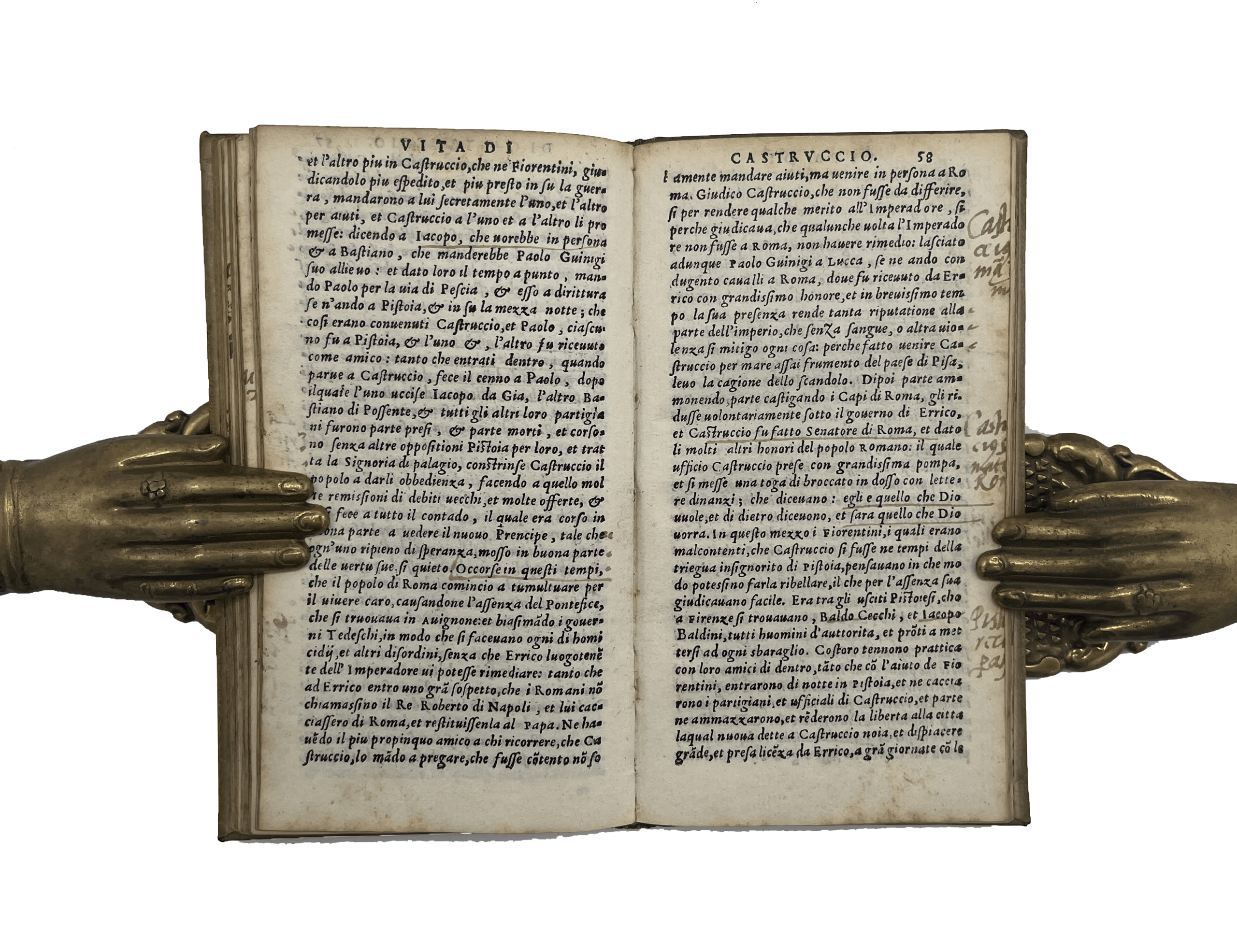
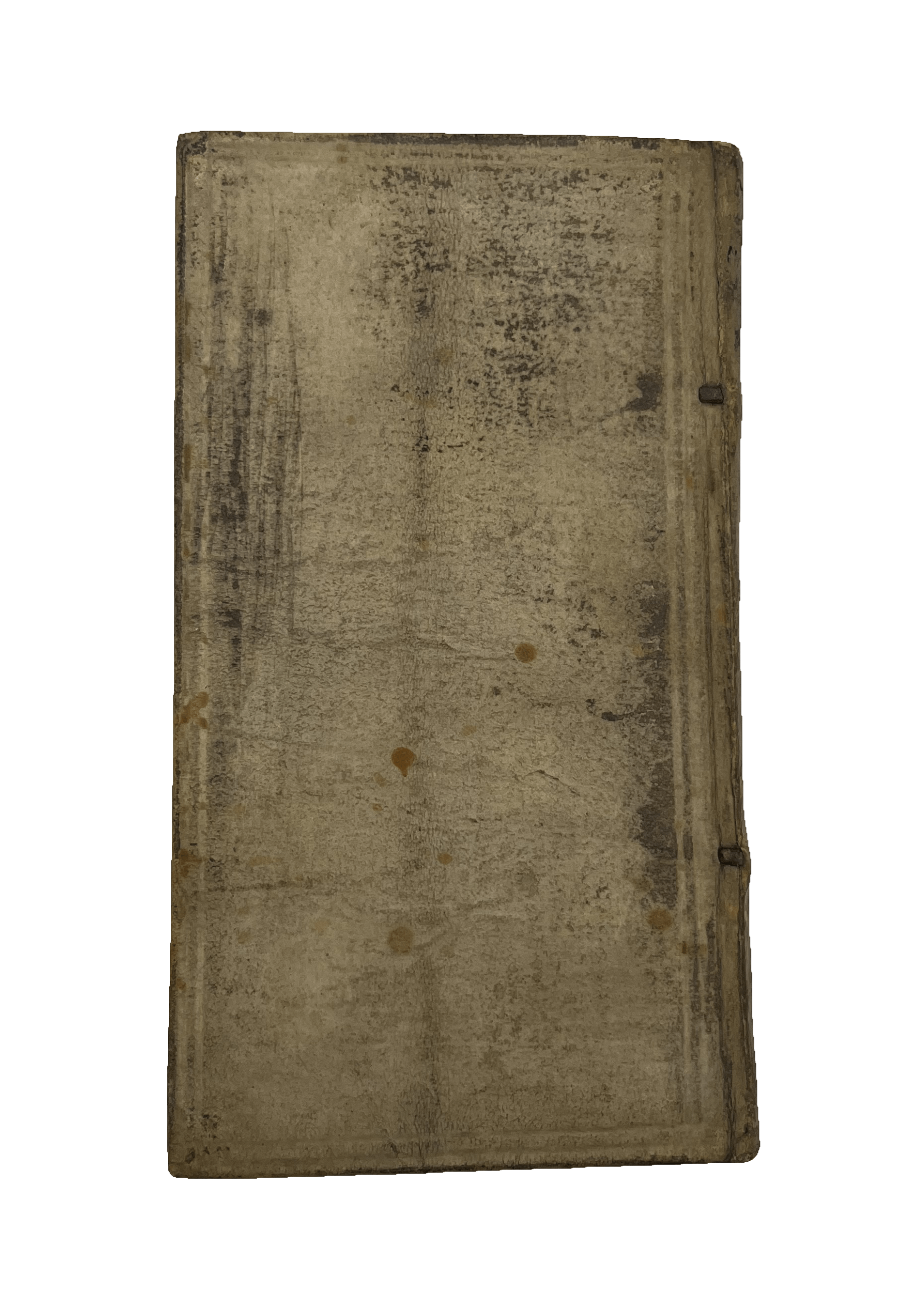
12mo. ll. 84. Italic letter. Woodcut printer’s device to t-p, woodcut initials. T-p very slightly dusty at blank outer edge, occasional smudging and light marginal foxing, a very good copy in C17 vellum, soiled. Numerous contemp. annotations, trimmed, underlining.
Rare Venice edition of Machiavelli’s Il Principe, first published in Italian in 1532, the most famous of the Renaissance ‘mirrors for princes.’ The Prince usually appears, as here, with four short works: The Life of Castruccio Castracani, an Italian condottiere; studies of three Italian noblemen; and two brief treatises on the national character of the French and Germans.
‘‘The Prince’ is far more than a book of directions to any one of the many Italian princelings. Machiavelli … wrote for the guidance of the ruler by whom alone Italy, desperately divided, could be restored to political health [i.e. Lorenzo di Piero de’ Medici] … Machiavelli founded the science of modern politics on the study of mankind … Politics was a science to be divorced entirely from ethics, and nothing must stand in the way of its machinery. Many of the remedies he proposed for the rescue of Italy were eventually applied. His concept of the qualities demanded from a ruler and the absolute need of a national militia came to fruition in the monarchies of the C17th and their national armies’ (PMM).
Much of the work is concerned with the founding of new republics by force, and the need for a well-maintained militia. Alexander the Great is used as an example of an ideal ruler in this regard. Machiavelli also considers whether it is acceptable for a ruler to break his promises, whether it is better to be feared or loved, and how to appear generous without spending too much of one’s own money. This is Machiavelli’s general rule: it is important only to be seen to be virtuous; a prince should be ready to act or change his behaviour according to his best advantage. In the same way, it is fine to be loved or feared, as long as you are not hated.
Bertelli 107. Gerber, II, 58.2. Gamba, p. 190. EDIT16 CNCE 68041.In stock