
LAET, Johannes de.
ORIGINS OF INDIGENOUS AMERICANS
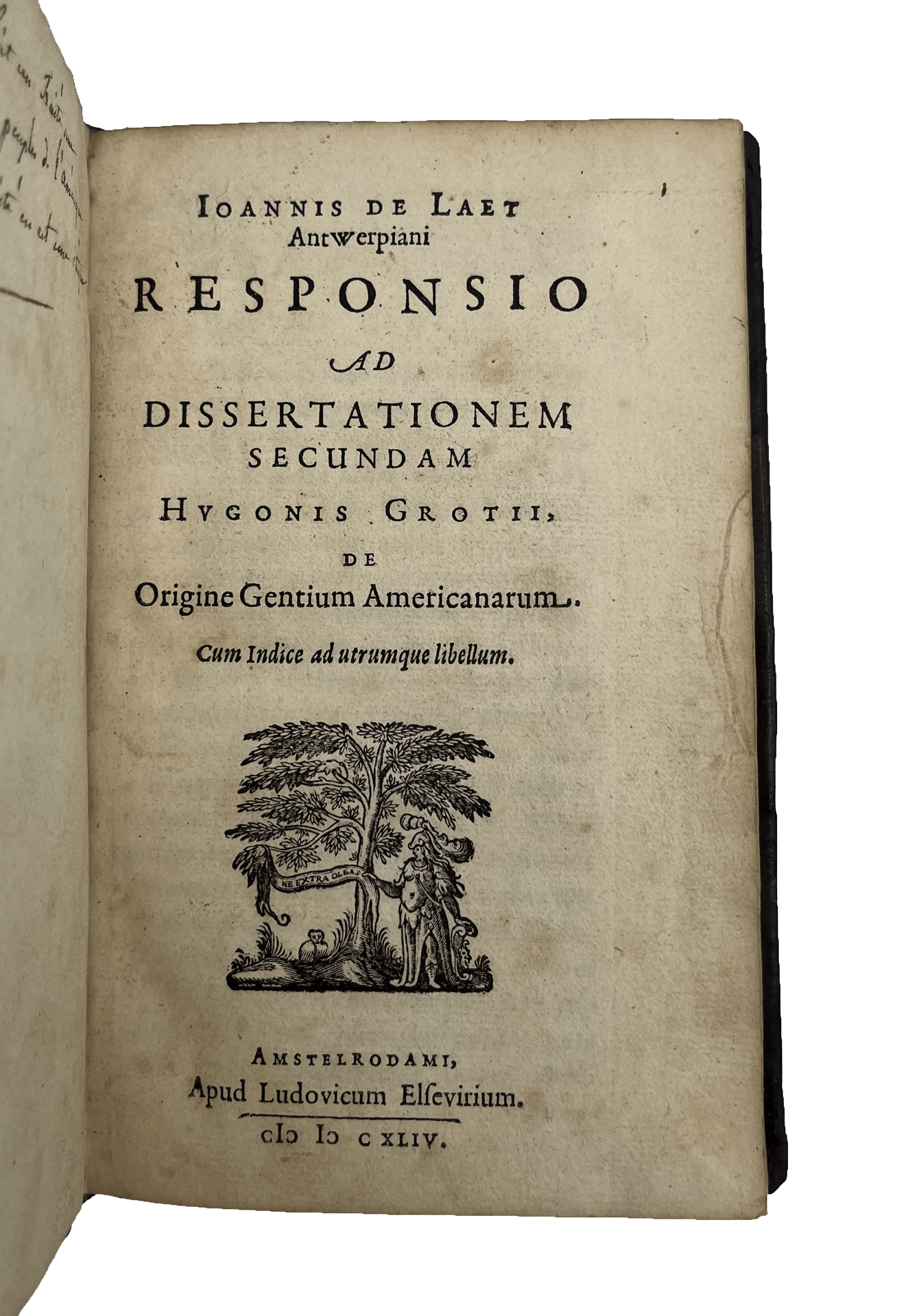


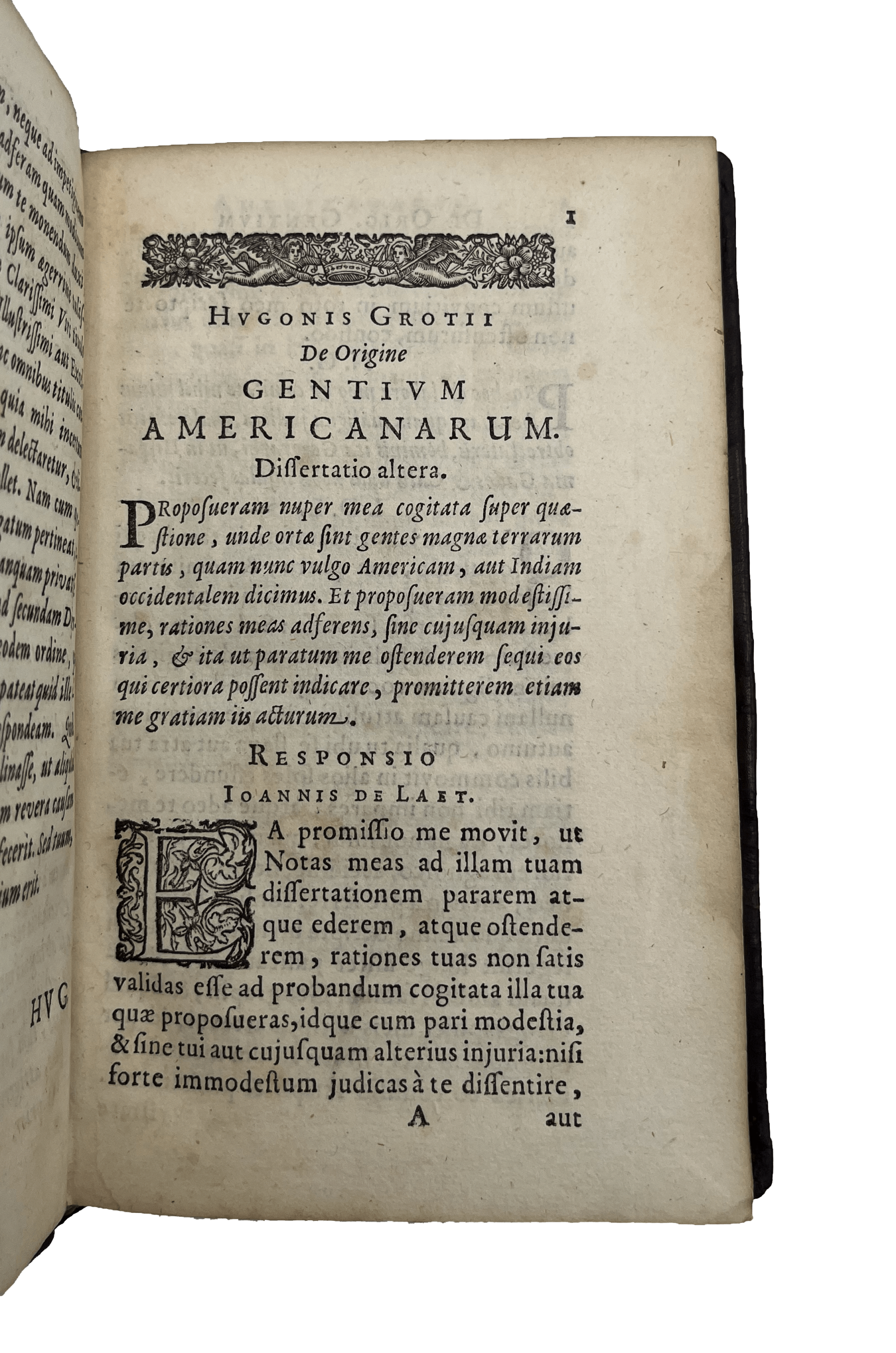

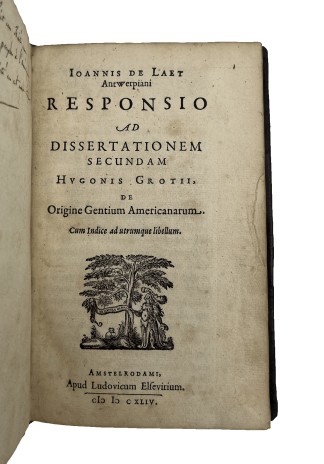
Responsio ad dissertationem secundam Hugonis Grotii, de Origine Gentium Americanarum.
Amsterdam, L. Elzevir, 1644.£2,250.00
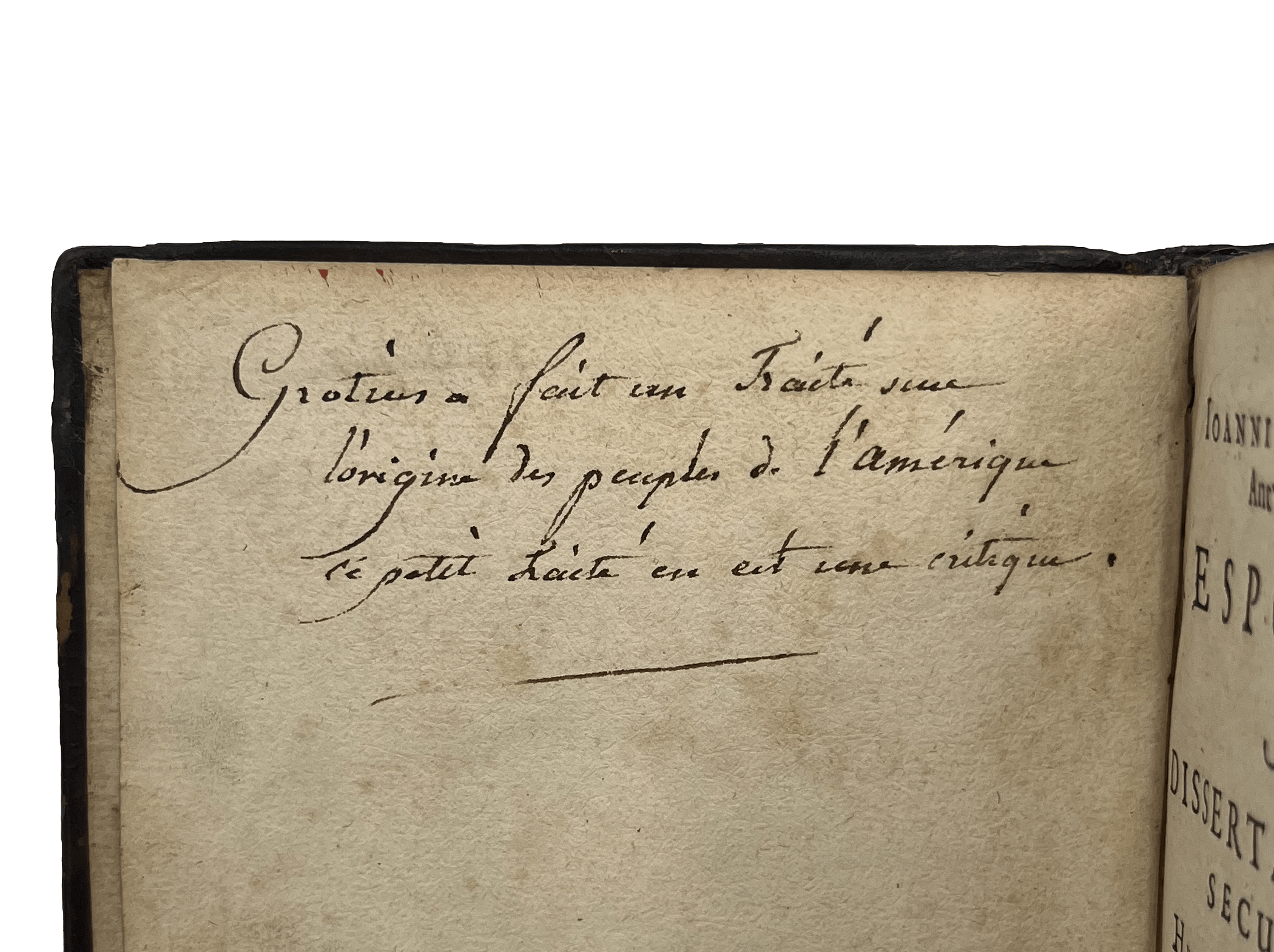
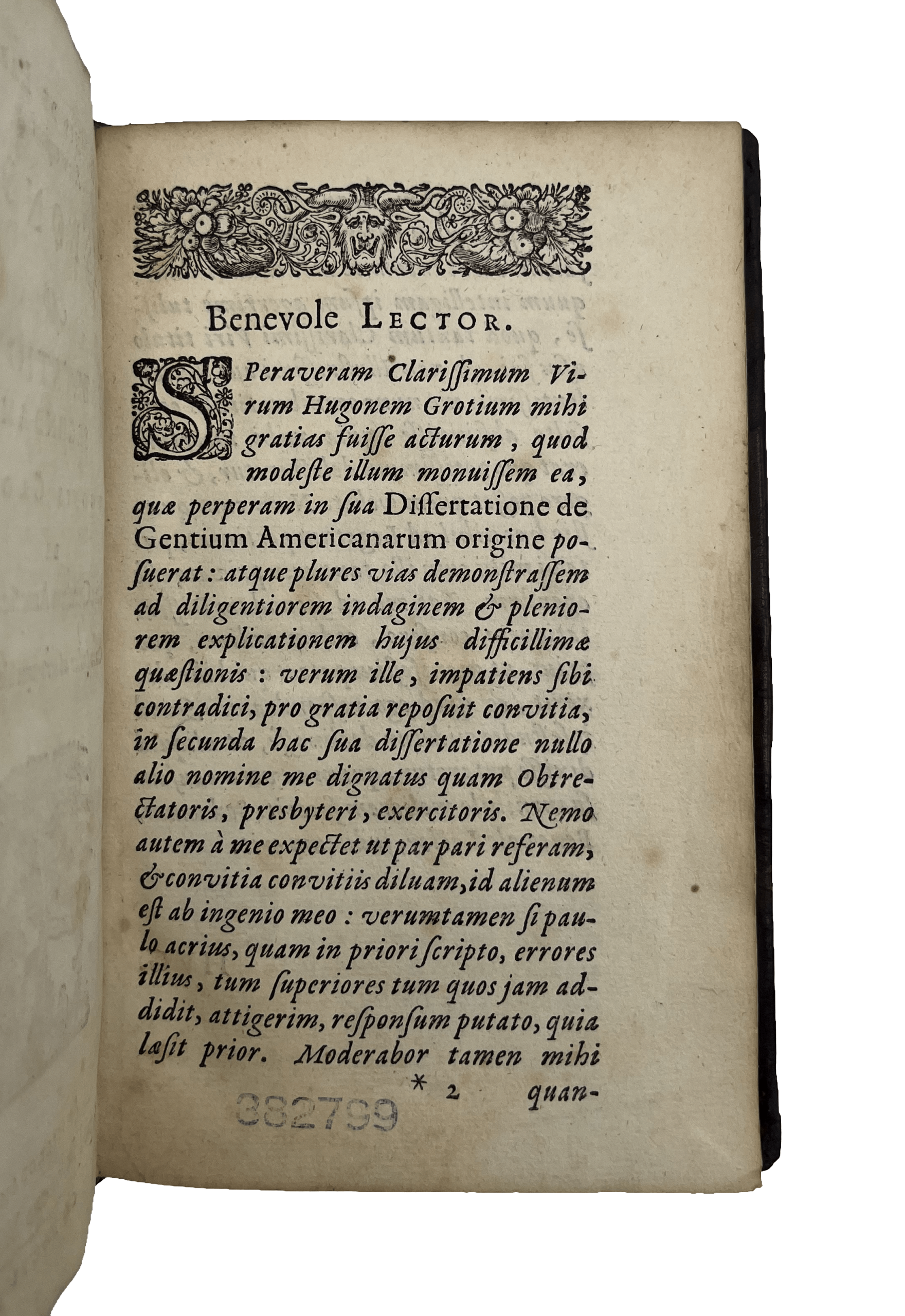
FIRST AND ONLY EDITION. 8vo. pp. [4], 116, [8]. Roman letter, little Italic. Printer’s device to title, decorated initials and ornaments. Slight age browning. A very good, clean copy in contemporary probably Dutch calf, double gilt ruled, spine gilt, hinges and corners repaired, ms ‘1726 fs’ to front pastedown, ‘11677’ and c1800 bibliographical note to fly, C18 ms shorthand inscription to rear pastedown, numerical ink stamp in lower blank margin of *2.
First and only edition of this important work, one of several produced as part of early debates on the origins of indigenous peoples in America. Joannes de Laet (1581-1649) was director of the East India Company, a geographer and historian, and the author of a ‘History of the New World’ (1625). His daughter Johanna moved to the colony of New-Netherland (between Connecticut and Delaware) in 1653, where she spent several decades as a successful businesswoman.
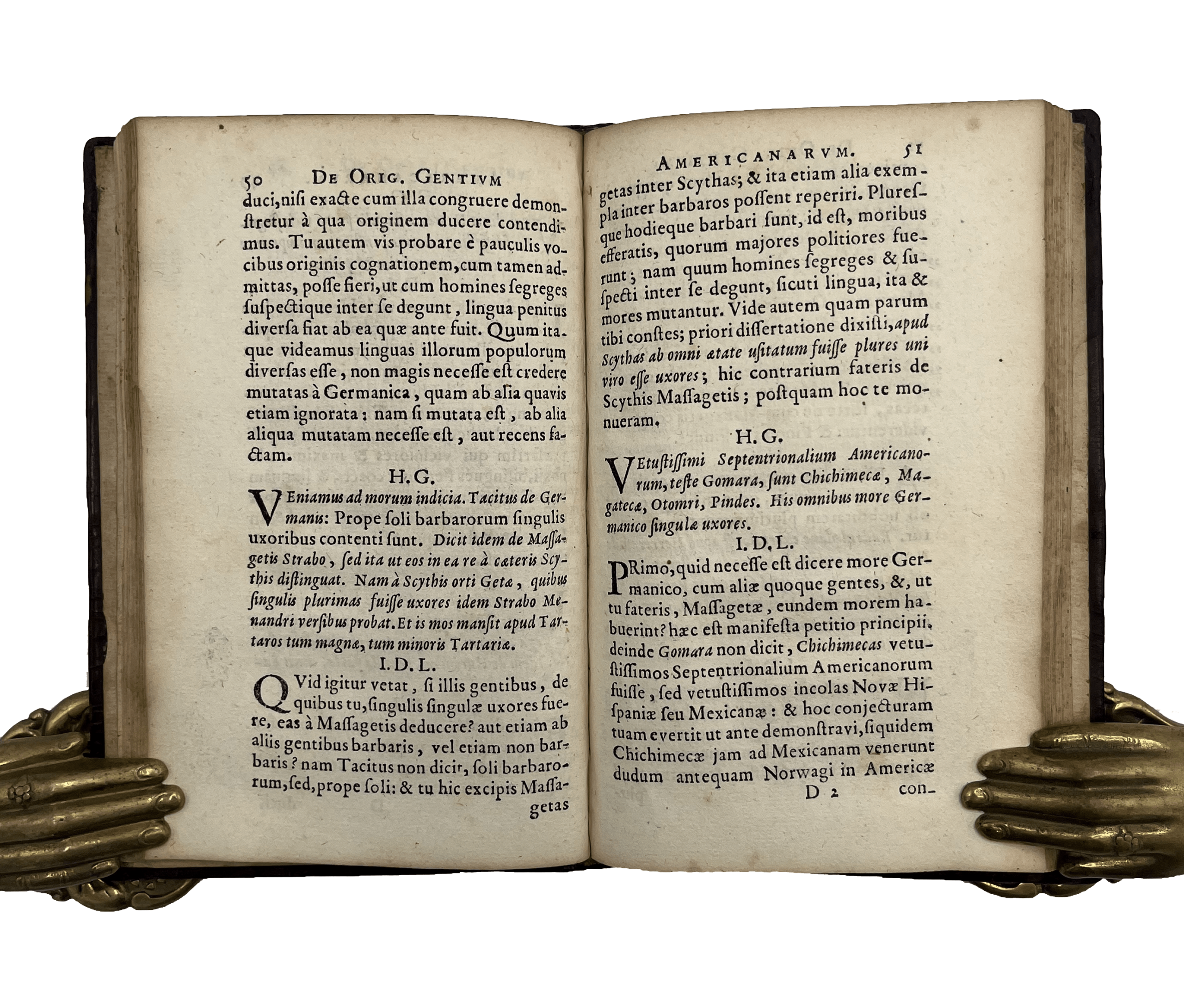
Laet’s ‘Responsio’ was part of a longer debate between himself, Hugo Grotius, and other European intellectuals, concerning the origin of the indigenous peoples of the New World. The traditional theory of their Central Asian Scythian descent was criticised for the first time by Grotius in ‘De Origine Gentium Americanorum’ (1642), where he suggested that North American peoples originated in Norway, Yucatan people in Ethiopia, and South American peoples in China. The controversy that sparked led to Laet’s publication of a response to Grotius in 1643, where he tackled the key issues – who could have travelled to the New World in the past, and how – concluding in favour of the Scythian theory for North and South America, that the Canaries and Africa could have provided useful intermediate stations for these migrations. Grotius replied in his ‘Dissertatio altera’ (1643), mainly with personal attacks on Laet’s historiographic and scholarly capabilities; in 1644, Laet published the present ‘Responsio’. Each chapter includes a quotation from Grotius, followed by Laet’s reply. Laet discusses dozens of issues, such as Columbus’ knowledge of Dominica from Mercator’s map, theories proposed by travellers like Lescarbot, the origins of Greenlanders and the Norwegian language, migrations to Mexico, apparent similarities between the Huron and Norwegian languages, the discovery and habitation of Brazil, and the relationship between the Peruvian and Chinese languages, among many others. Laet wrote no more on the subject after ‘Responsio’, which however elicited other treatises by Georg Horn, J.-B. Poisson and Robert Comte. A most interesting witness to early ethnographic studies.
Willems 1007; Alden 2/317; USTC 1031905; Sabin 38562: mentions ‘New-Netherland\\\\\\\'.In stock