
BENZONI, Girolamo
EARLIEST AMERICANUM BY A NON-SPANISH AUTHOR

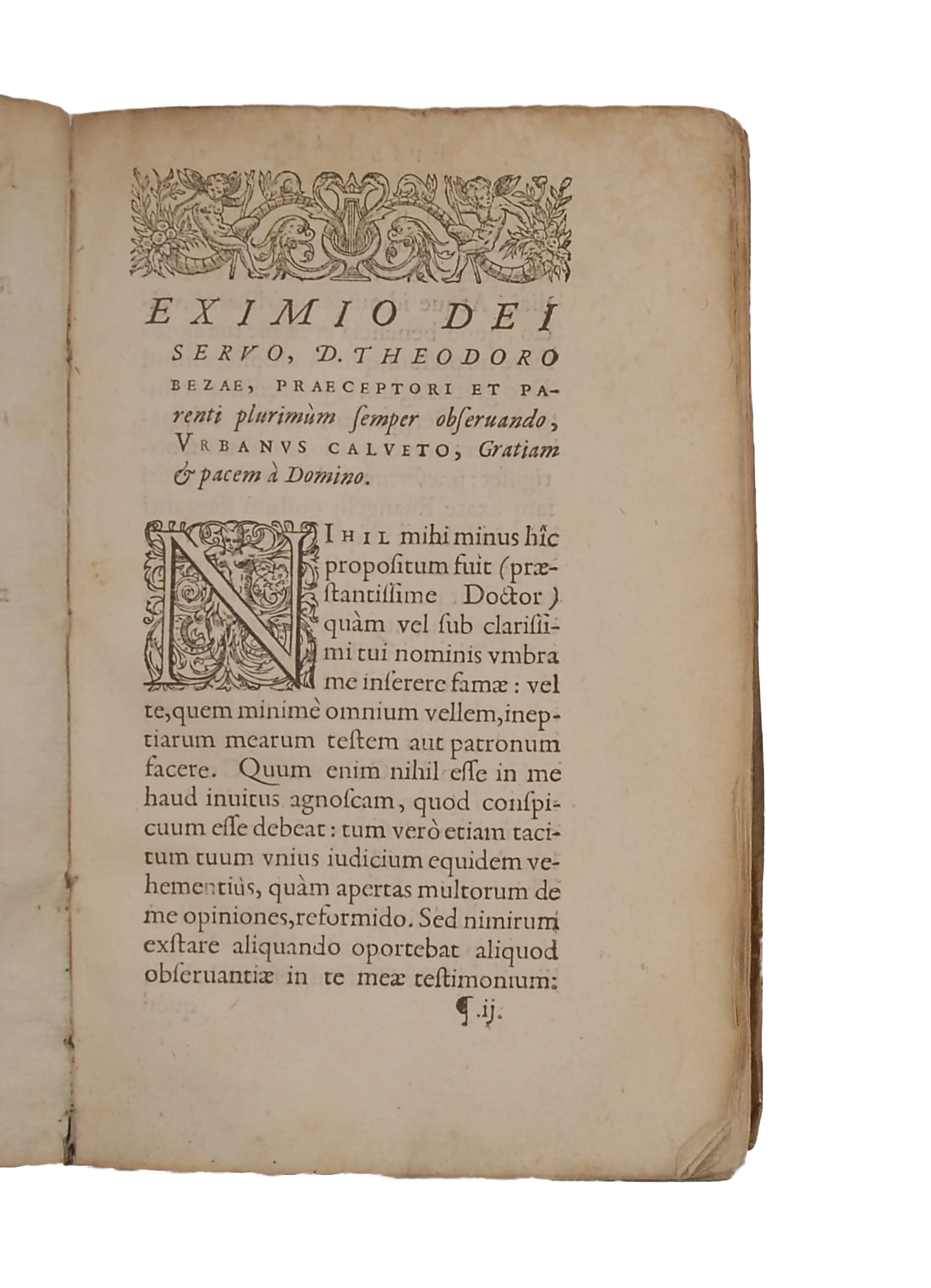

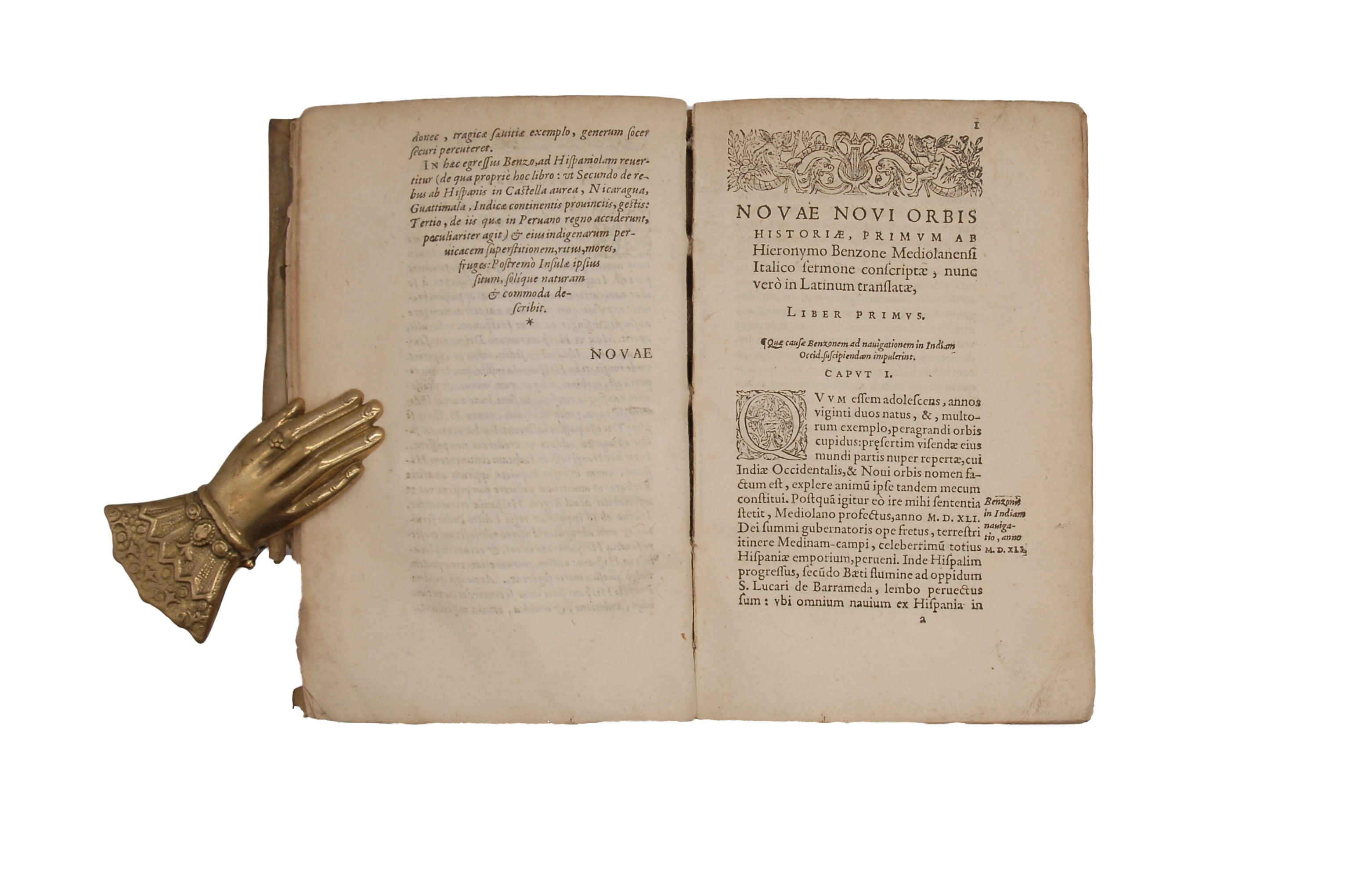
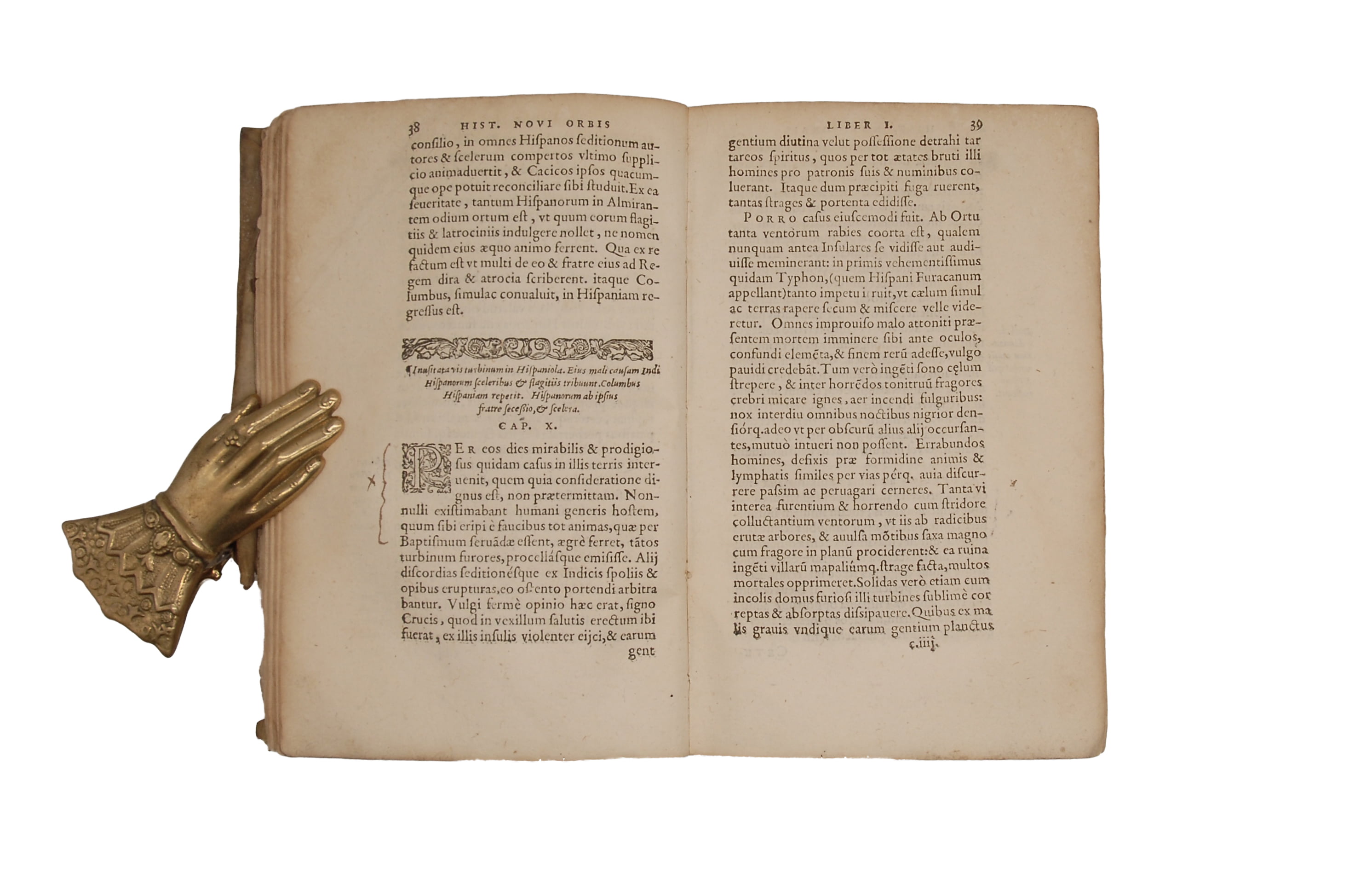
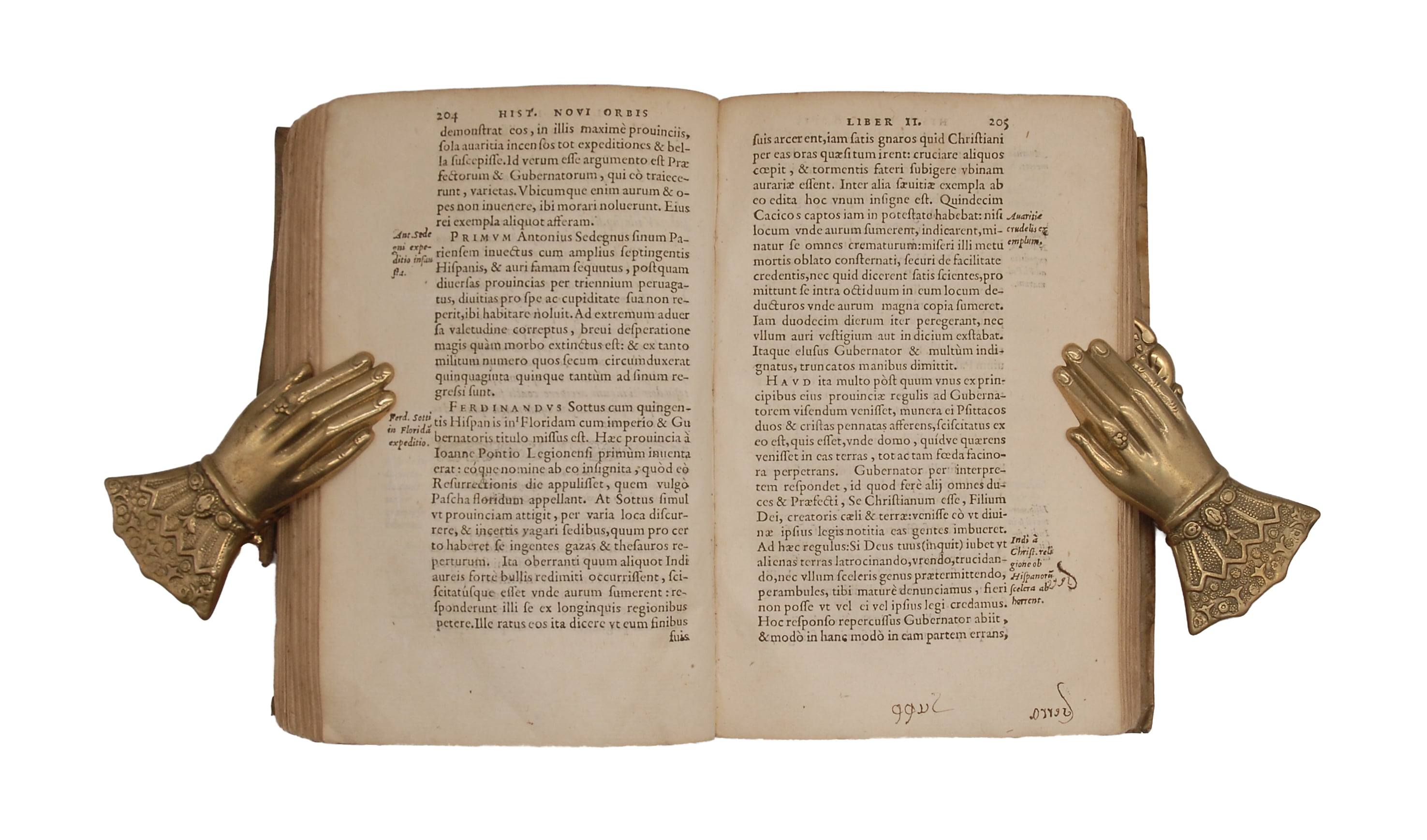

Novae novi orbis historiae
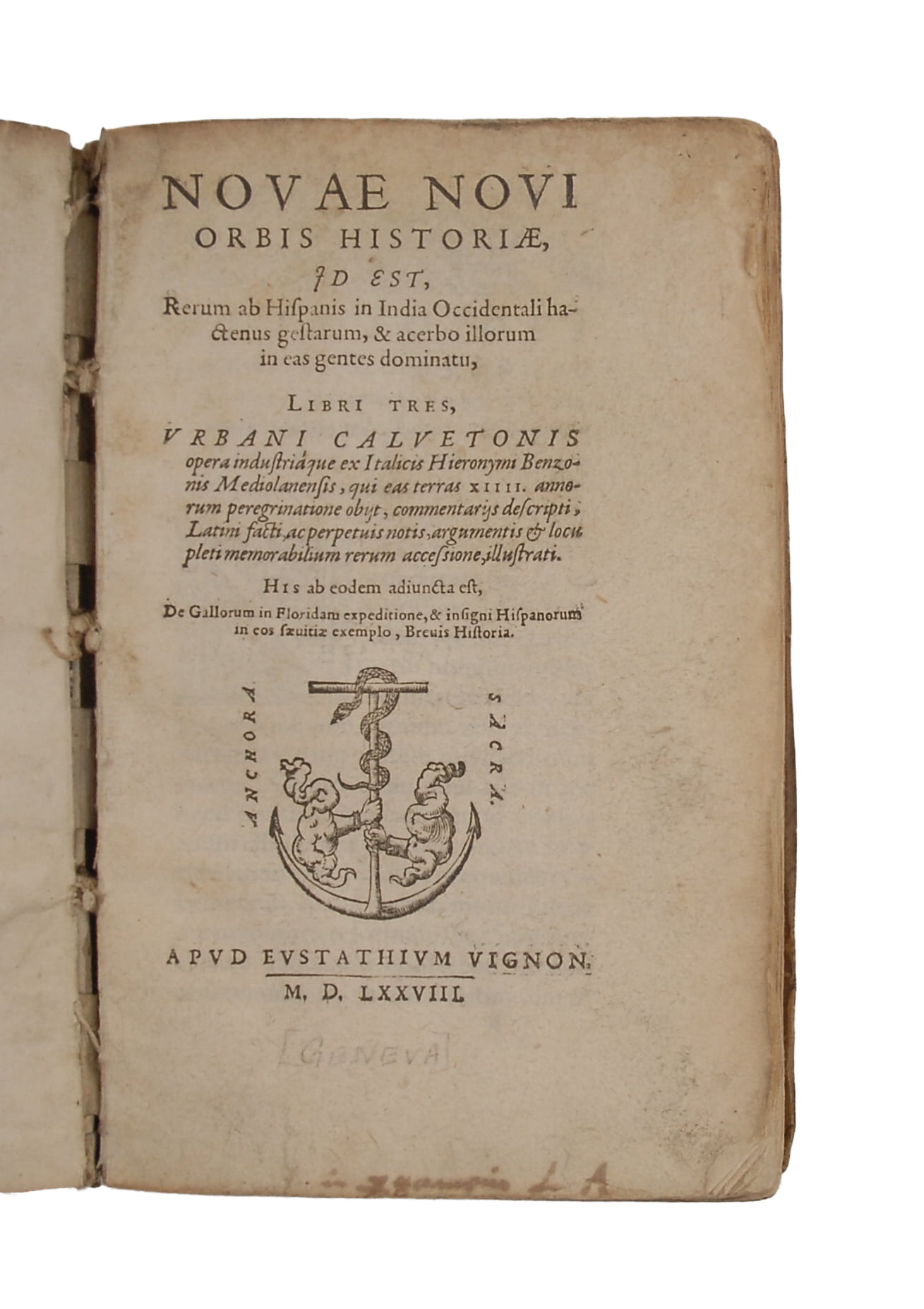
[Geneva], E. Vignon, 1578£3,850.00
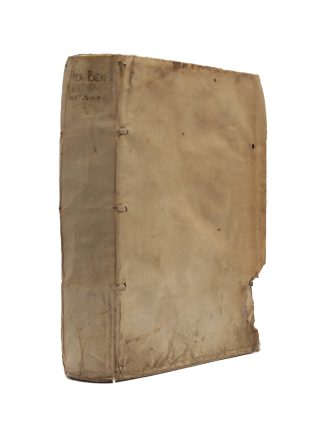
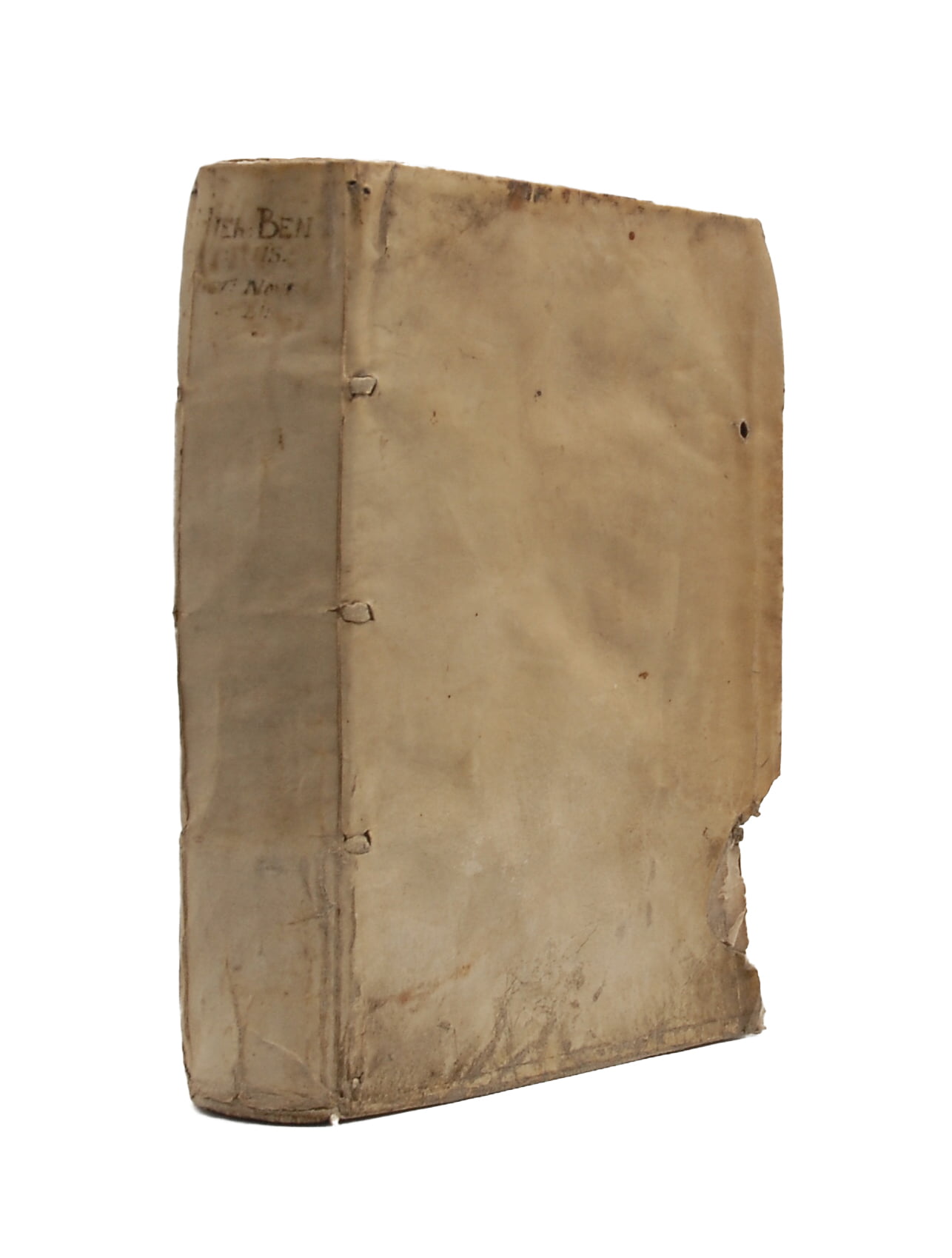
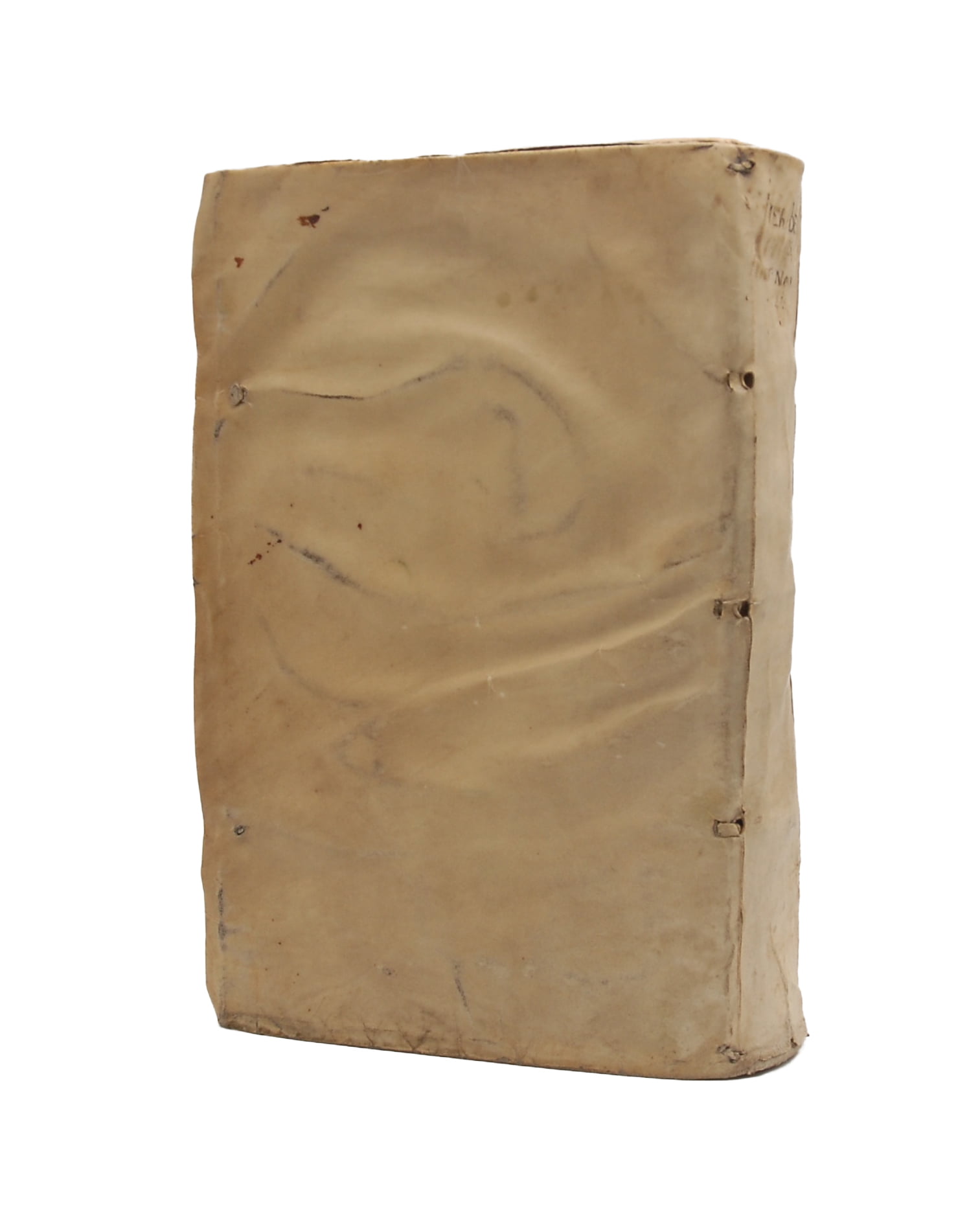
FIRST LATIN EDITION. 8vo. 2 parts in 1, second with half-title, ff. (xxxii) 480 (xii), variant issue without final H7 (emendatio) and H8 (blank). Roman letter, little Italic. Woodcut printer’s device to t-p, decorated initials and ornaments. Edges of first two gatherings a bit softened, elsewhere somewhat dusty, slight age yellowing, very occasional marginal spotting, small tear from lower blank margin of Q4 just touching signature, very faint water stain to foot of E-H in places. A good, clean copy in contemporary limp vellum, traces of ties, printed paper waste used as pastedown, title inked to spine, outer edge of upper cover chewed, occasional contemporary marginalia.
A good copy of the first Latin edition of this major Americanum—the first account of the New World based on the personal experience of a non-Spanish author. A mysterious figure, the Milanese Girolamo Benzoni (1519-72) travelled to Sanlúcar de Barrameda in Spain to join expeditions in the New World; he spent the years 1541-56 visiting the Caribbean, Central and South America, though the reasons are unknown. In 1565, upon his return to Italy, he published ‘Historia del Mondo Nuovo’, the first edition of this successful account of his adventures; in the following decades it was translated into English, French, German and, the present, Latin. It was unsurprisingly not translated into Castilian as the work was accused of being anti-Spanish and adverse to their colonisation methods. In particular, it presented them, following traditional stereotypes, as cruel, greedy and impious conquerors of the meek and frugal Indians. Unlike earlier travel writings, Benzoni did not just focus ‘on “exotic” items…marvellous or strikingly out of the ordinary’; he was interested instead in phenomena which diverged from what was known in Europe (Enders, ‘An Italian’, 27). One of these is the Indians’ habit of smoking ‘petum’ (‘tabacum’ in the original Italian), the making of which he describes at length and which he characterises as a ‘pestiferous and evil poison’; this detail, and the fact that Indians were ‘stupefied’ by it, has convinced several botanists that what he saw was not the smoking of what we now call tobacco. The contemporary annotator of this copy highlighted Benzoni’s anti-Spanish stance by glossing a passage on the conquistadores’ gory and vicious deeds as ‘the summary of [Benzoni’s] work or books’, and added to another that ‘to convert to Christianity good exempla not violence are needed’. He also underlined passages on unhealthy climate and ‘vapours’. An important work on the European reception of the discovery of the New World.
As highlighted by Sabin, the collation of this edition is variable as some copies are recorded without the final index; or lack the final errata and/or blank, as present.
Sabin 4792 (highlights differences in collation); Adams B685; Alden 578/3; JFB B198. A. Enders and E. Fraser, ‘An Italian in the New World’, Dispositio 17 (1992), 21-35.In stock