
CERVANTES SAAVEDRA, Miguel
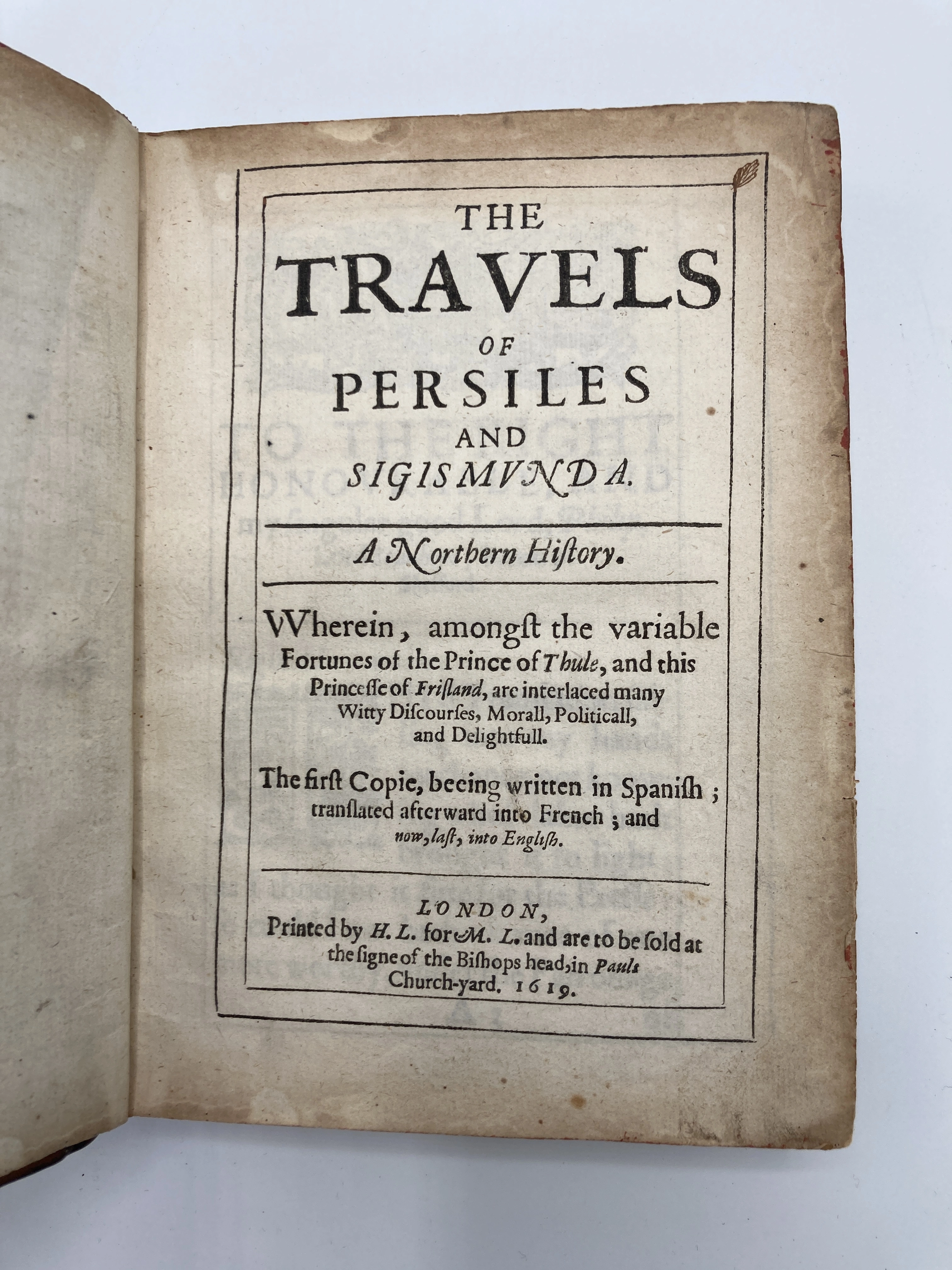
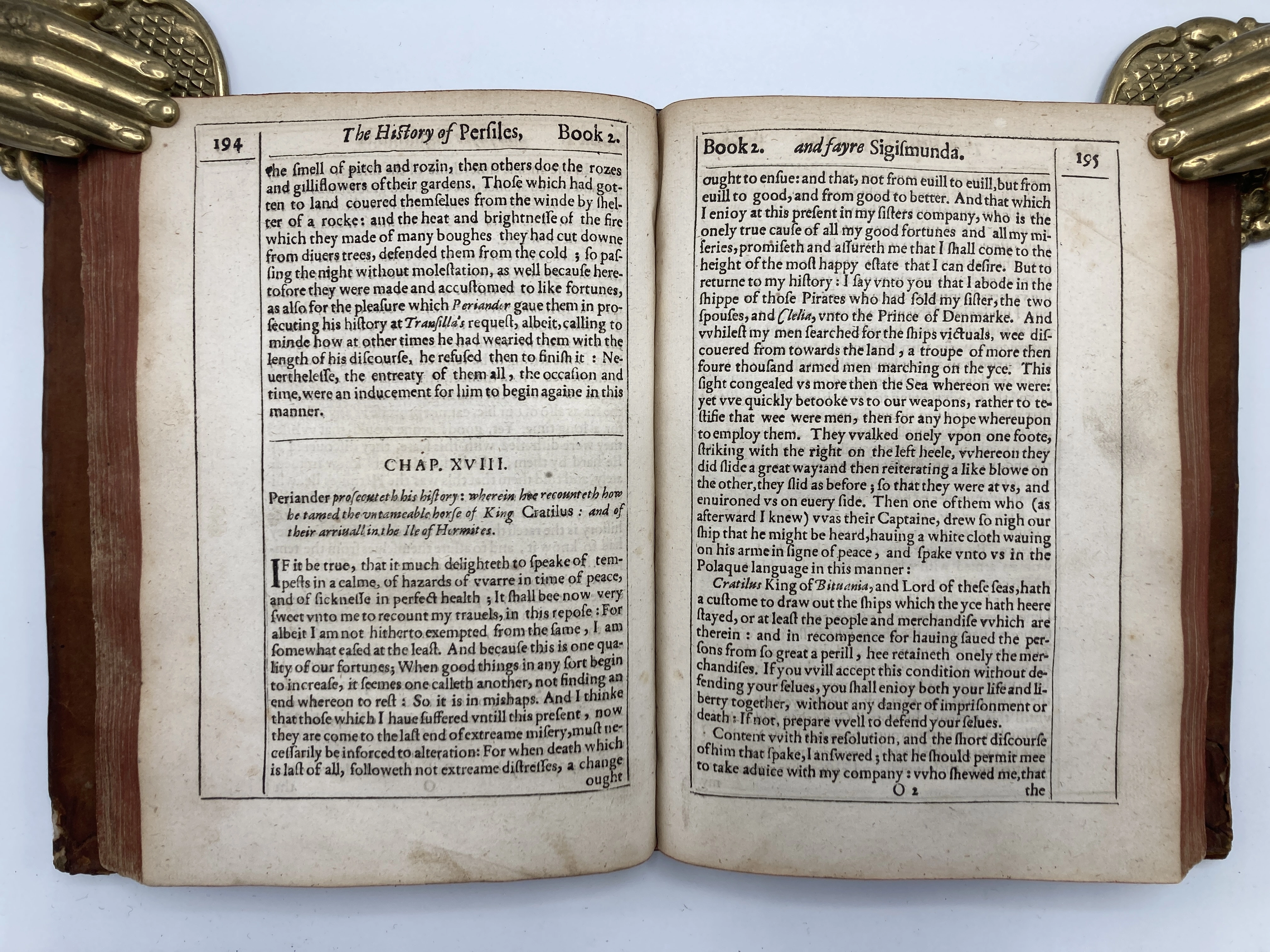
The Travels of Persiles and Sigismunda.
London, Humphrey Lownes, 1619.£35,000.00
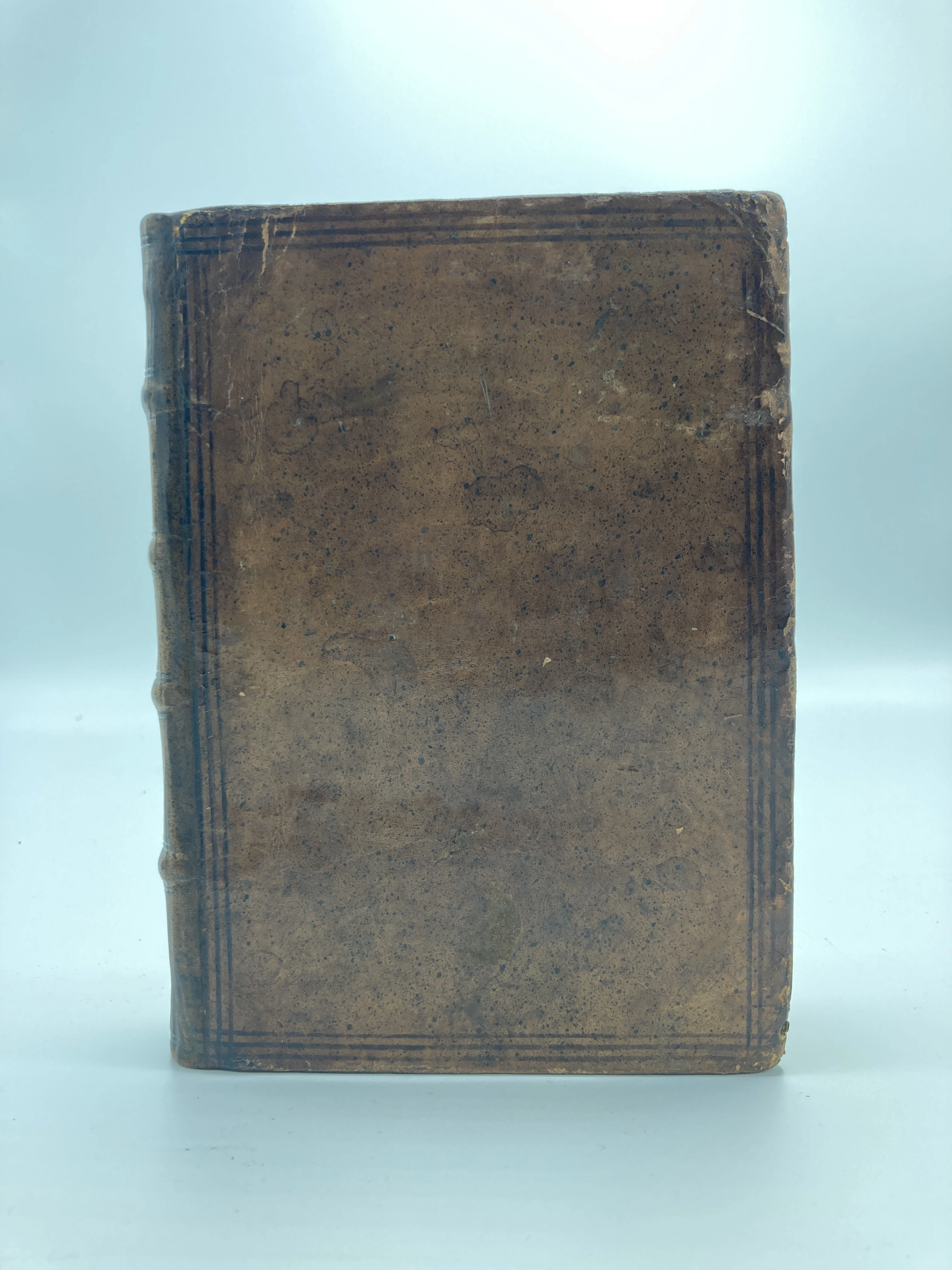
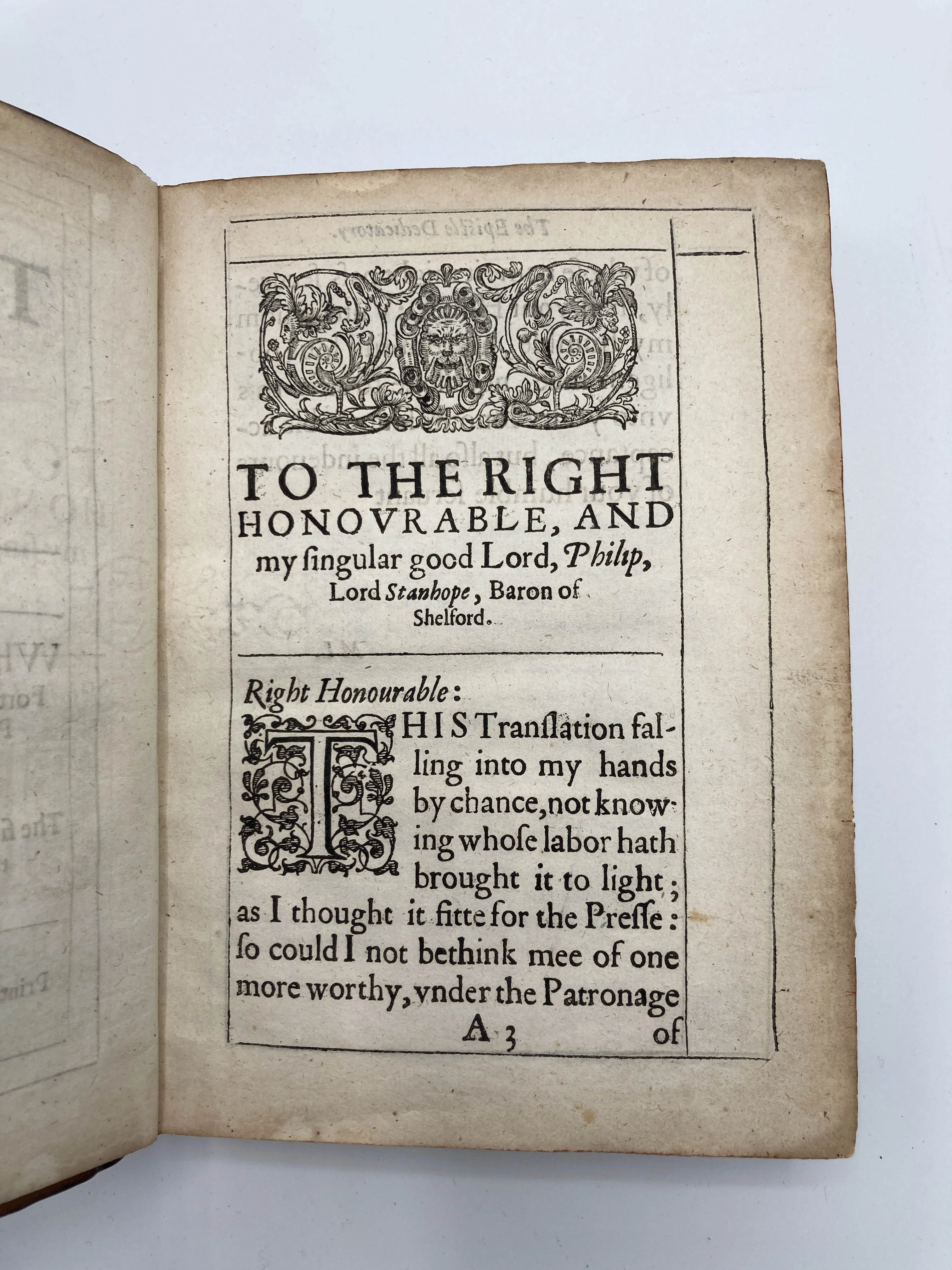
FIRST EDITION THUS. 4to. pp. [6] 399 [1]. Roman letter, little italic. Woodcut ornaments and historiated initials at beginning of each book, dedication, and preface. Text within ruled borders, acquisition note to inner upper cover ‘1874 Leamington, Simmons’ and bookplate of Kenneth Rapoport, various mss. scribbles to verso of final ep. Lightly age yellowed, very occasional marginal spot or mark, upper margin of t-p and dedication darkened, edges a little scuffed. Good, clean copy in contemporary English speckled calf, very ably rebacked, a.e.r.
The first English version of Cervantes’ (1547-1616) final work, by an anonymous translator. ‘The French version from which the English was made was that of V. d’Audiguier, first published in 1618’. It is his final oeuvre, published posthumously in January 1617, completed only three days before the legendary author’s death. Cervantes regarded it as his magnum opus, writing in his Exemplary Tales that it ‘dared to compete with Heliodorus’. The antithesis of the more renowned and witty satire ‘Don Quixote’, this work combines the romantic with the picaresque, and Christianises the genre of the Byzantine novel, which often featured travels around the Mediterranean. The Nordic nobles travel to Rome to get married, changing their names to Periandro and Auristela. They overcome a range of obstacles and travel the length of Italy, meeting pirates and robbers, taking part in duels, attending a masquerade ball in Venice and festival in Rome. Eventually, freed from captivity at the hands of pirates, they escape to Cadiz, where they marry.
This epic swashbuckling story reflects many real episodes in Cervantes’ own life. He left Madrid in 1569, following a warrant for his arrest after he wounded Antonio de Sigura in a duel. Arriving in Rome, he served Cardinal Acquaviva. Much of his life was spent in the navy and he was sent to fight at the Battle of Lepanto in 1571, which aimed to contain the Ottoman advance into Western Europe, where he was seriously wounded, losing use of his left arm. Further, he suffered capture by Barbary pirates around 1575 and was held for ransom for 5 years, liberated by the Trinitarians, a Christian group who freed Christian slaves from North African imprisonment. He returned to Madrid in 1606 as a tax collector and later became a member of the Franciscan Third Order.
ESTC: S107935; Lowndes II 402; Rius: 1012; A.F. Allison ‘English translations from the Spanish and Portuguese to the year 1700’ 36.In stock