

BOCANEGRA, Juan Pérez.
FIRST VOCAL POLYPHONY PRINTED IN THE NEW WORLD
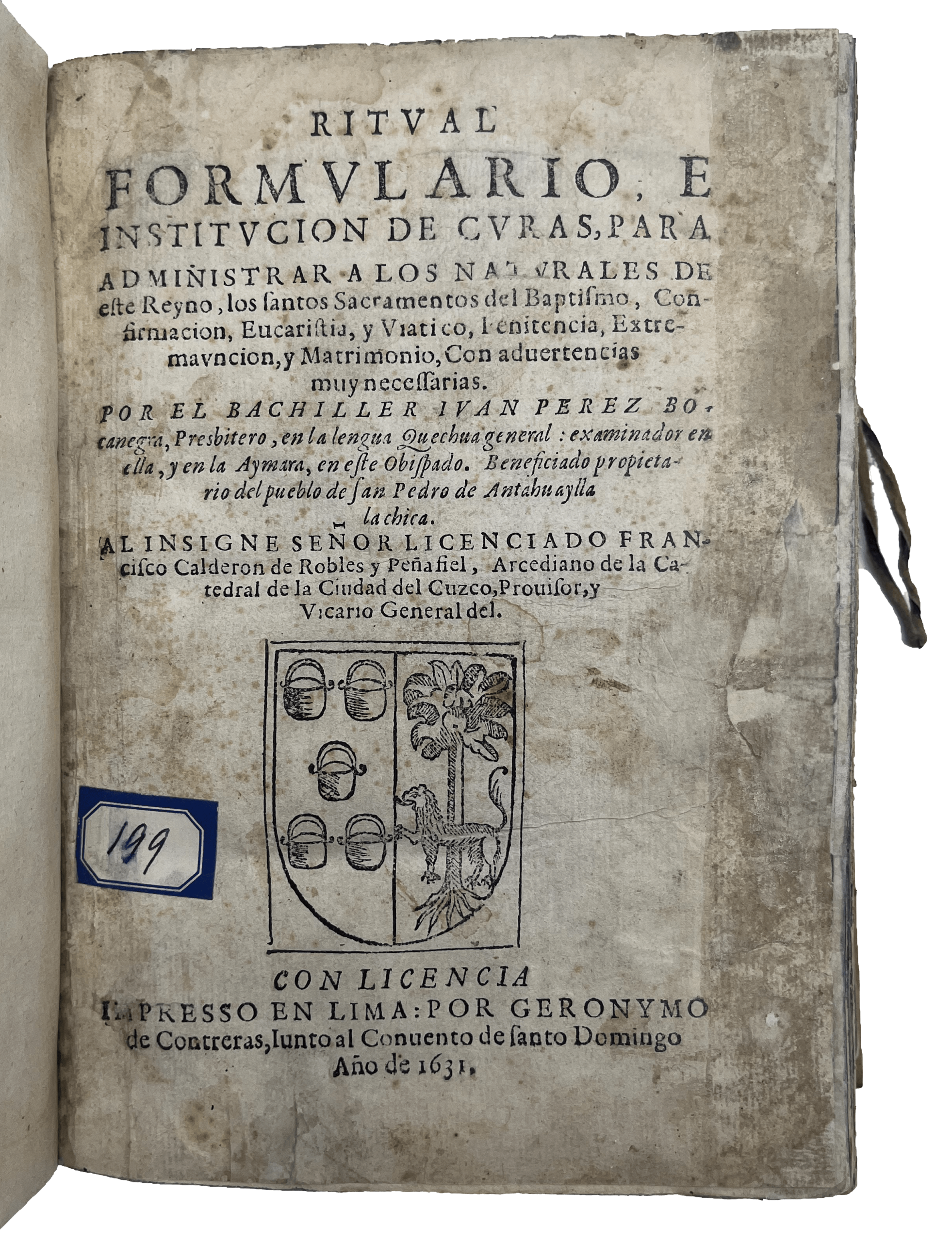
Ritual formulario, e institucion de curas.
Lima, por Geronymo de Contreras, 1631.£17,500.00
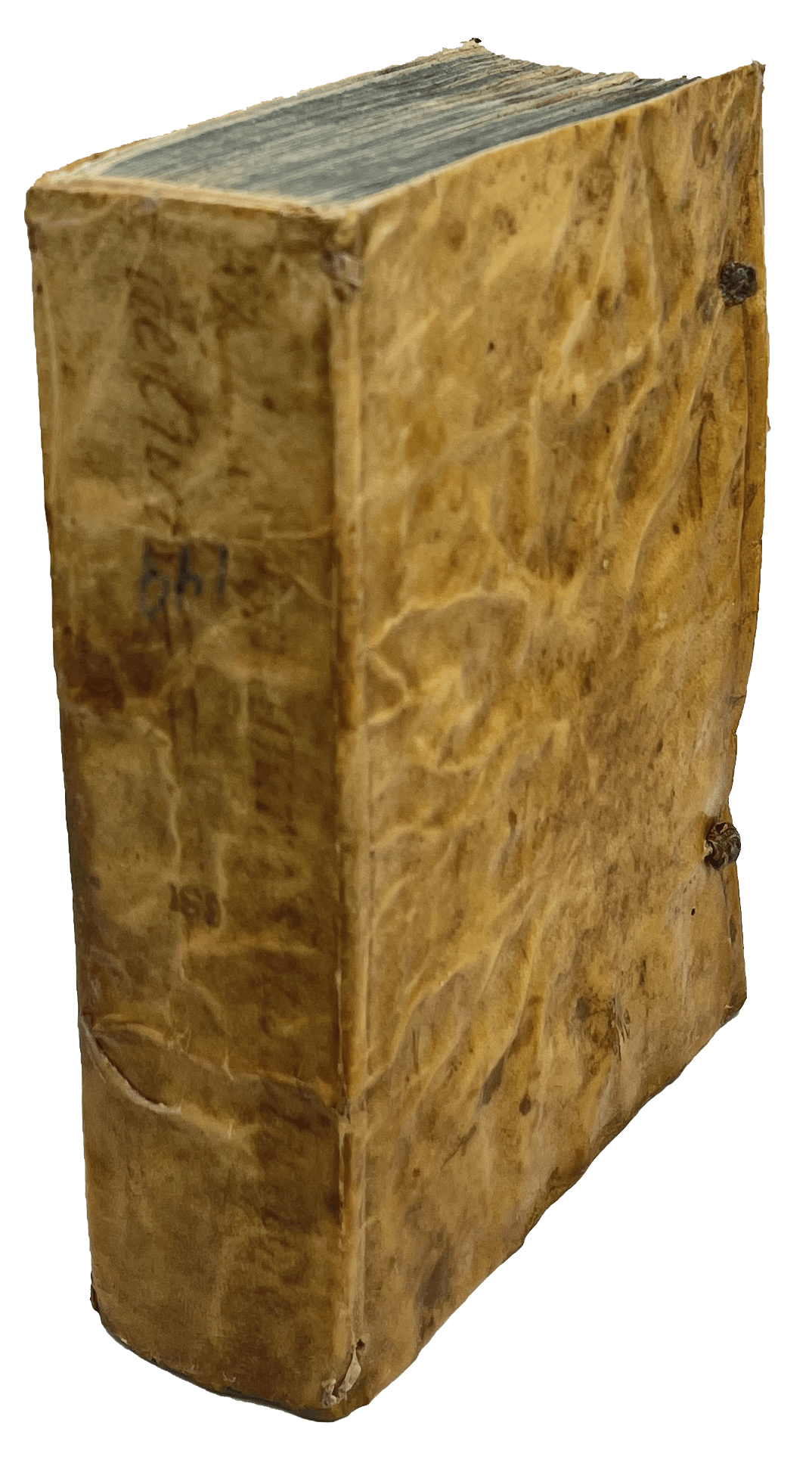
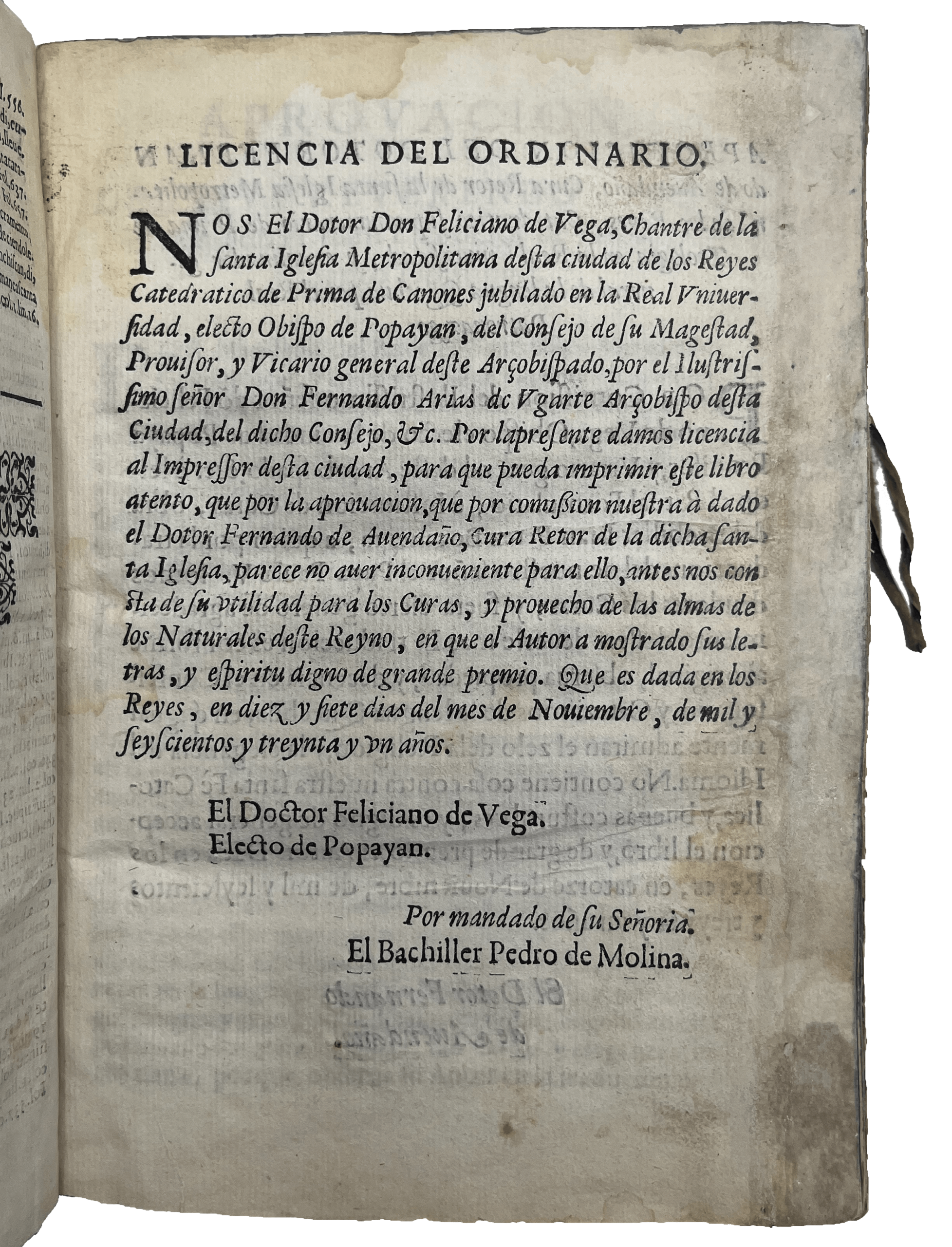
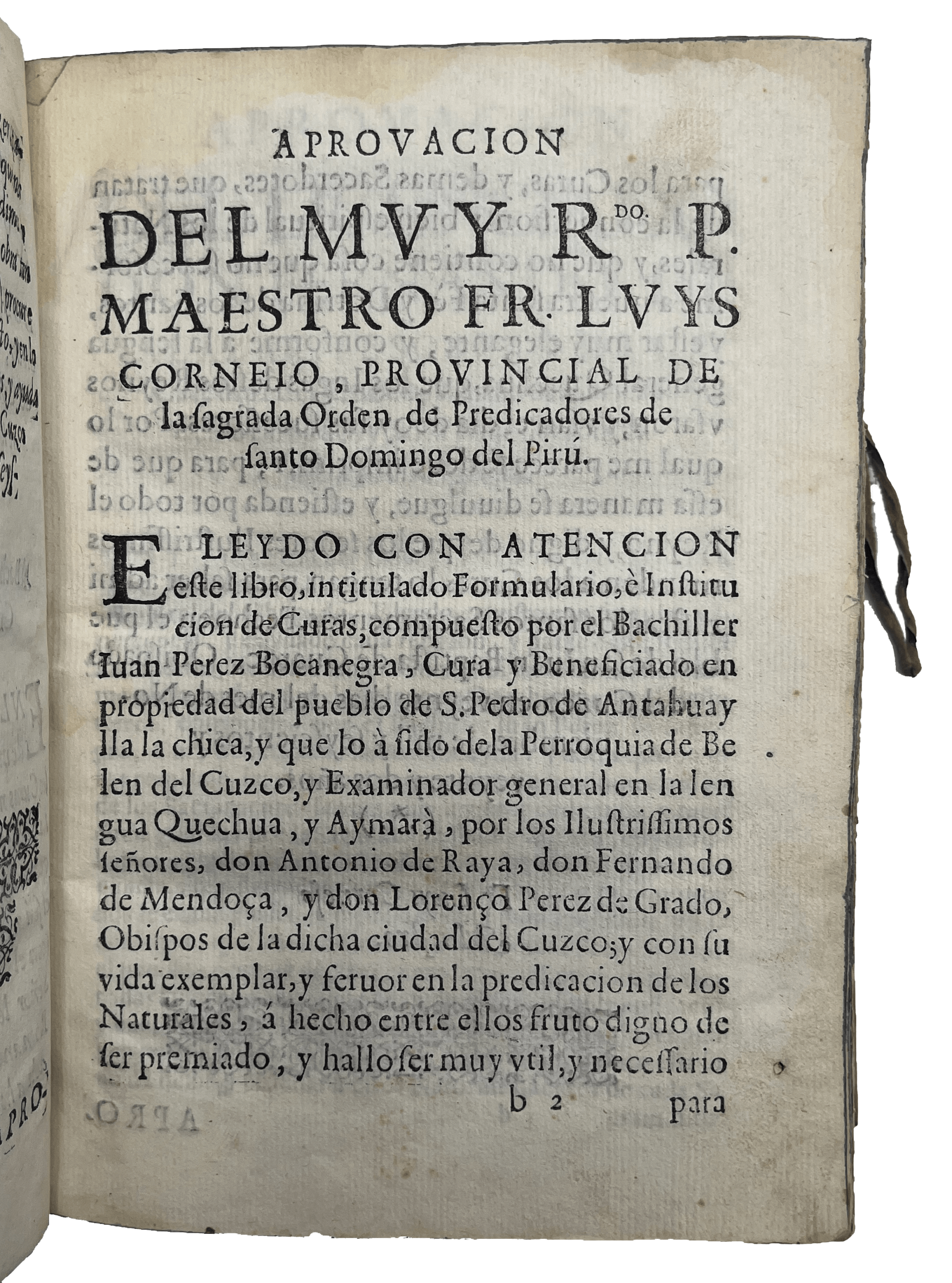
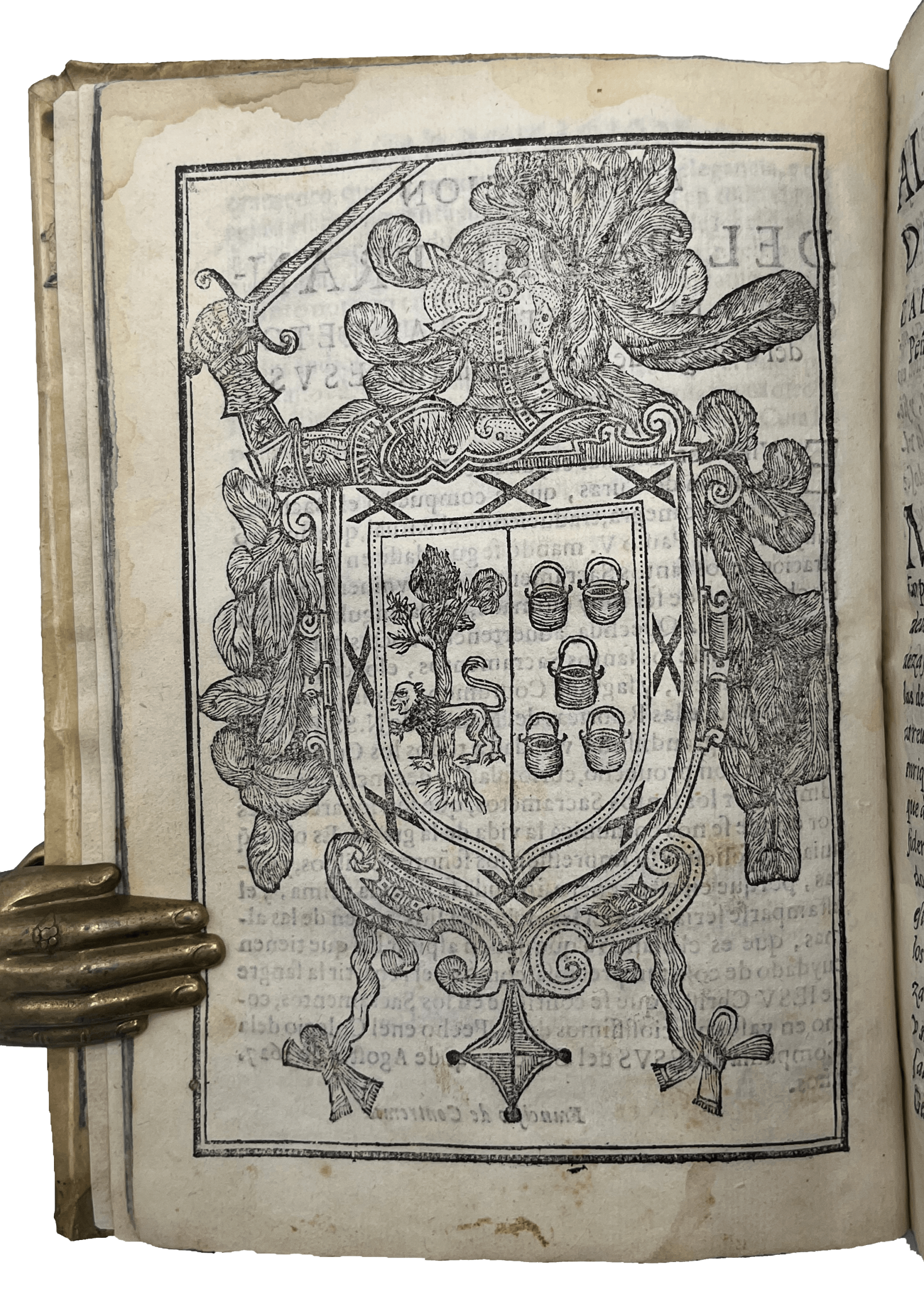
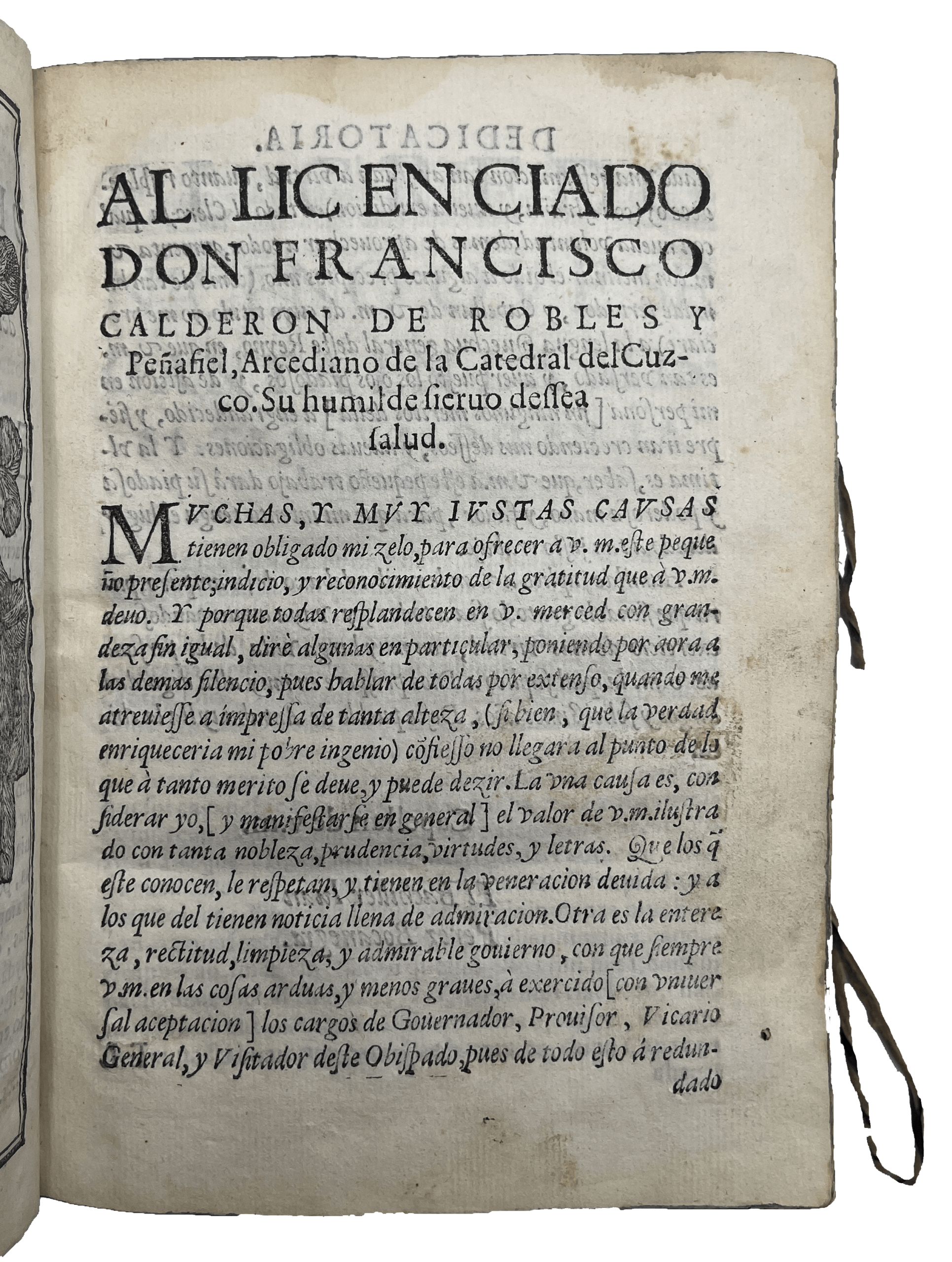
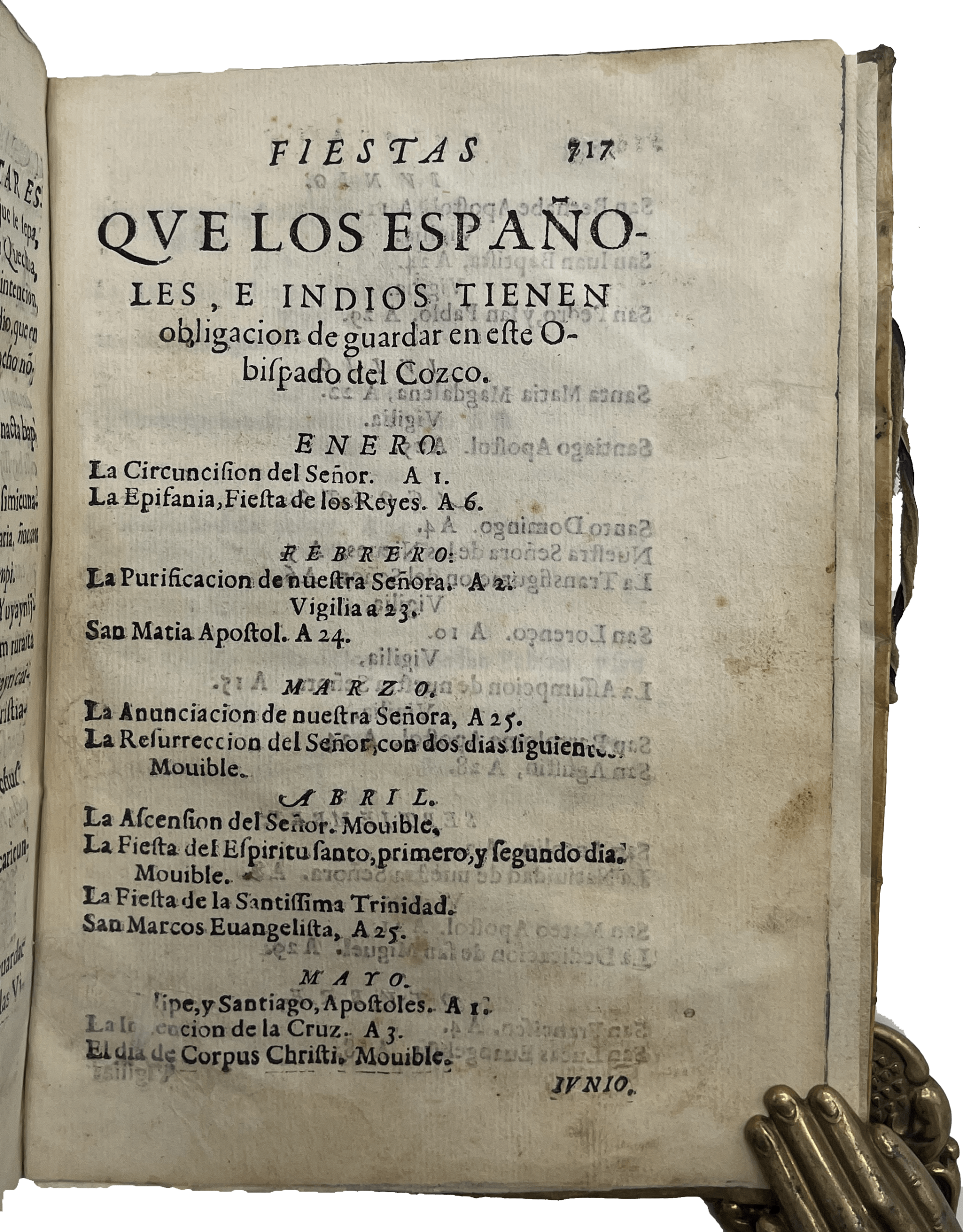
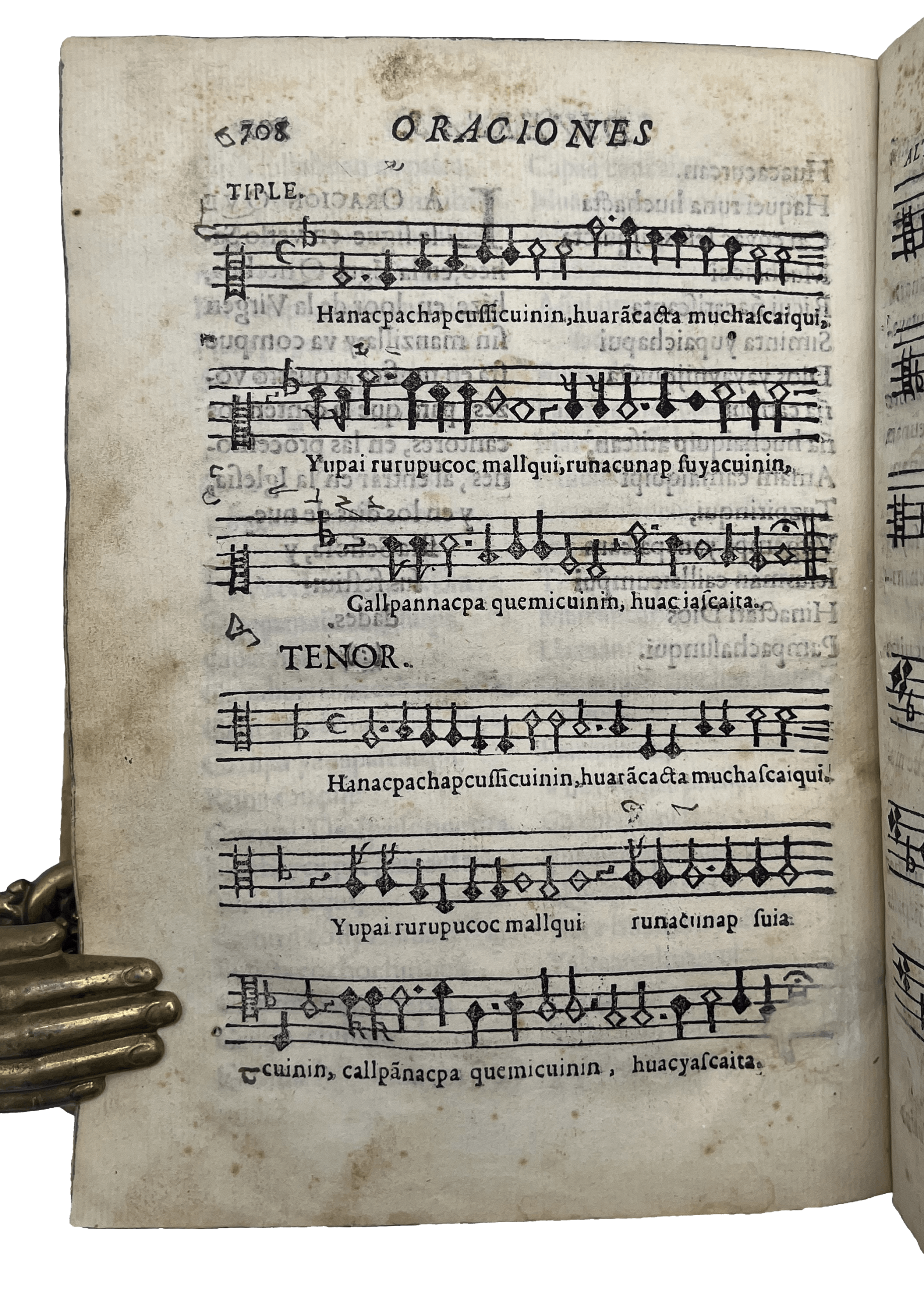
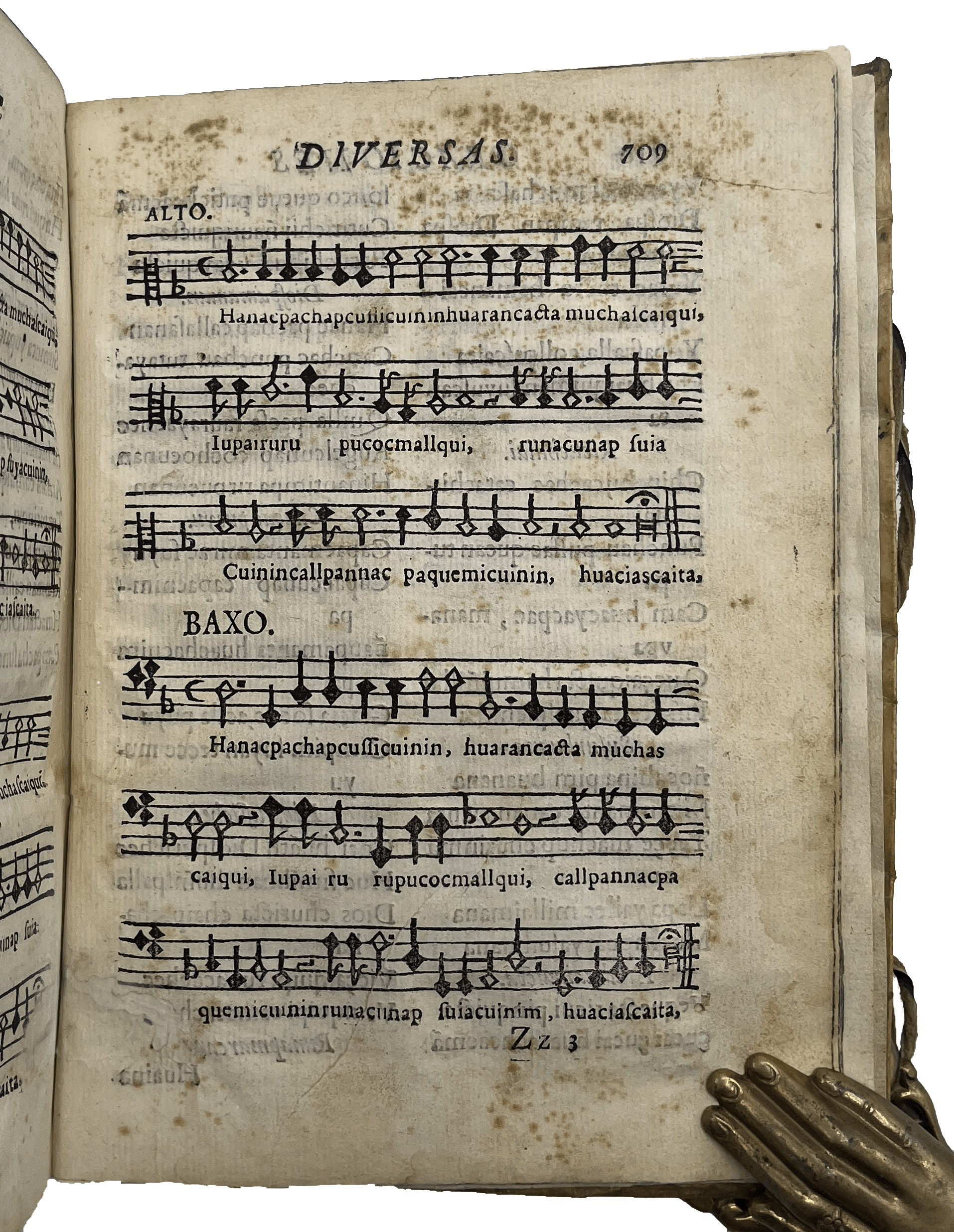
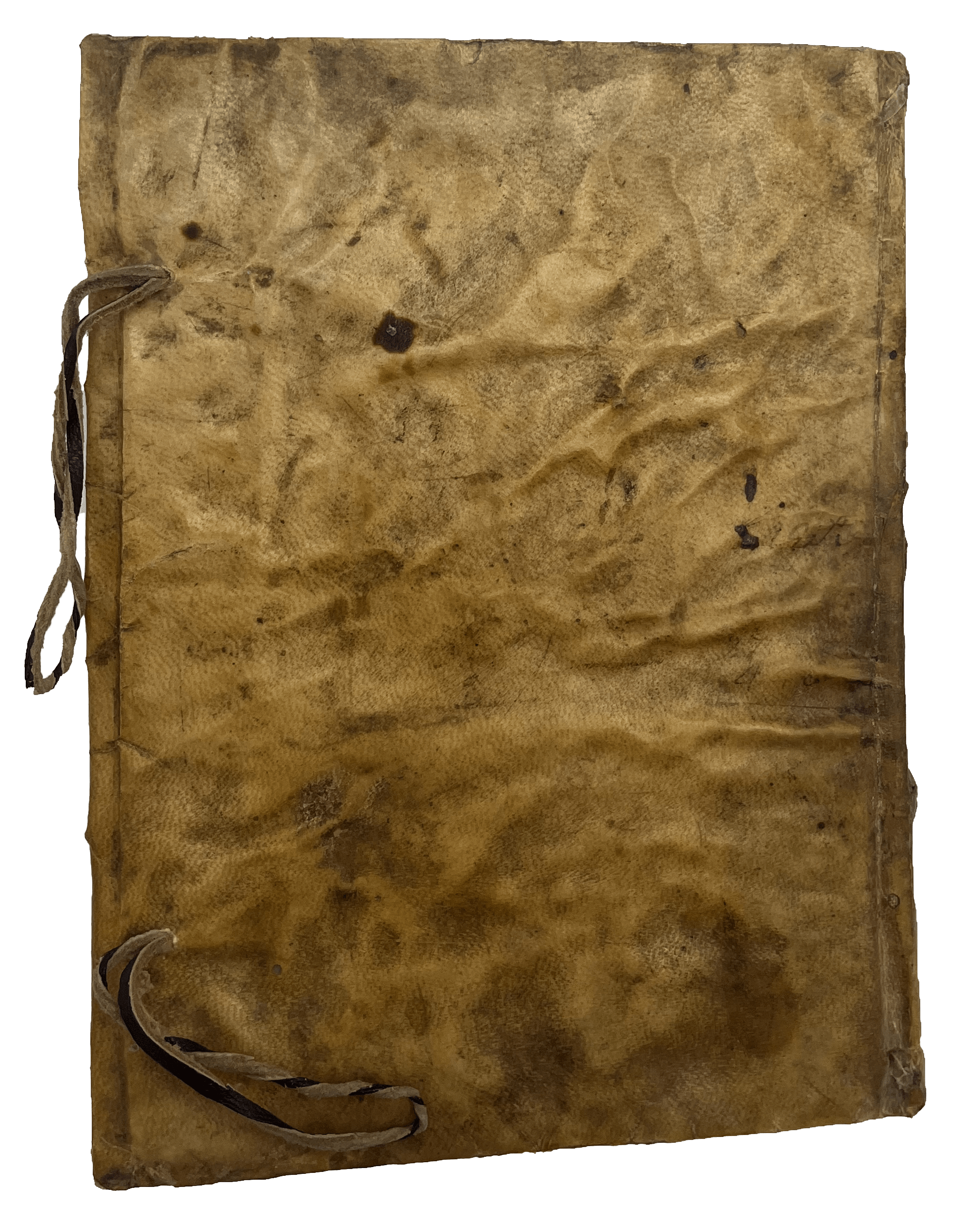
FIRST EDITION. 4to. pp. (xxxii) 720. Roman letter, double column. Woodcut arms of Don Francesco Calderόn de Robles to t-p, apparently reversed in error, full-page woodcut arms of Robles to b4v. 2 pp. of woodcut music in four vocal parts to rear, with a few contemp. pen trials. Typographical tailpieces. T-p restored to head and foot of gutter, just touching one letter, outer margins of first quire restored. Small marginal tear to E6 not affecting text. Wormtrack to outer blank outer margin, just touching one or two letters. Tiny wormhole to lower gutter Ss4-Yy7, little worming to lower gutter Yy7, repaired to next 9 ll. (to end), affecting the occasional letter and end of one stave of music but not obscuring, and one or two words last two ll. Occasional little waterstain to blank upper margin, slight intermittent marginal foxing, the odd ink mark. A good copy recased in original vellum, ties, soiled, edges stained blue, remains of marca del fuego visible to lower edge (heart)? Small C19 or C20 label to t-p.
Rare first edition of this guide to the ritual of the Catholic church in Lima in Spanish and Quechua, the Indigenous Peruvian language, with ‘the first piece of vocal, polyphony printed in any New World book,’ the Quechua hymn to the Virgin Mary, Hanaq pachap kusikuynin, in four voice parts, composed sometime before 1622 (Robert Stevenson, Music in in Aztec & Inca Territory (Berkeley: 1968), p. 280). Plainchant notation had been printed in Mexico as early as 1556, anticipating by 142 years the publication of the 1698 edition of the Bay Psalm Book, the first book published in North America to contain printed music, but only monophonic bass parts. The first Quechua texts were printed around 1584-85, by the first printing press in Lima by the Jesuits in 1581.
Juan Pérez Bocanegra (d. 1645) was a Spanish Franciscan who became expert in the Indigenous languages and culture of Peru. He taught Latin in Lima before moving to Cusco, where he served as cantor at the Cathedral of Santo Domingo, before becoming a parish priest in Andahuaylillas, where he commissioned extravagant baroque decorations for the church. When this manual was published, the Jesuits controlled his parish, and he crucially disagreed with them over doctrinal questions such as whether entire Indigenous communities should be confessed, as well as over translation into Quechua. The Jesuits preferred Spanish loan words that would avoid doctrinal confusion, while Bocanegra was sensitive to the Andean context, for example choosing to translate Dios into the name of the sacred mountain Huanacari. He possibly sought to avoid detection by preventing his Quechua and Spanish translations from aligning perfectly, providing simple Spanish paraphrases, or no Spanish translation at all (see Bruce Mannheim, ‘A Nation Surrounded’ in Native Traditions in the Postconquest World (Dumbarton Oaks: 1998), p. 392).
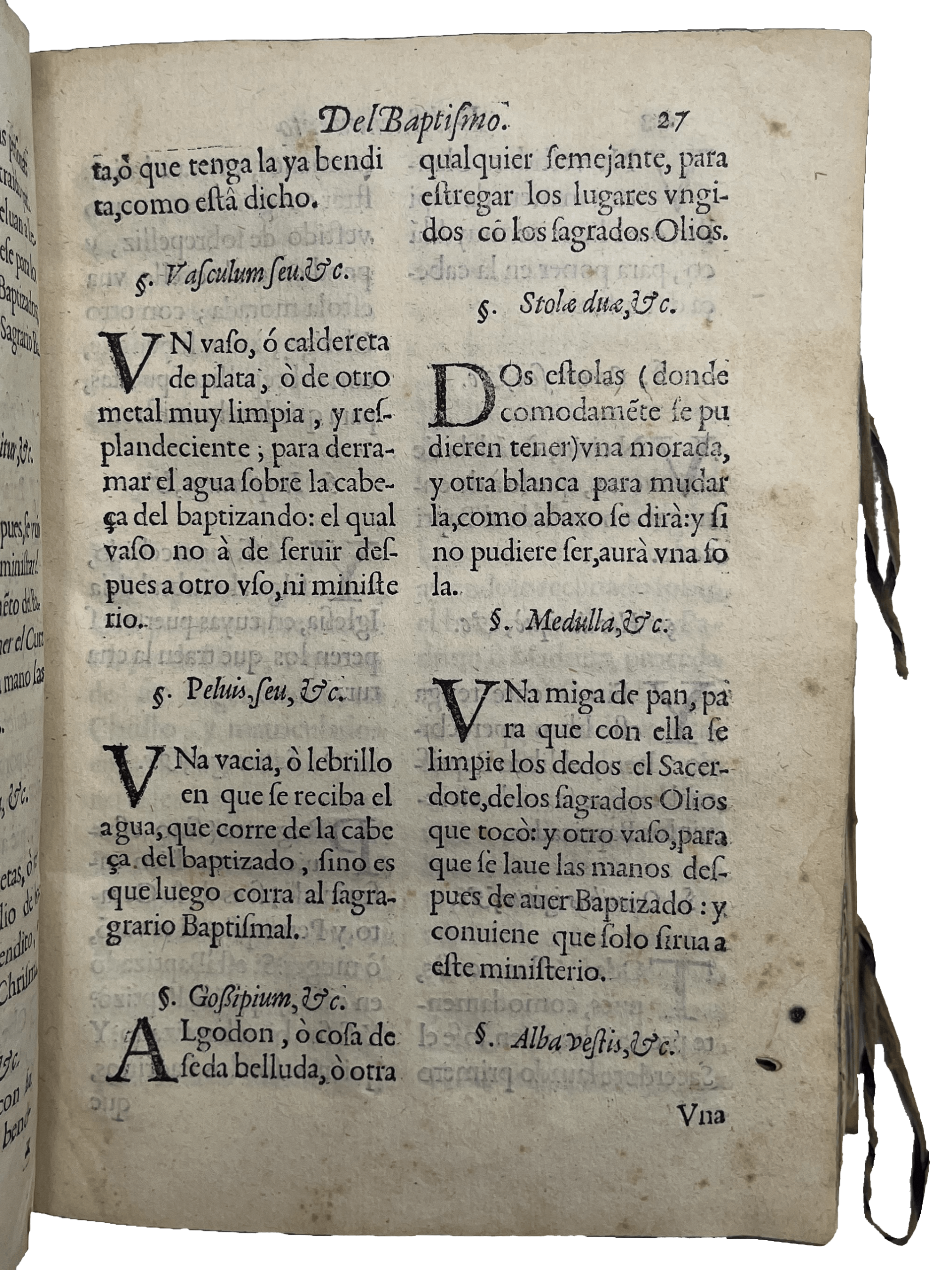
The manual includes prefatory Latin poetry and a sonnet in Quechua, the Nicaean creed in Quechua, and the forms for the sacraments in parallel Quechua and Spanish: baptism; confirmation; penitence, with forms of confession for different sins including luxury, envy, etc., and against those who do not pay debts, commit incest, etc.; the Eucharist, including masses for Easter and the dead; extreme unction; and marriage. There follow forms for writing parish records, a brief catechism of Catholic doctrine in Quechua, prayers and hymns in Quechua, with the printed music, and a calendar of festival days.
‘This rare volume … is not noticed by Brunet, Ternaux, or Ludwig’ (Sabin).
Medina I, 151. Sabin II, 6096. Palau XIII, 219847.In stock