

Description
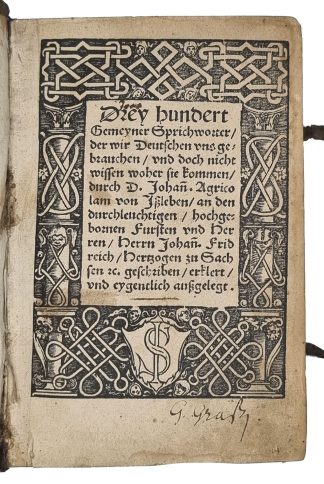
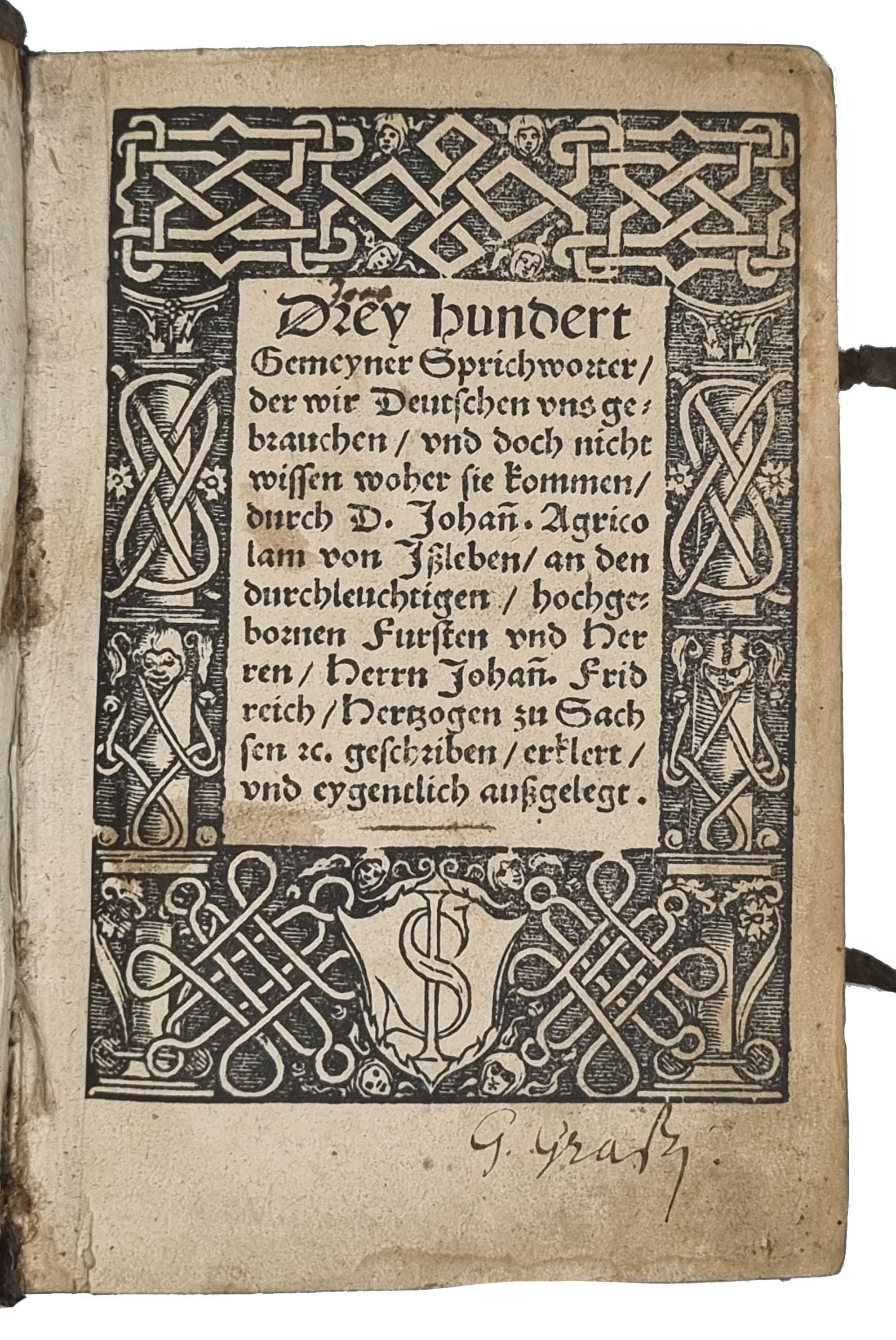
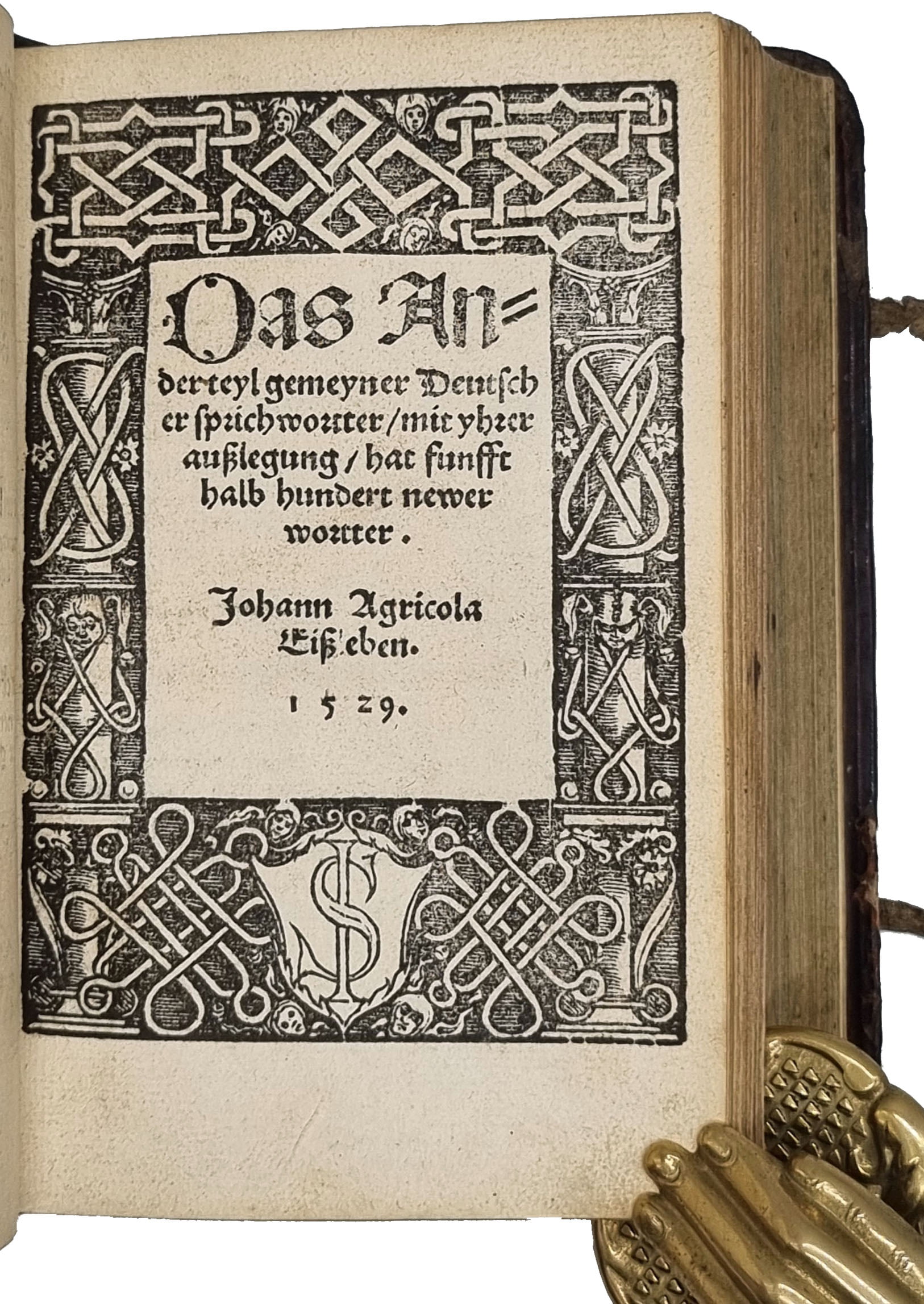
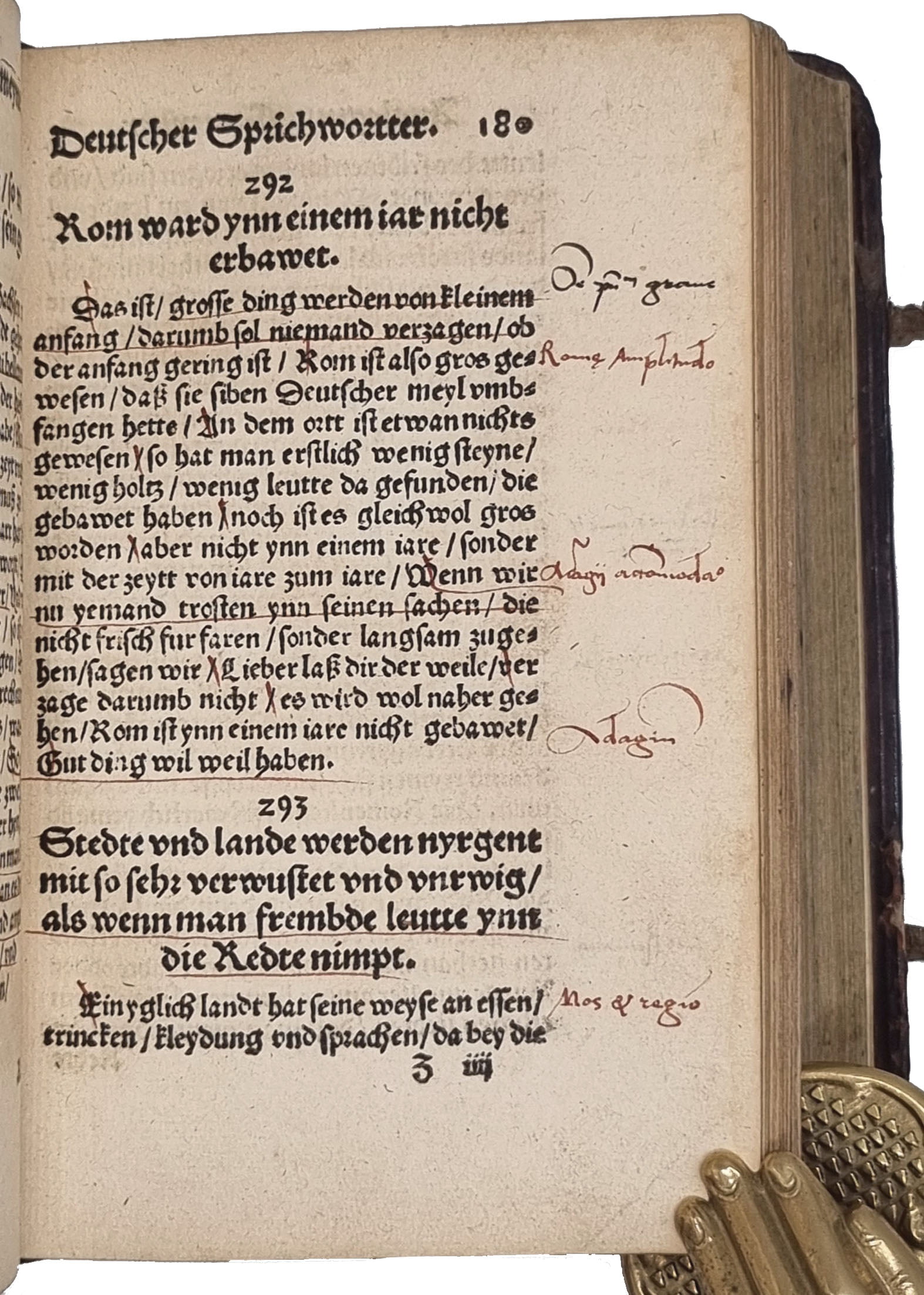
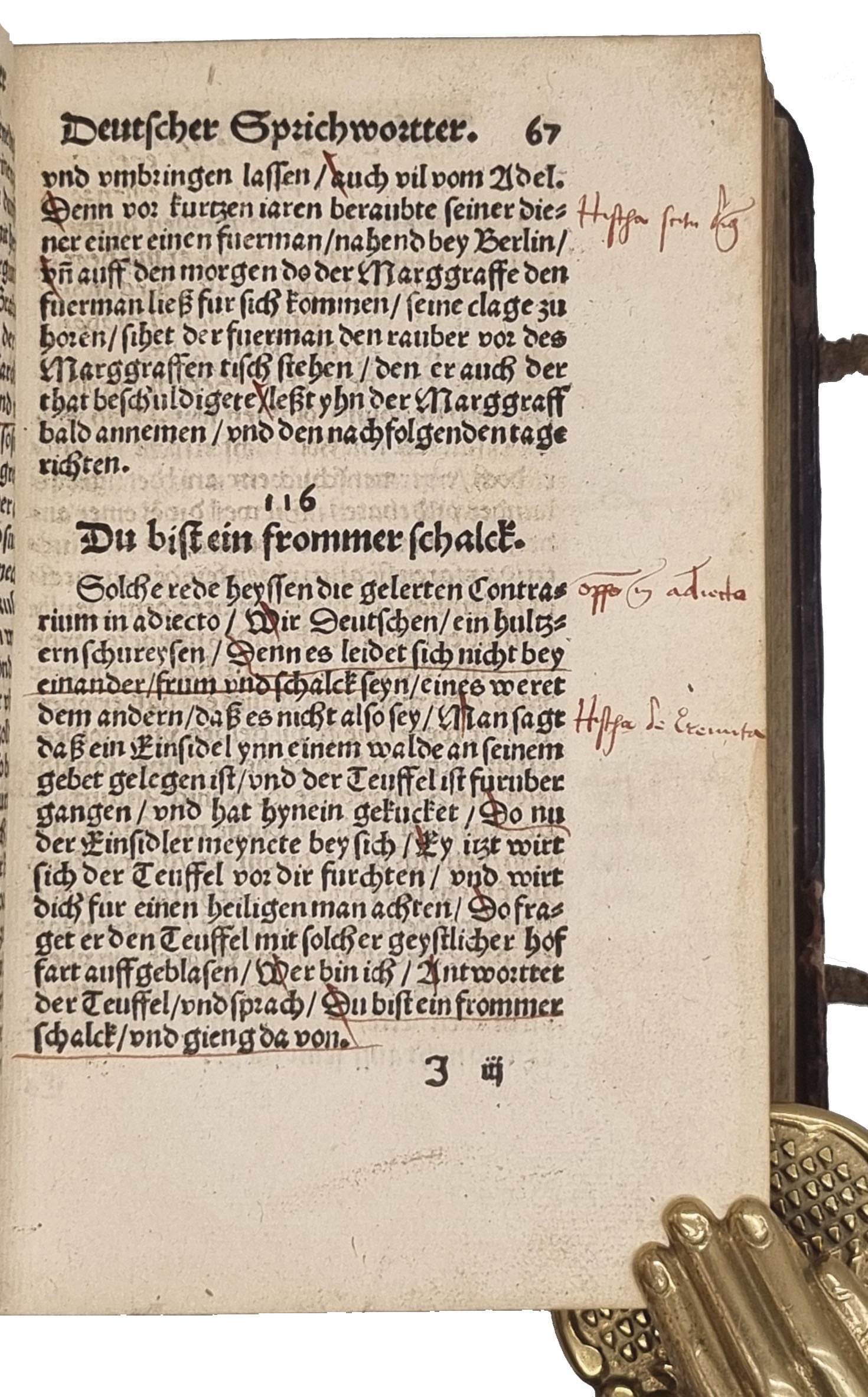
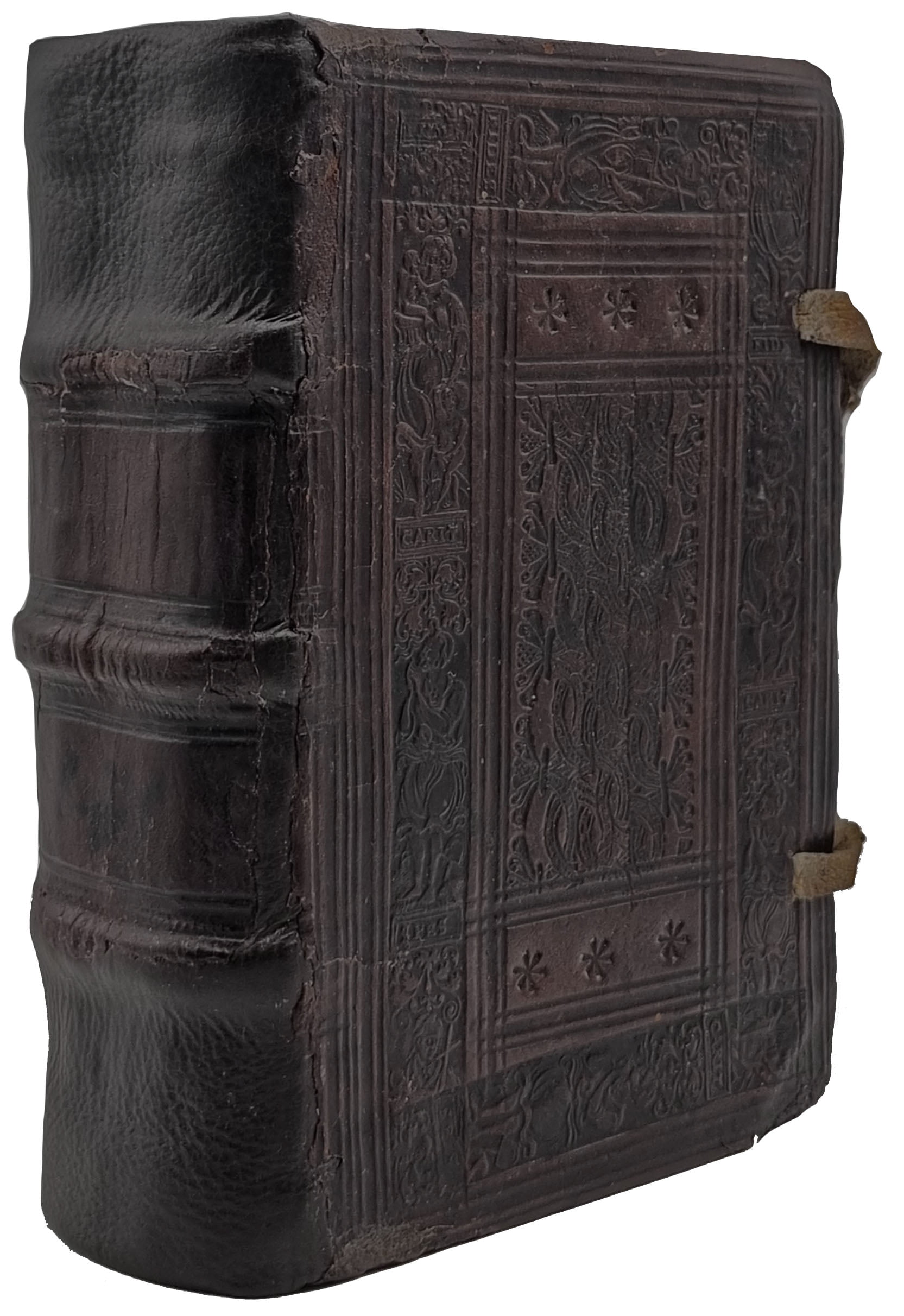
Carefully used copies, charmingly bound and extensively annotated, of the first and second part of this important early collection of German proverbs – ‘one of the major literary documents of the Reformation’ (Gilman, p.78). The first part – here in one of 5 first editions published in 1529 (priority not established) – comprises 300 proverbs; the second work, first published here, has another 450. In these two works, Johannes Agricola (1494-1566), a German Protestant Reformer acquainted with Luther, combined the medieval tradition of vernacular proverbs with Erasmus’s humanist Latin ‘Adagia’. At the same time, he ‘polemized’ the content and gave it a different form – using the genre of the moralizing exemplum – so as to transmit Reformed ideas (Gilman, p.78). Indeed, each numbered proverb, accompanied by a Latin or Greek version, is followed by a short explanation in German, presented as a traditional harmless commentary with moral intent, but actually imbued with Reformation and nationalistic polemics, including biographical details of the early Reformers and observations on contemporary German economics and politics.
The extensive annotations in this copy provide stellar evidence of ways in which contemporary Reformed readers engaged with Agricola. E.g., the annotator glossed ‘This is what false tongues and teachers have done’ with ‘Thomas Müntzer’, an early Reformer who eventually rejected Luther’s ideas. He highlighted a passage on Luther’s difficult position in 1518, glossing it with a reference to his work (1520) on the ‘Captivitas Baylonica’ of the Roman Church. Other episodes from Luther’s career are glossed with a date and ‘M L’. He was interested in Agricola’s account of the fortunes and activities of the merchant Jakob Fugger, ‘who pushed trade so hard like nobody in living memory’, and who obtained with a bribe a monopoly over Portuguese spices (glossed with ‘Monopolia p[ro]hibita’ by our annotator). Clearly interested in trade, he glossed with ‘Emporia Germanica’ a passage on commercial centres, i.e., Antwerp, Frankfurt and Leipzig. He also marked references to sources, e.g., Erasmus and Huss, and added verse in German from his own personal knowledge. The slightly later annotators were more interested in the proverbs per se.
![CICERO. [MANUTIUS, Paolo (ed.)]](https://sokol.co.uk/wp-content/uploads/2018/01/L2695-1024x685.jpg)