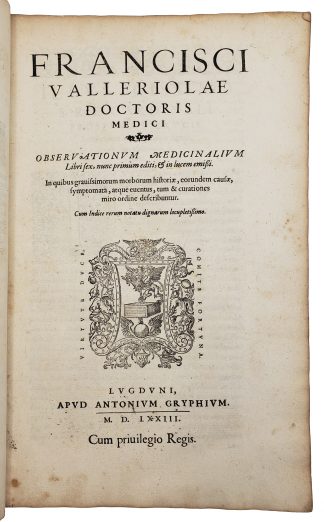

VALLERIOLA, Francesco
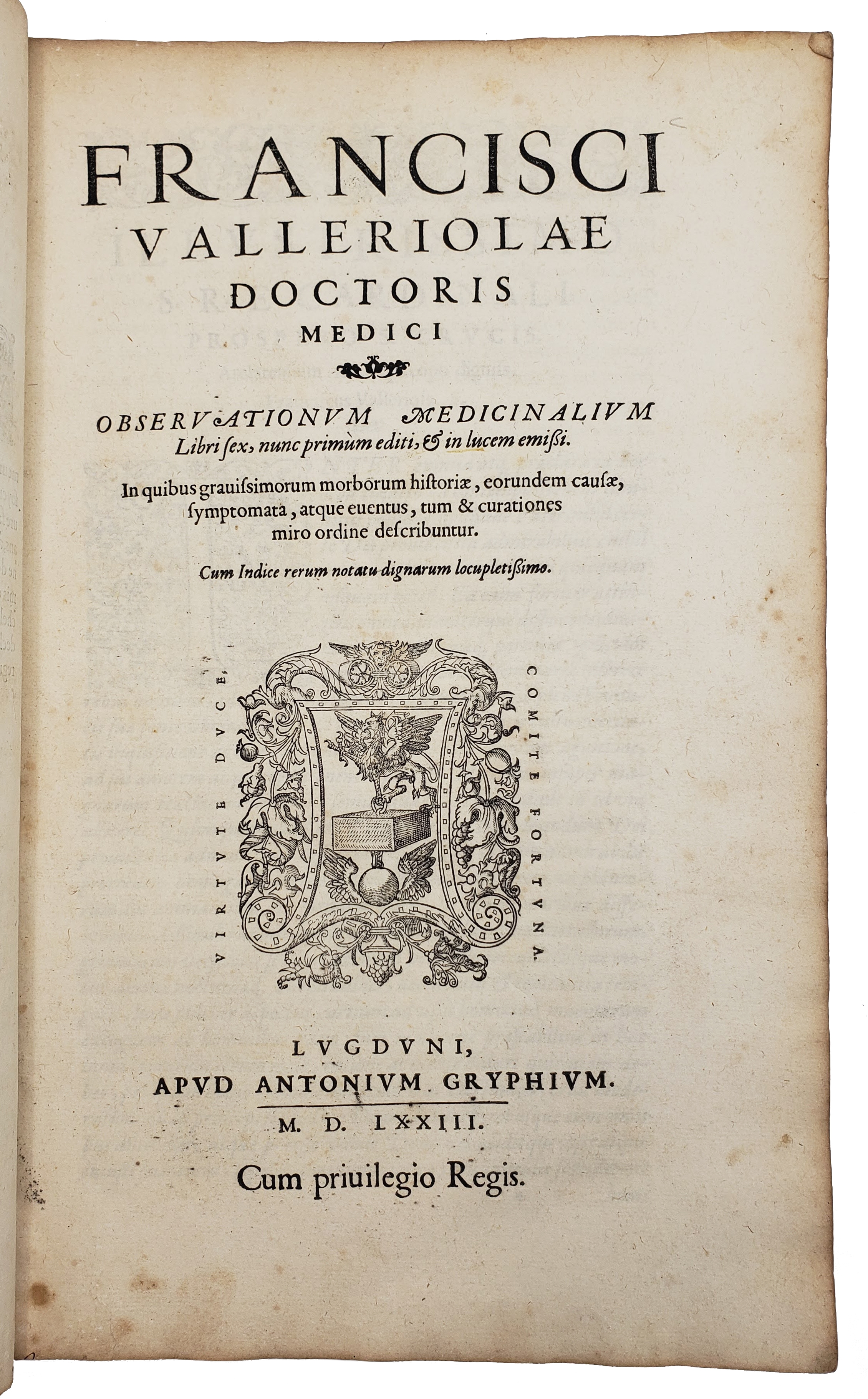
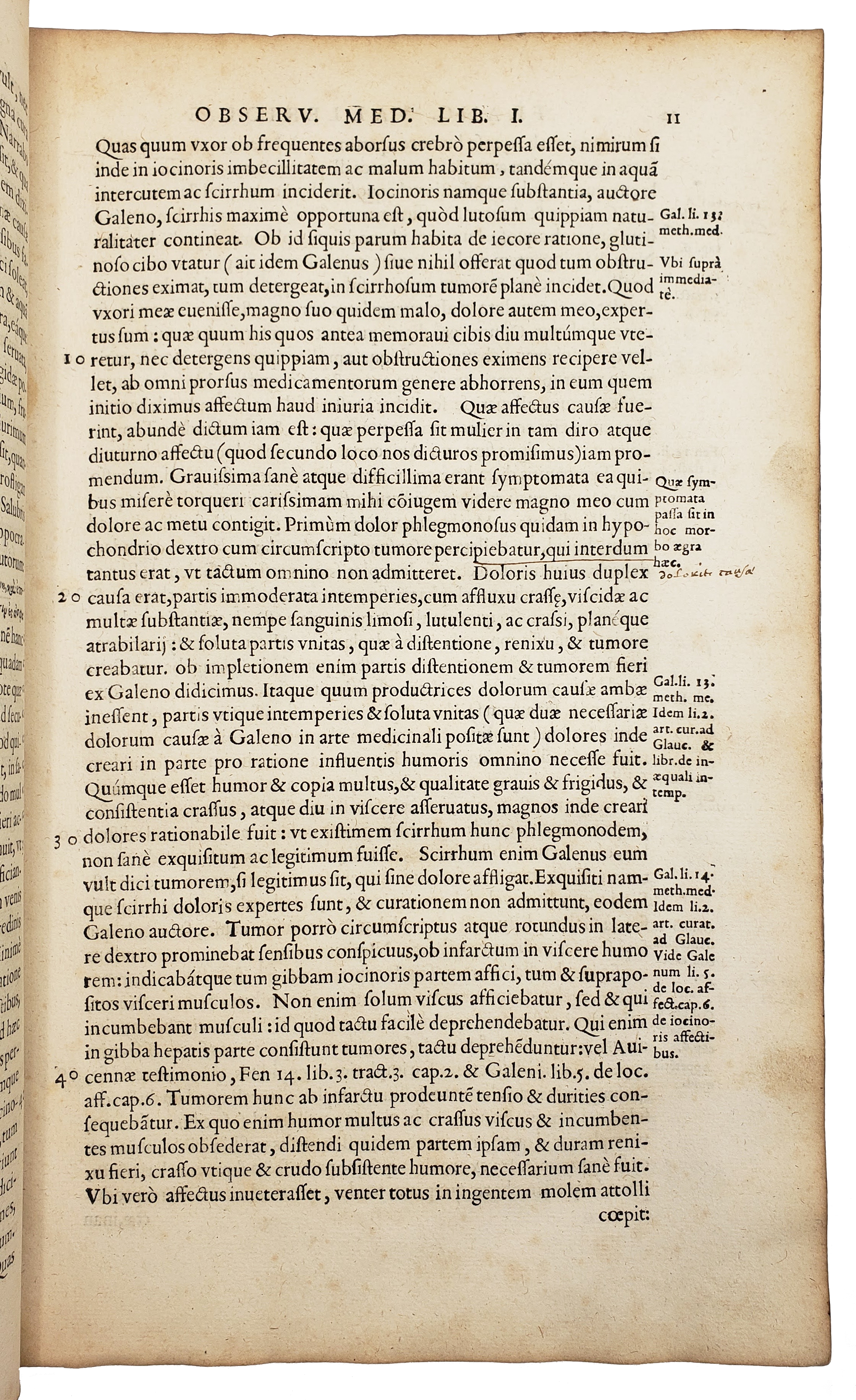
Observationum medicinalium libri sex.
Lyon, Apud Antonium Gryphium, 1573.£1,350.00
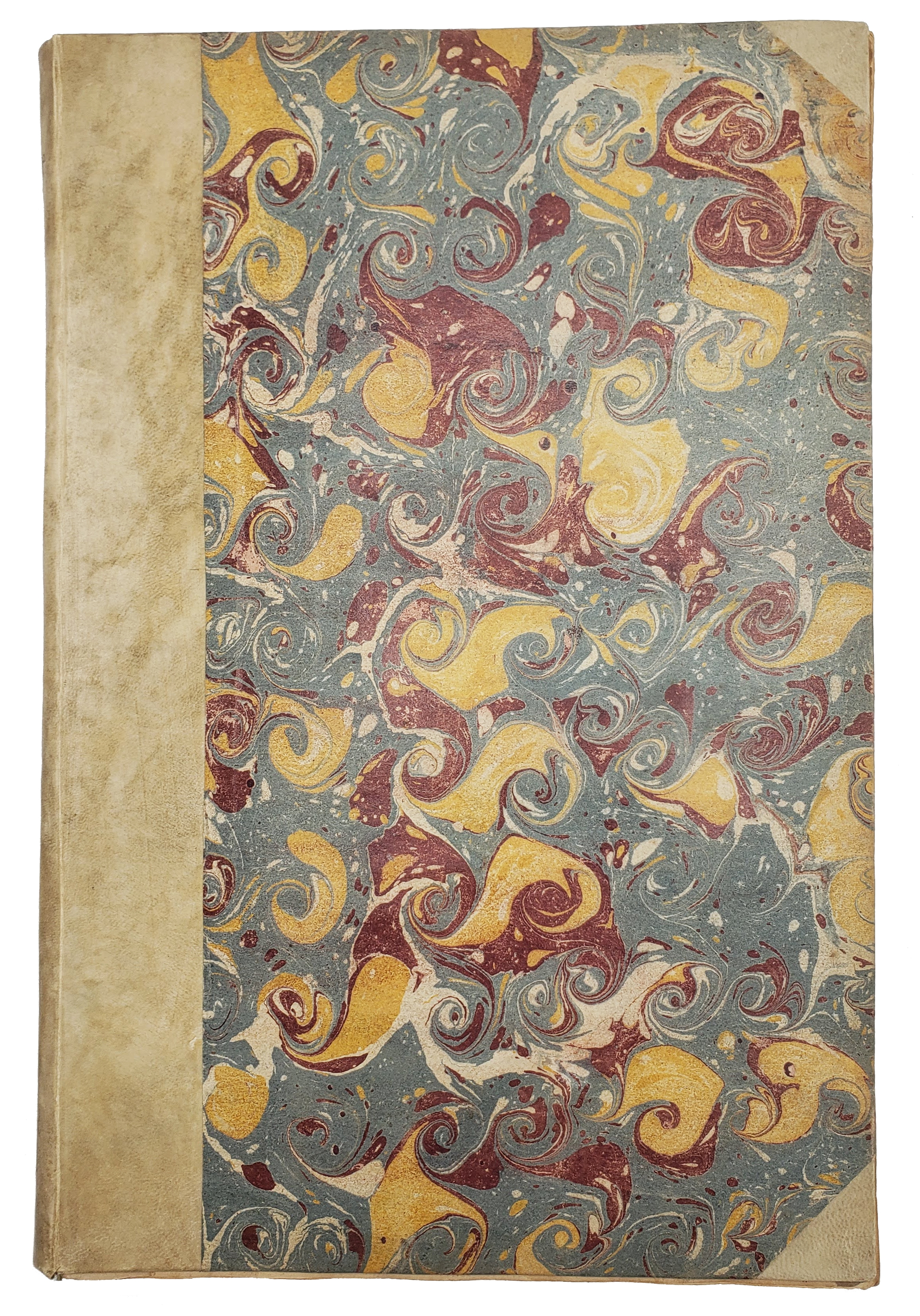
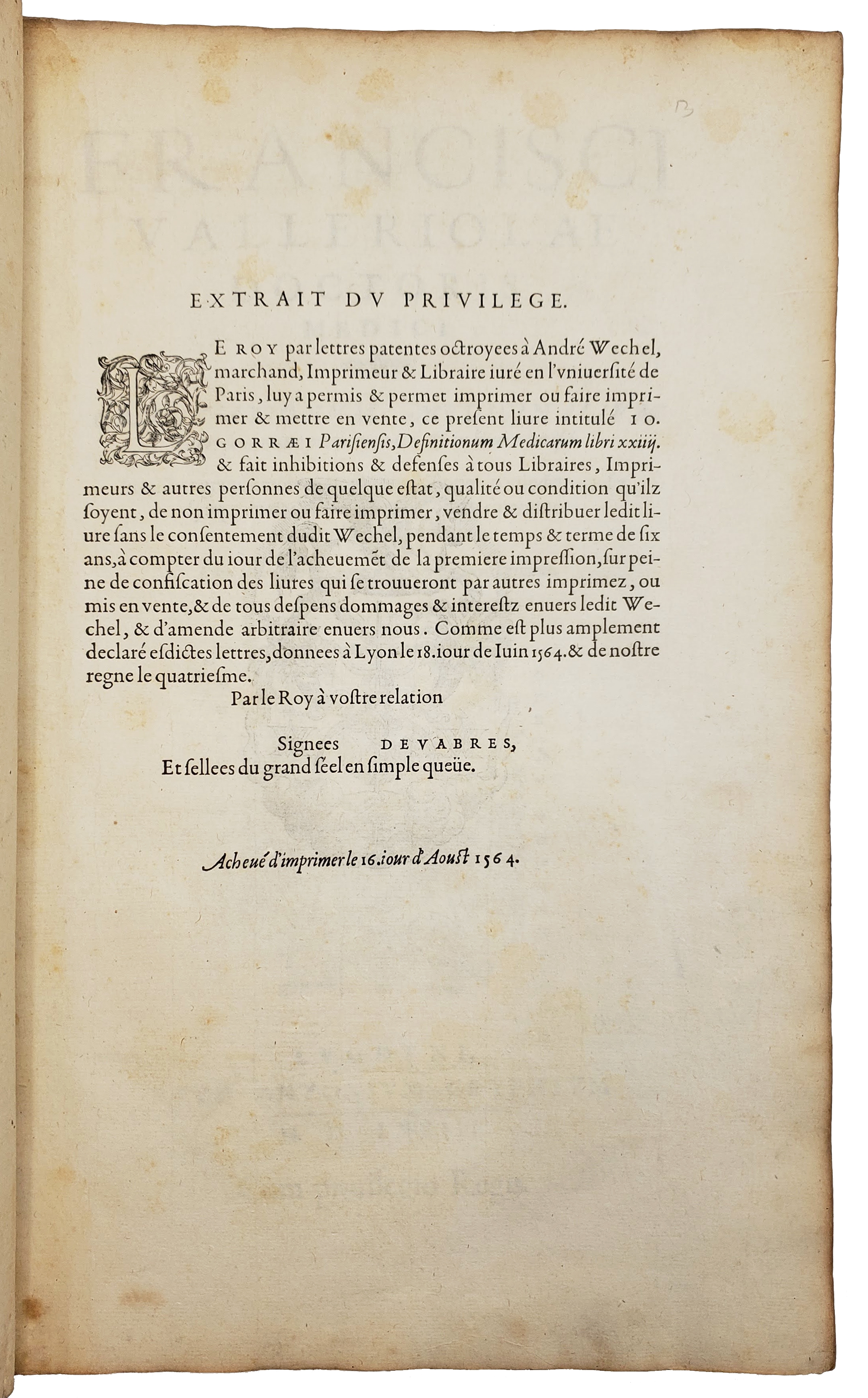
FIRST EDITION. Folio. pp. (xxiv) 264 (xxiv). Roman letter. Woodcut publisher’s device to t-p and verso of last, woodcut author’s portrait to **4r, woodcut initials, typographical initials, head- and tailpieces. Single extraneous l. at front from another book bearing privilege and publisher’s mark of Andreas Wechelus. Light age toning, last few quires with minor light mould spotting to lower outer corner at tail (fully treated), mostly marginal, a good copy in C18 half vellum over marbled boards. Occasional contemp. ms. annotations.
First edition of the Italian physician Valleriola’s entertaining collection of observations on cases, with an apparatus and prefatory letter addressed to medical students. Valleriola taught at the University of Montpellier and boasts that more than forty years of medical experience have been distilled into this work. The genre of ‘observationes medicinales’ experienced a prodigious flourishing in the later C16th. There is no organising principle, each case being briefly set out and then explained, Valleriola often drawing on Galen and Hippocrates, and ending with the recipe for the cure. Valleriola’s Observationum ‘is a good example of how the … case history was enlisted to support learned theory, in this case the author’s own eclectic Galenism, which was typical of Montpellier-trained physicians of the period’ (Brian Nance, ‘Wondrous Experience as Text: Valleriola and the Observationes Medicinales’ in Textual Healing: Essays on Medieval and Early Modern Medicine, ed. Elizabeth Furdell (Leiden, 2005), p. 102). The book opens in dramatic fashion, Valleriola describing his wife Guardiol’s near-fatal phantom pregnancy, which leads to a discussion of reproduction. Indeed, many of the cases described here are illnesses suffered by named aristocratic women, with another phantom pregnancy, this time of a young woman in Arles, resulting in the town’s women being thrown into ‘universal tumult,’ and its men rushing to get a look at the patient. Valleriola frequently employs language of the wonderful, marvellous and spectacular, and since this work undoubtedly functioned as an advertisement for his successes as a physician and teacher, most of the cases end with the patient’s miraculous survival, which Valleriola humbly attributes to the grace and intervention of God (of the sixty cases only nine are fatal). The cases include mercury poisoning, insane infatuation or erotomania, liver diseases, tumours, blunt traumas, epilepsy, fevers, etc., and are not always entirely medical, one describing a prodigious infestation of locusts in Arles in 1554.
NLM 4503. Wellcome 6456. Not in Osler or Heirs of Hippocrates. Adams V 211. Baudrier VIII, p. 360. Not in Brunet or BM STC Fr.