

PARÉ, Ambroise.
TREATING GUNSHOT WOUNDS
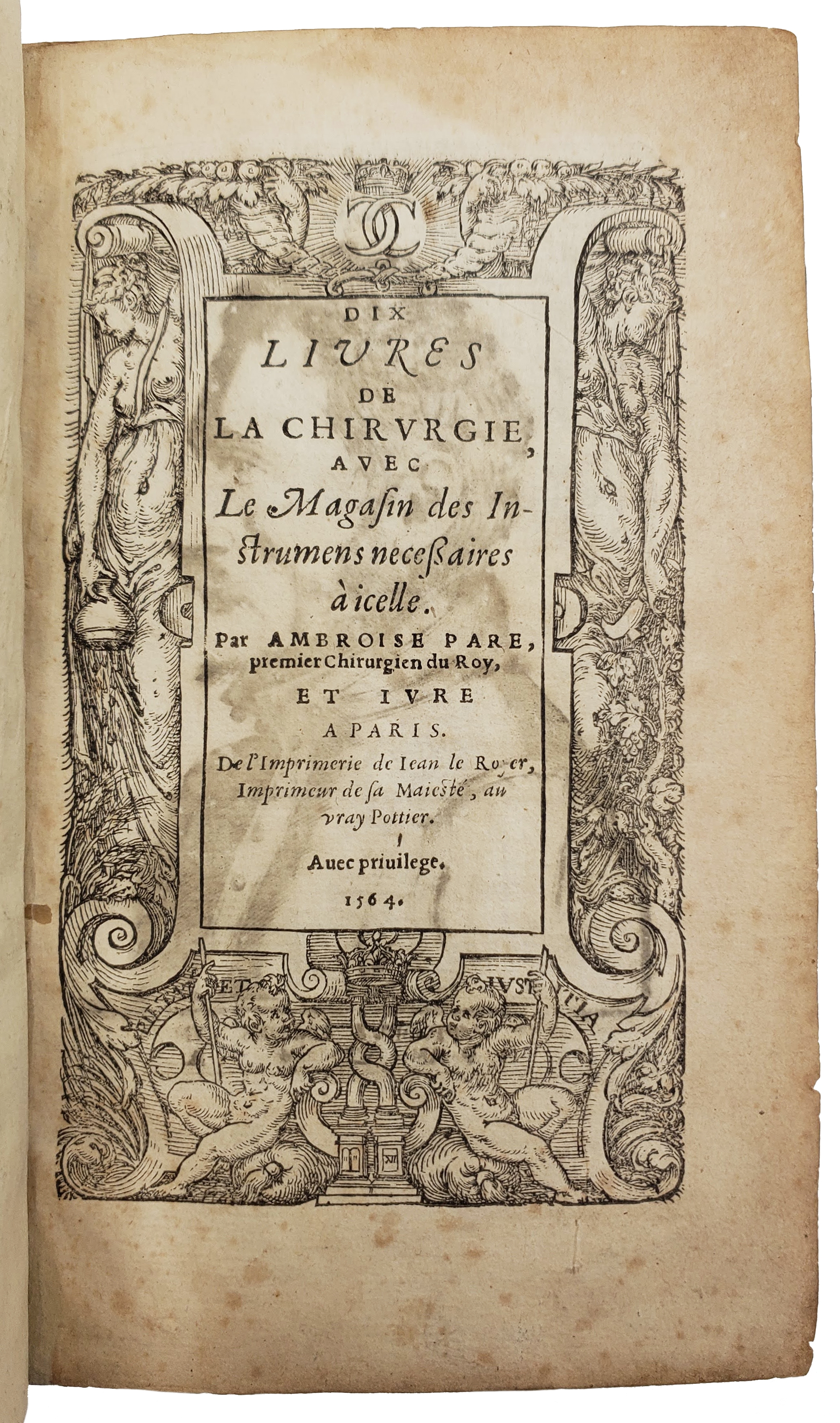
Dix livres de la Chirurgie.
Paris, de l’imprimerie de Jean le Royer, 1564£27,500.00
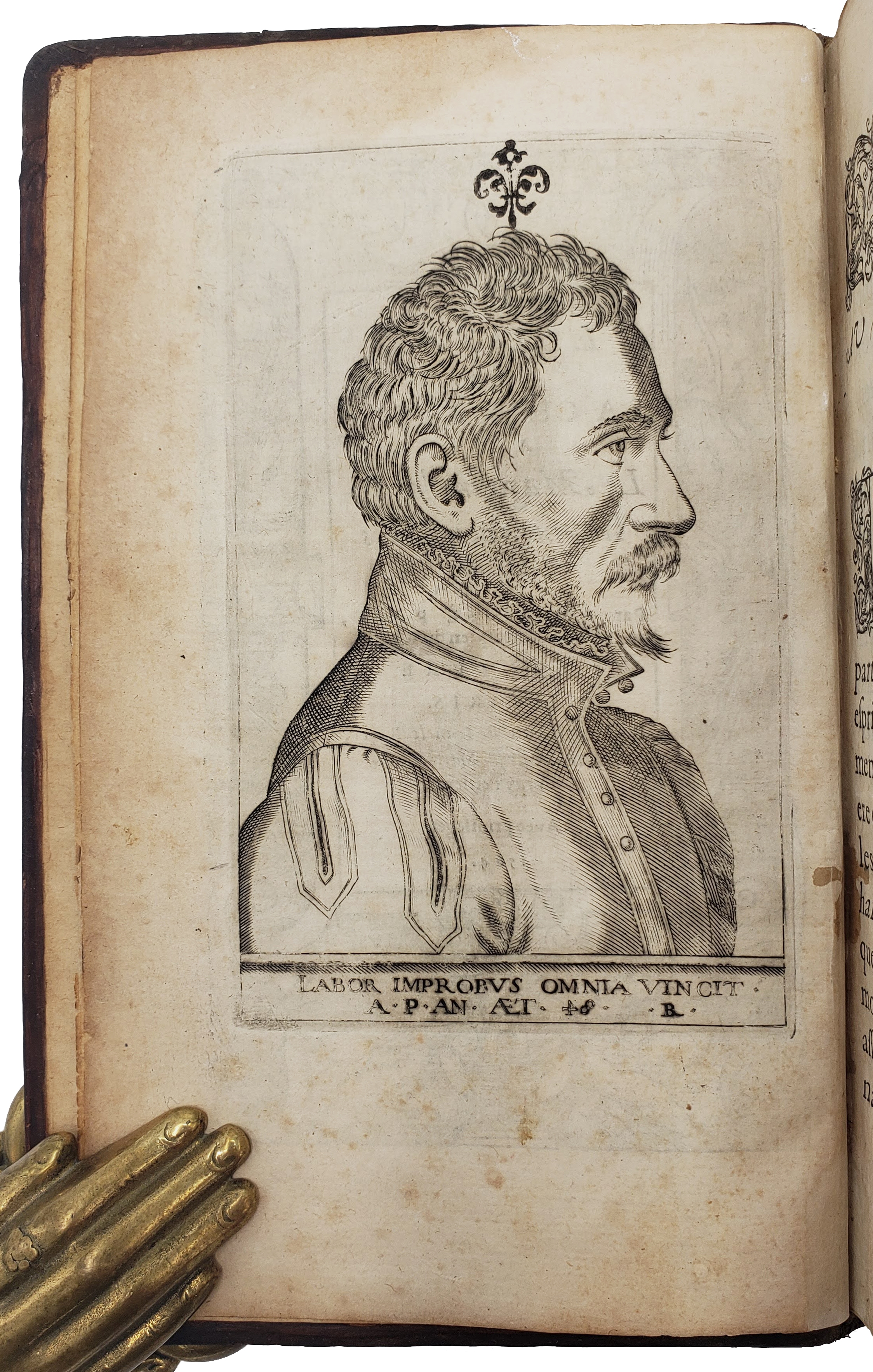
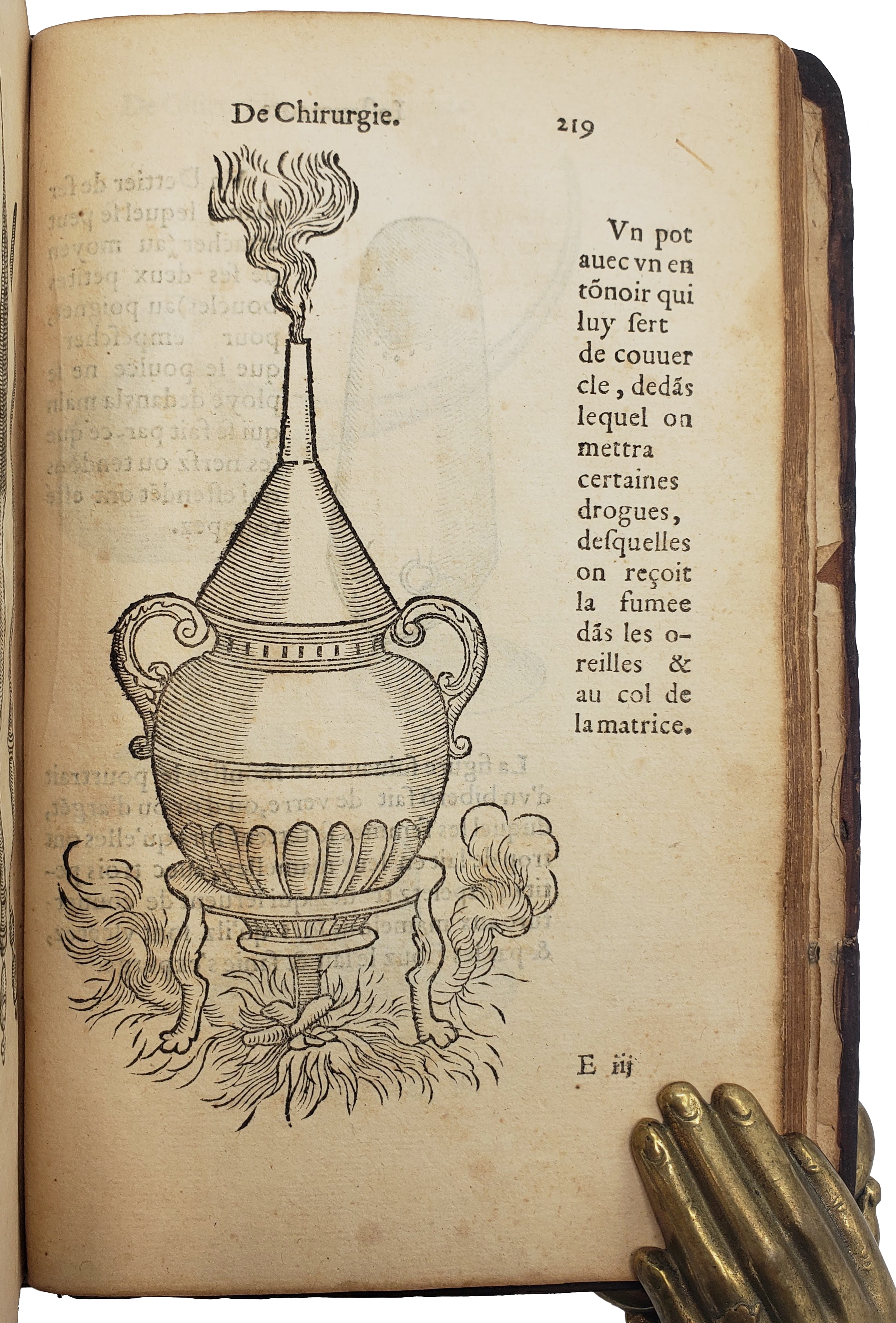
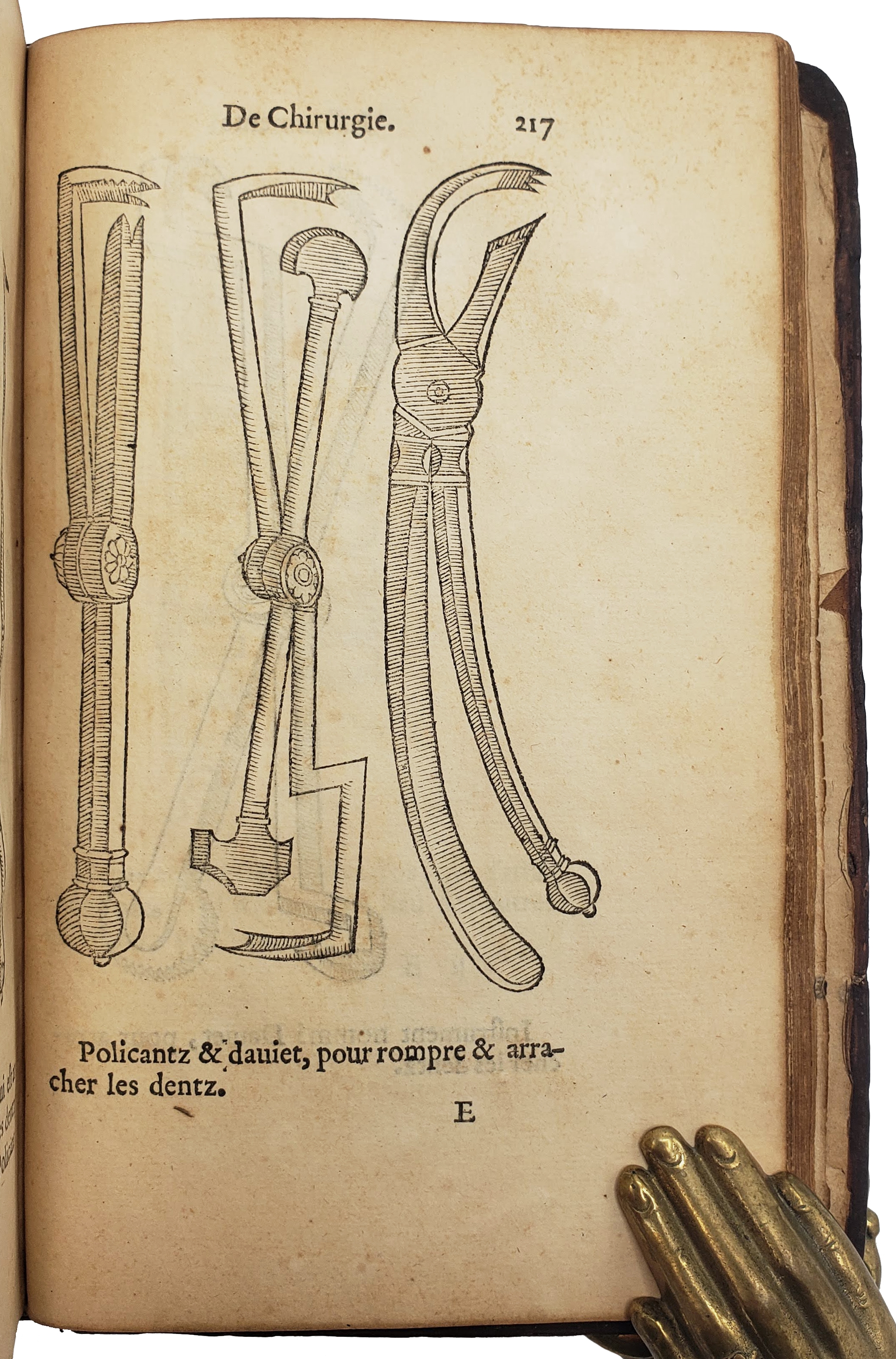
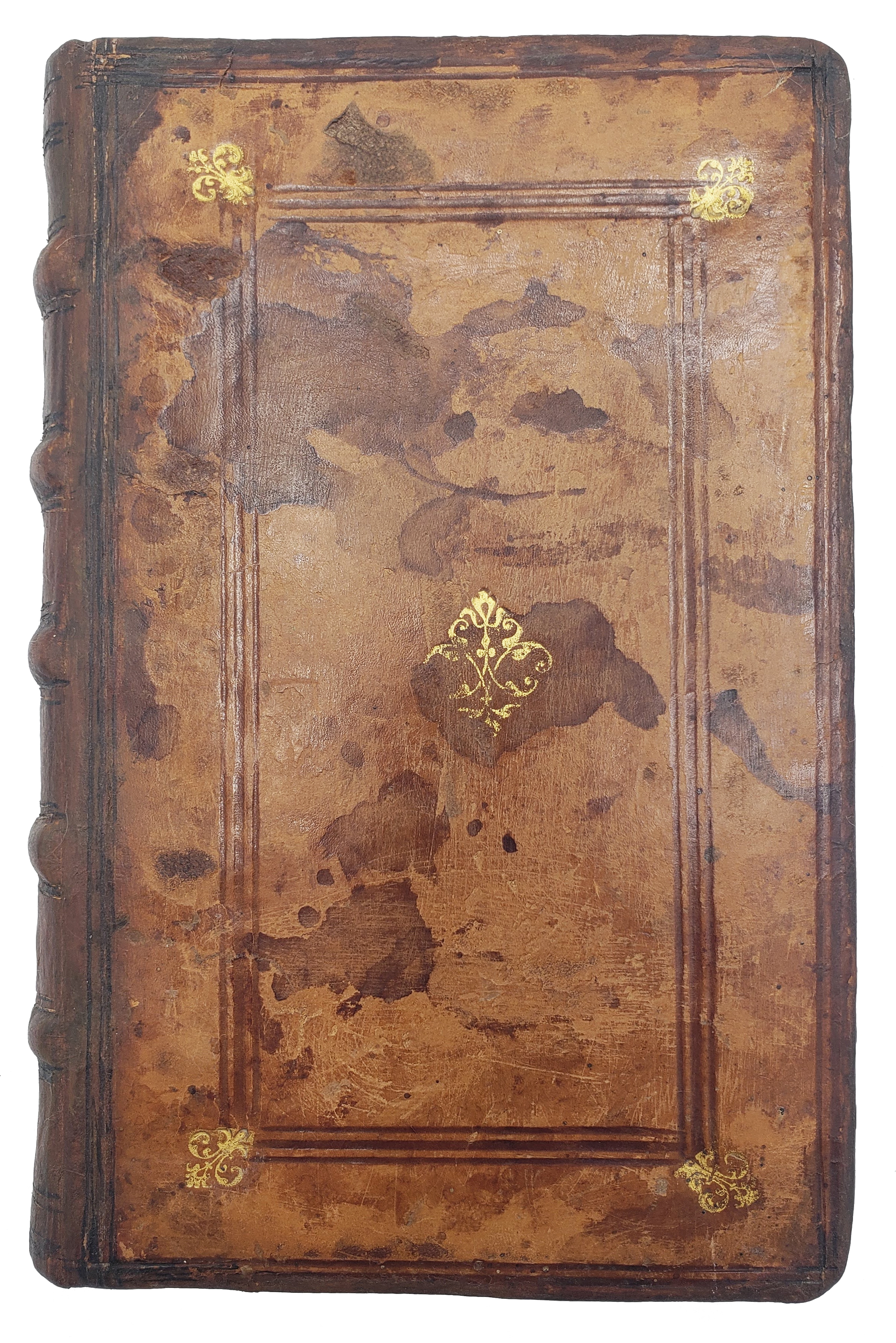
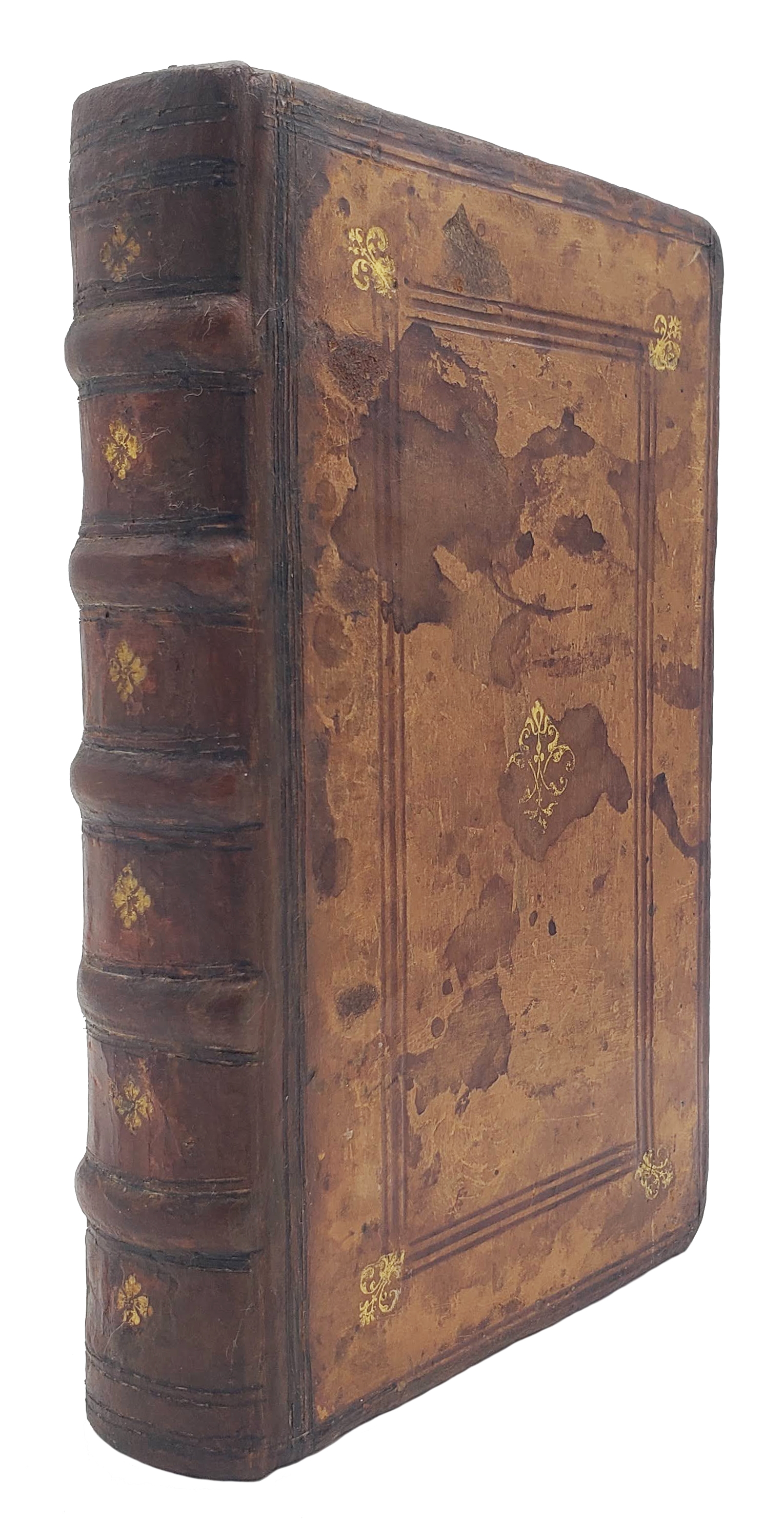
FIRST EDITION. 8vo. ll. (xxvi [‘discours’]) 232 (xxxvi [index]). Roman letter. T-p with woodcut border. Engraved portrait to verso of t-p, light bleeding from portrait to t-p. Numerous ½ and full-page woodcut diagrams to text depicting surgical instruments and procedures as well as skeletal anatomy. Woodcut initials and headpieces. Contemp. panelled calf, gilt, border of triple fillet in blind around central fleuron with fleuron cornerpieces, stained, spine gilt in panels, rebacked and remounted. Some browning, foxing, especially marginal, generally a good copy.
First edition of the French royal surgeon Ambroise Paré’s treatise on surgery, with numerous woodcut illustrations of surgical instruments and two famous anatomical images of skeletons borrowed from Vesalius, one holding a spade and the other leaning on a scythe (the latter an addition). The work begins with a preliminary discourse on arquebuses and other gunpowder weapons, which Paré wrote at the express command of the king, who was concerned by the high number of soldiers and noblemen dying from wounds caused by bullets from guns; the first book covers surgical procedures designed to treat such wounds. Paré challenged earlier theories on gunshot wounds such as those of Giovanni da Vigo, which considered the wounds to be toxic and advocated the use of boiling oil. Paré directly refuted Vigo’s erroneous assumptions, especially his suggestion that gunpowder was poisonous. He does so in a section on the catastrophic injuries caused by larger projectiles and cannonballs, demonstrating a morbid sense of humour; clearly it is these that are a danger to life and health, he says, not traces of poisonous gunpowder. Instead, Vigo suggested using odoriferous solutions of rosewater and other herbs, as well as herbal pomades, which should be placed in the injured patient’s chamber to fortify the vital organs and restore strength to the whole body, for which he provides several recipes.
The theme of injuries caused by warfare continues (as the late lamented Arthur Lyons M.D. remarked, ‘in the C16 no-one elected for surgery’). The second book describes the removal of arrows, crossbow bolts, spears and lances, with a section on poisoned projectiles. Diagrams depict different kinds of projectiles and their removal. The rest of the books deal with bones and fractures; gangrene and sepsis, including amputation and the use of prosthetics like wooden legs and hands; diseases of the urinary system including tumours, kidney and bladder stones, the inability to urinate and diabetes. The final section is a wonderfully illustrated ‘shop’ of surgical instruments, including false eyes, noses and teeth.
Not in Osler, Wellcome or Heirs of Hippocrates. NLM 3525. Brunet, VIII, 149.
