
SPILBERGEN, Joris Van and LE MAIRE, Jacob
‘ONE OF THE MOST REMARKABLE VOYAGES EVER UNDERTAKEN’ (COX)
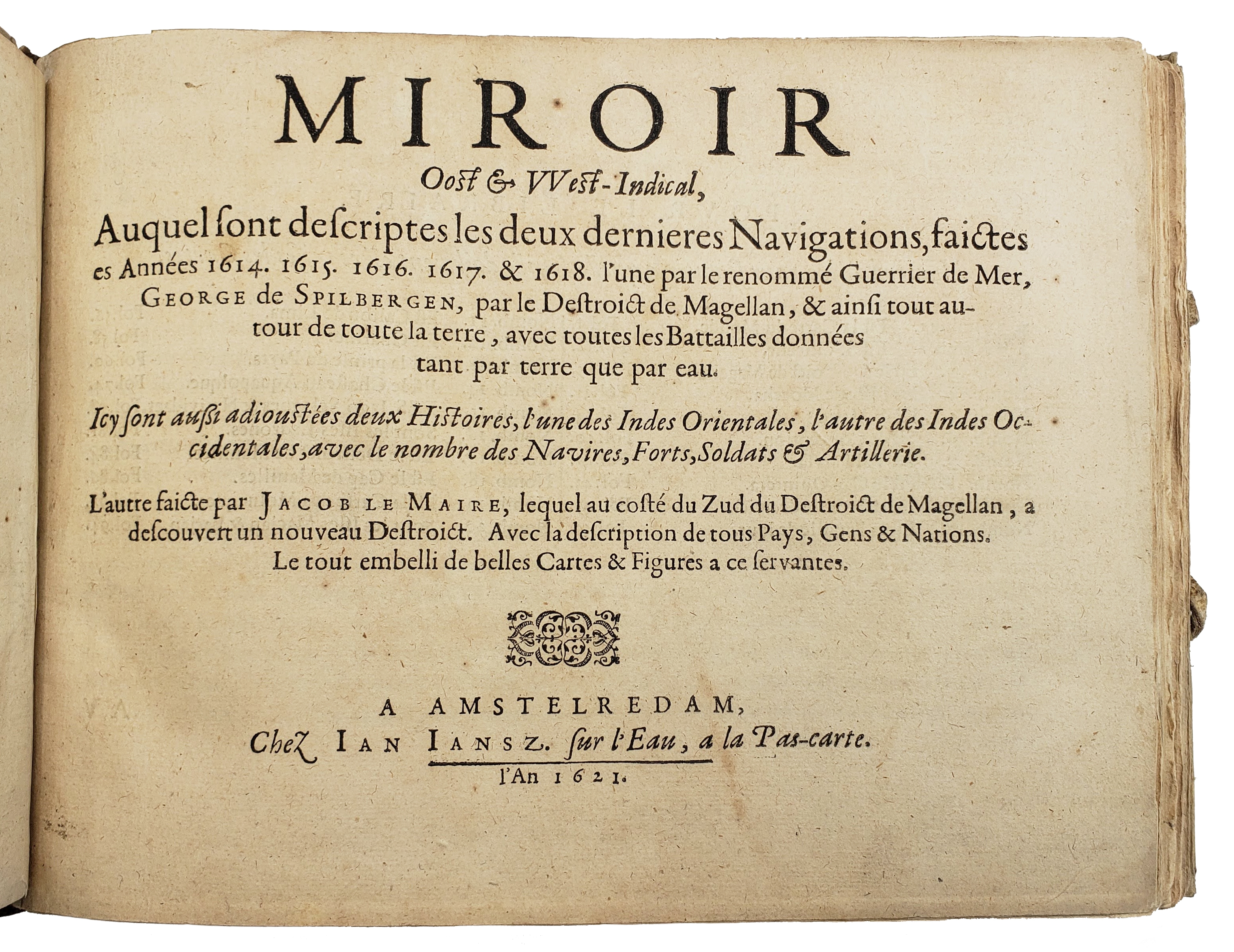
Miroir Oost & West-Indical.
Amsterdam, Chez Jan Jansz[oon], 1621.£25,000.00
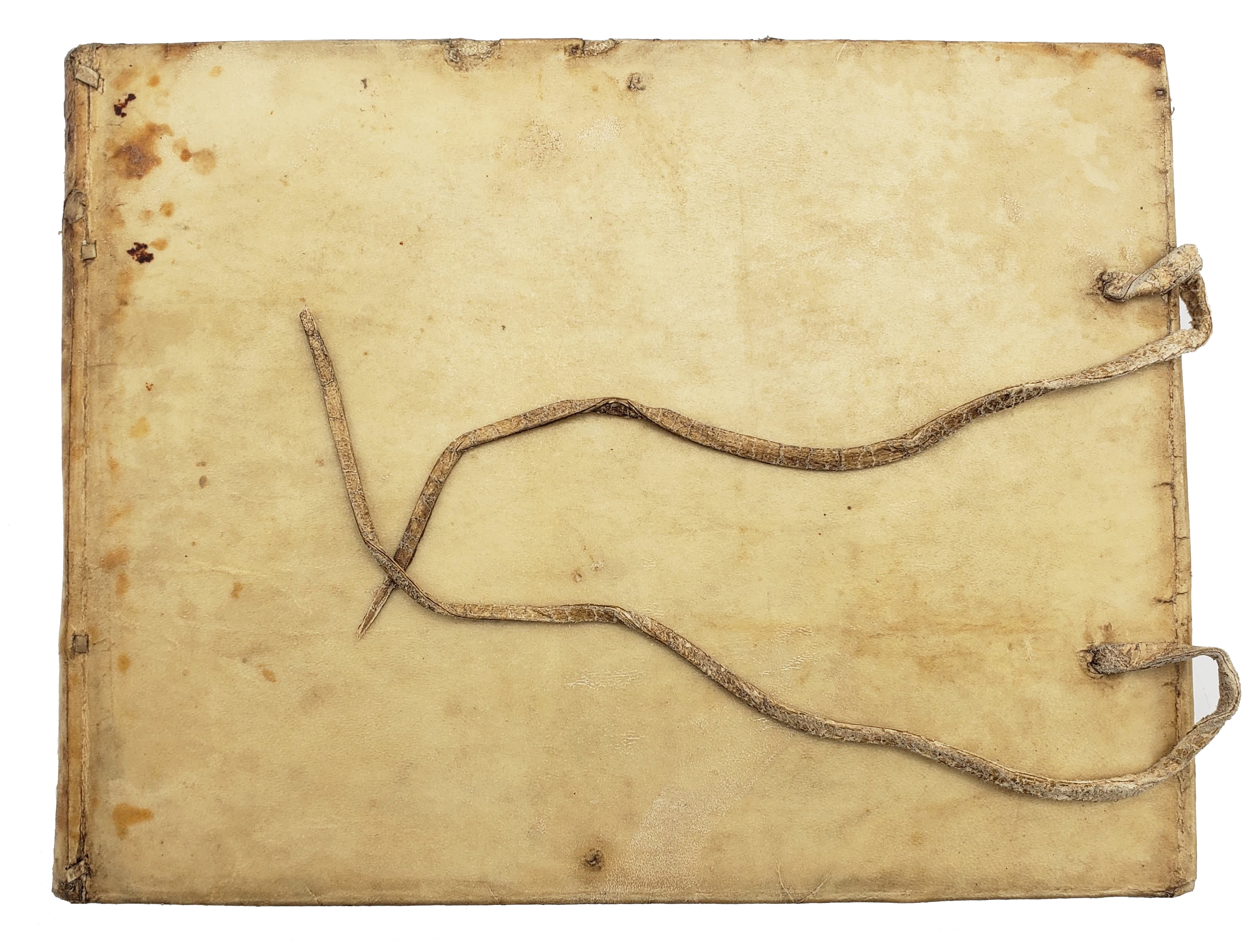
FIRST EDITION thus. Oblong 4to. pp. (iv) 172. Roman letter. 25 engraved plates, seven folding, including fine frontispiece folding world map, unsigned, further maps, views of islands and sea battles, good, strong impressions. Two ll. at start repaired at upper margins, affecting one running title, small ink burn to blank lower margin of plate facing F2r, folding map of Moluccas islands facing N2v with closed tear, small closed tear to blank upper margin of plate facing N3v, closed tear to lower margin of plate facing V3r, small repair obscuring one word to Z4r, a few ll. lightly browned, plates occasionally very lightly spotted, the odd very light mark or spot, mostly marginal, a very good copy in original vellum, spine restored, ties.
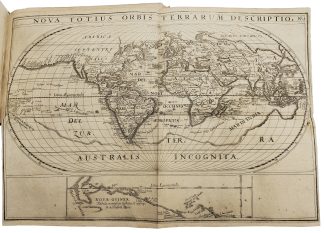
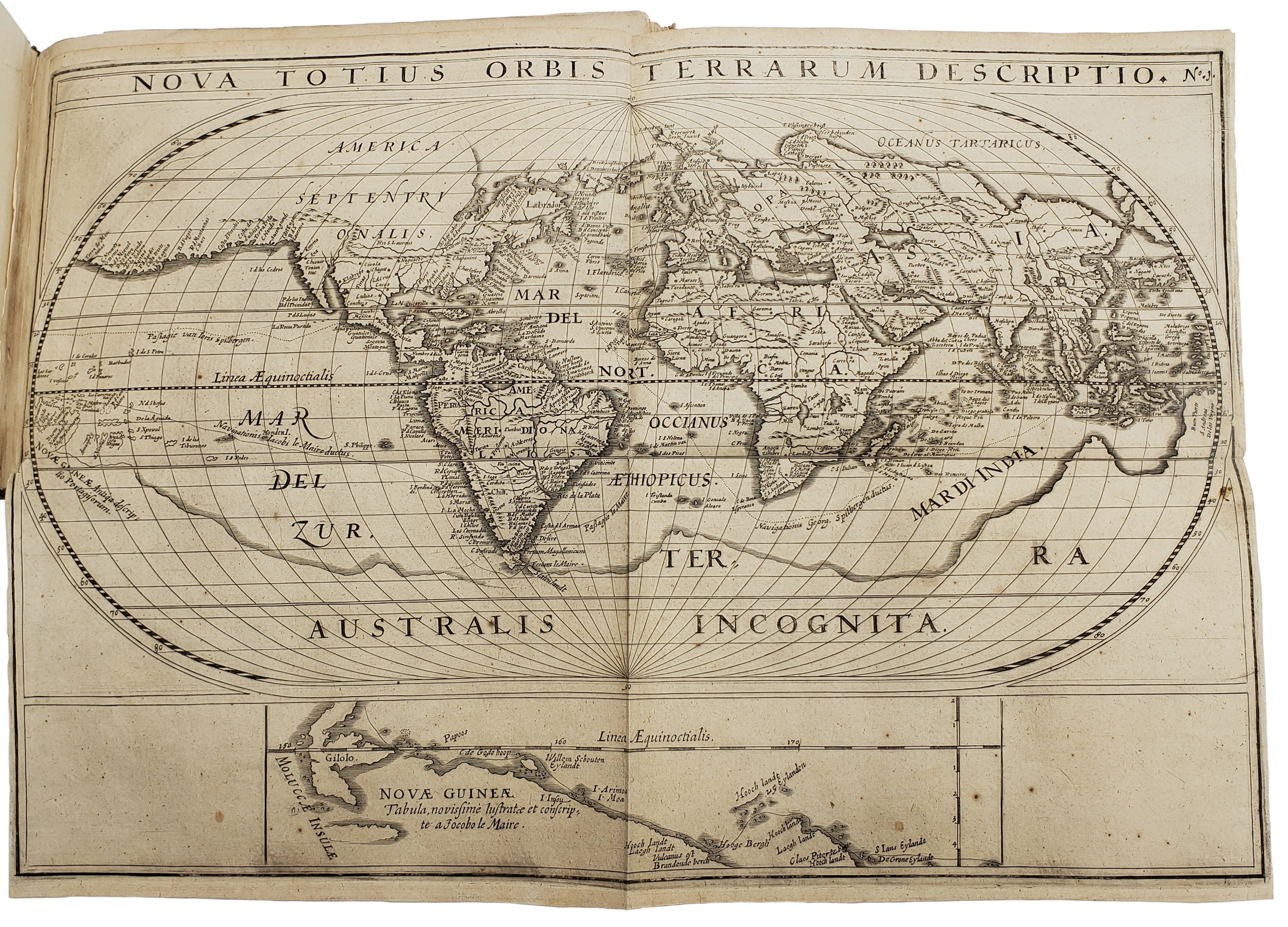
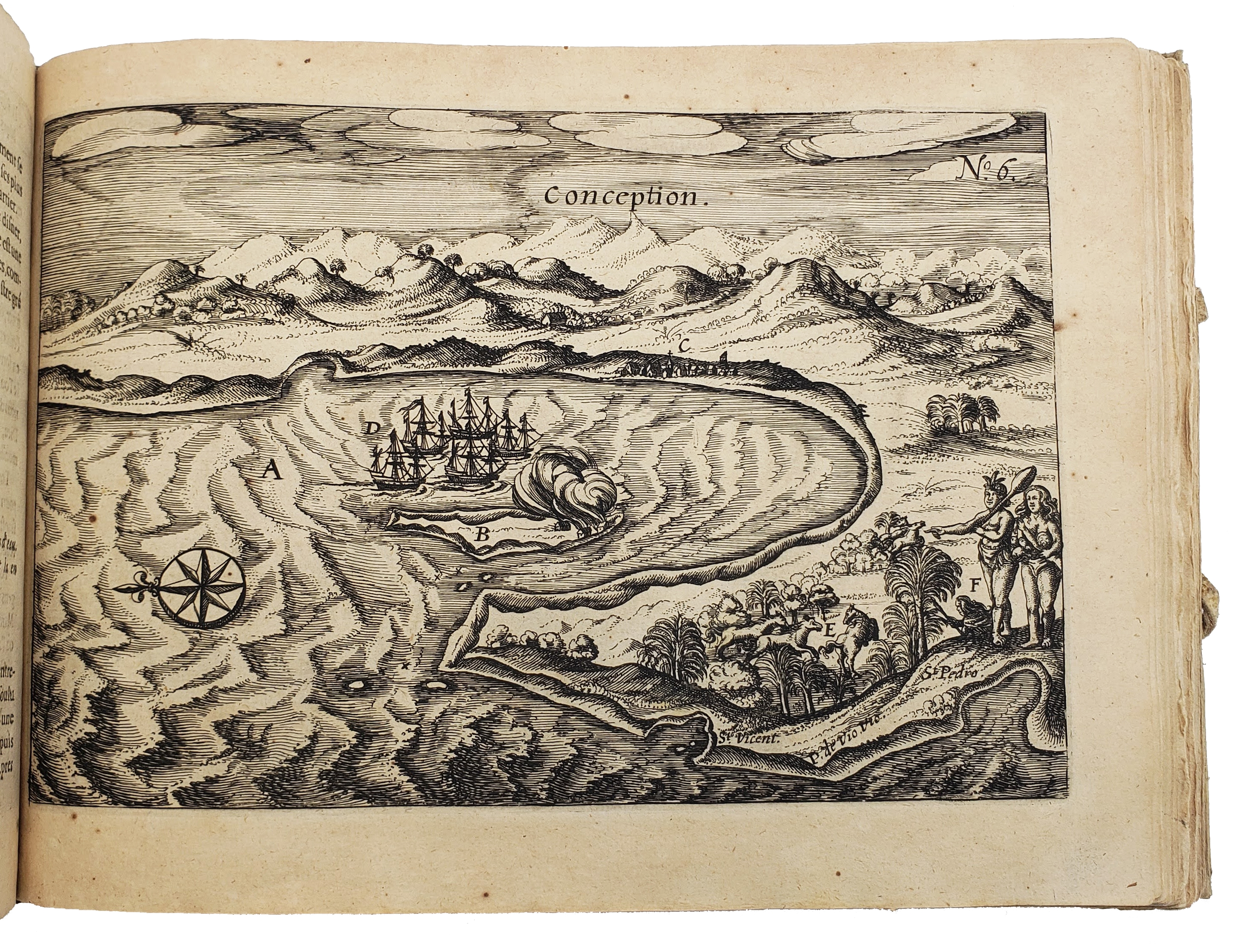
Richly illustrated first French translation of this popular account of Joris van Spilbergen’s (1568-1620) circumnavigation and Jacob Le Maire’s (1585-1616) account of Willem Schouten’s (c.1577-1625) voyage to Australia between 1614-18, first published in Dutch 1619 with a Latin edition appearing in the same year. The maps include a fine folding world map after Ortelius as the frontispiece, the Manila Straits and the Moluccas, and a chart of Le Maire’s voyage. The views of islands depict the often outsized local fauna, including monstrous fish, ostriches, sea lions, penguins, llamas and a condor, as well as a volcanic eruption in the Moluccas.
Schouten’s voyage took him around the southern tip of the Americas – though avoiding the Magellan Straits and instead discovering the passage between Tierra del Fuego and Isla de Los Estados (now called Le Maire Strait) – round Cape Horn and then across the Pacific to New Guinea. This ‘was one of the most remarkable voyages ever undertaken and contributed much to the science of cartography, while the numerous versions in other languages attest its popularity, indicating how much the new passage into the Soutth Seas was appreciated’ (Cox I, p. 41). ‘It was one of the most successful voyages ever undertaken by the Dutch. It resulted in the conquest of the Moluccas by the Dutch and greatly increased the power and the reputation of the Dutch East India Company (Cox I, p. 52). The Dutch were the first westerners to visit the North Tonga Islands, which include the Cocos and Traitors Islands, where there were skirmishes with the natives, and they also discovered the Hoorn Islands, where after initial conflict they were well received. Schouten’s name is given to two sets of islands in New Guinea and Papua New Guinea that were explored on this voyage. Passing through the Moluccas the Dutch trade in bananas, coconuts, sago, rice and tobacco, before arriving in Ternate, the headquarters of the Dutch East India Company. ‘The discovery of the passage through the Straits of Le Maire and around Cape Horn, though entered in the log, were branded as infamous forgery by the Dutch officials at Ternate, and the ship itself confiscated’ (Cox I, p. 41). Joining up with Spilbergen, Le Maire died on the return voyage to Amsterdam, his account passing to Spilbergen who, despite himself being on his deathbed, included Le Maire’s account in his work.
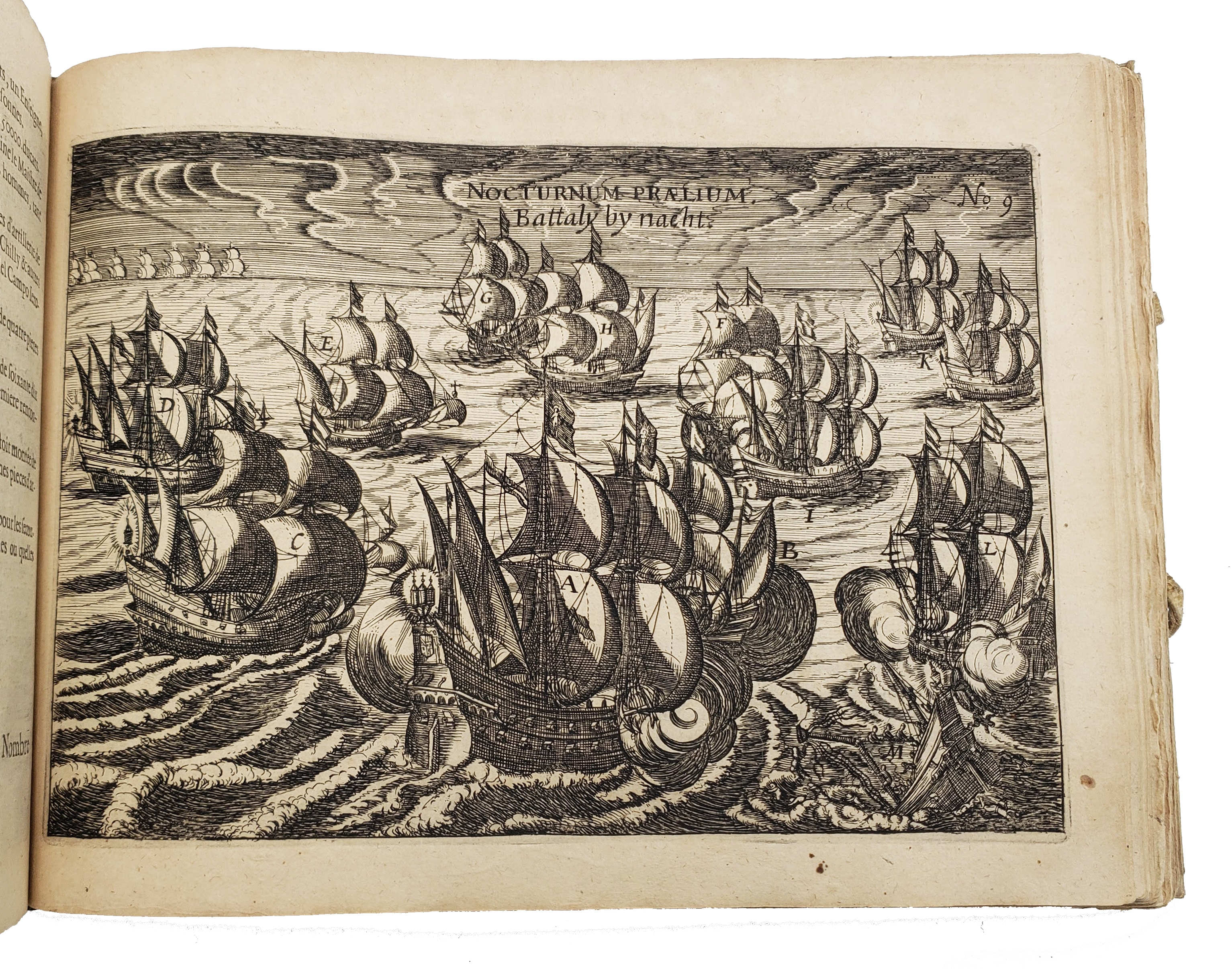
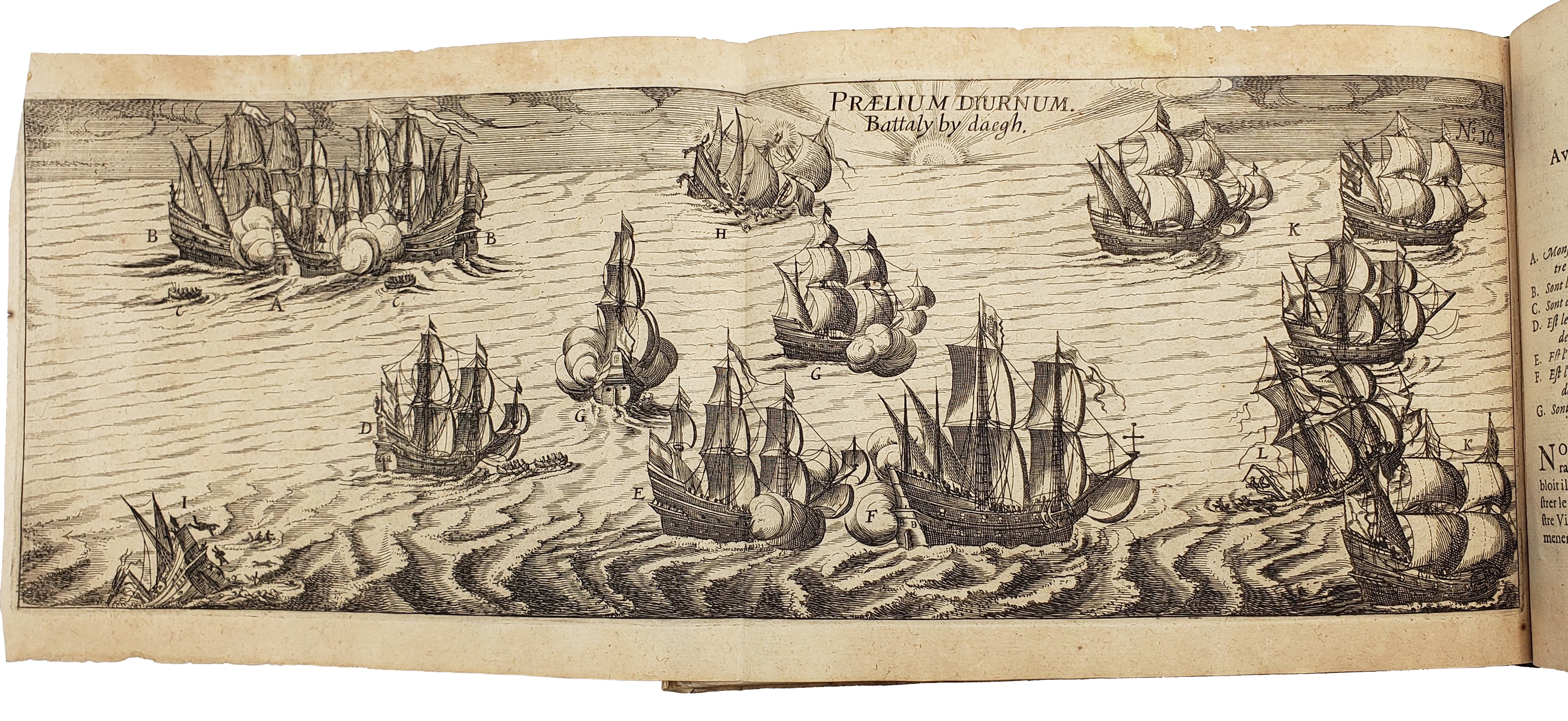
Spilbergen’s voyage is famous for his navigation of the Straits of Magellan in less than one month, which is described here and illustrated with a wonderful folding plate depicting the progression of the ships through the straits, a group of natives, a penguin, and scenes of the Dutch sailors hunting birds and being attacked and killed by natives. Passing up the west coasts of Chile and Peru, the Dutch make attacks on Spanish settlements at La Isla Sancta Maria, Concepciόn, Valparaiso, Quintero and Lima, as well as participating in sea battles by day and night, all of which are depicted here in the plates. The Dutch stop to refuel at Huarmey, where they occupy the abandoned fort from the Spanish, who had fled inland. More combats follow at Paita and, in Mexico, at Acapulco, which is captured, Santiago and Navidad. Crossing the Pacific they sailed through the Philippines and the Moluccas; appended to the narrative is Appolonius Schotte’s (c.1579-1639) discourse on the disputed ownership of the Moluccas between the Dutch, Portuguese, Spanish and English, with a description of the forts on the islands.
Alden 621/91. Sabin 89451. JCB II.1, p. 158. BM STC Fr. C17 943. This ed. not in Cox or NMM Voyages and Travel. Not in JFB.