
SETTALA, Ludovico
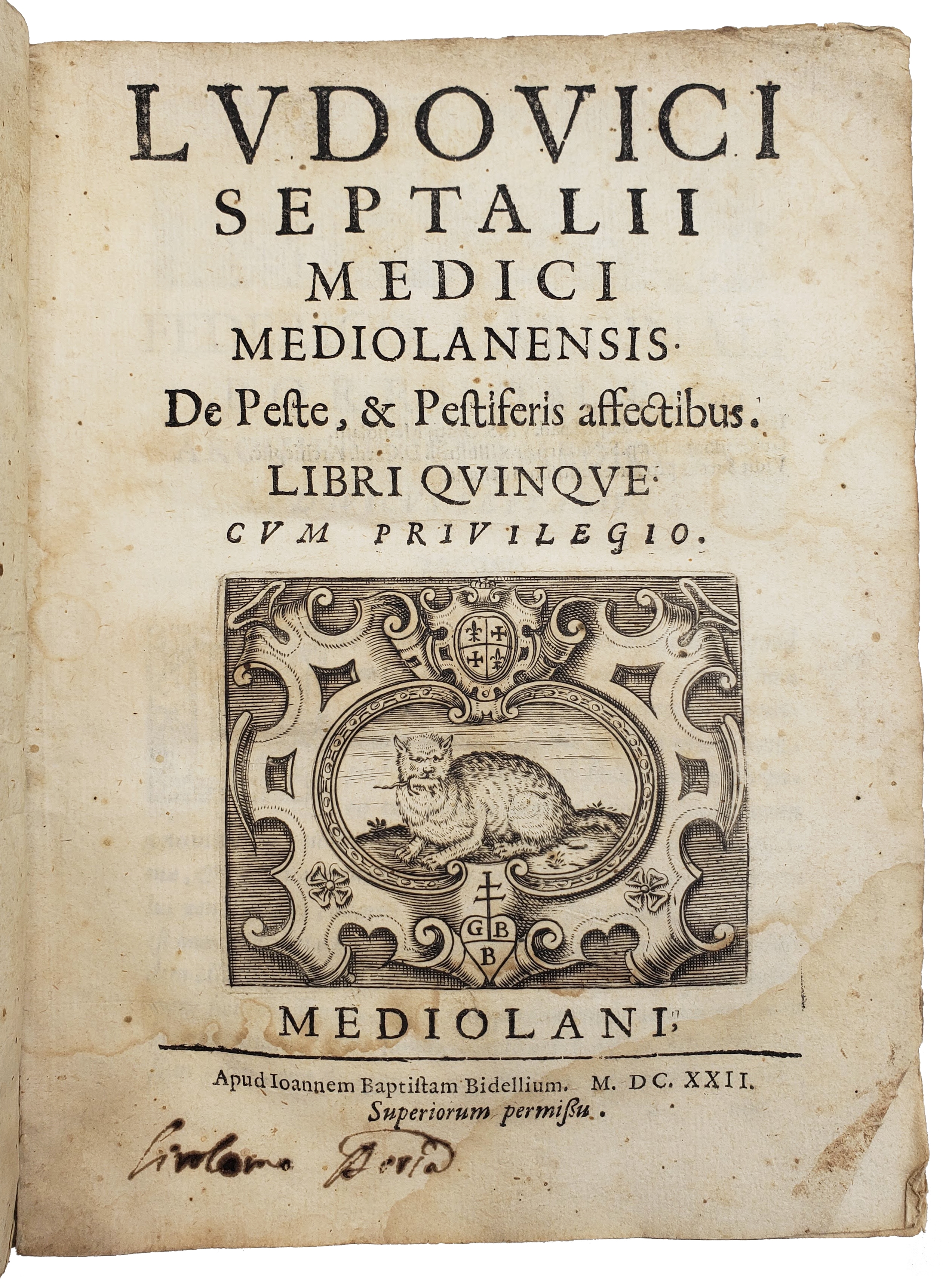
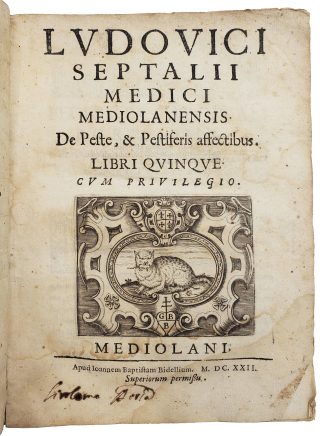
De Peste, & Pestiferis affectibus, libri quinque.
Milan, Apud Joannem Baptistam Bidellium, 1622.£1,450.00
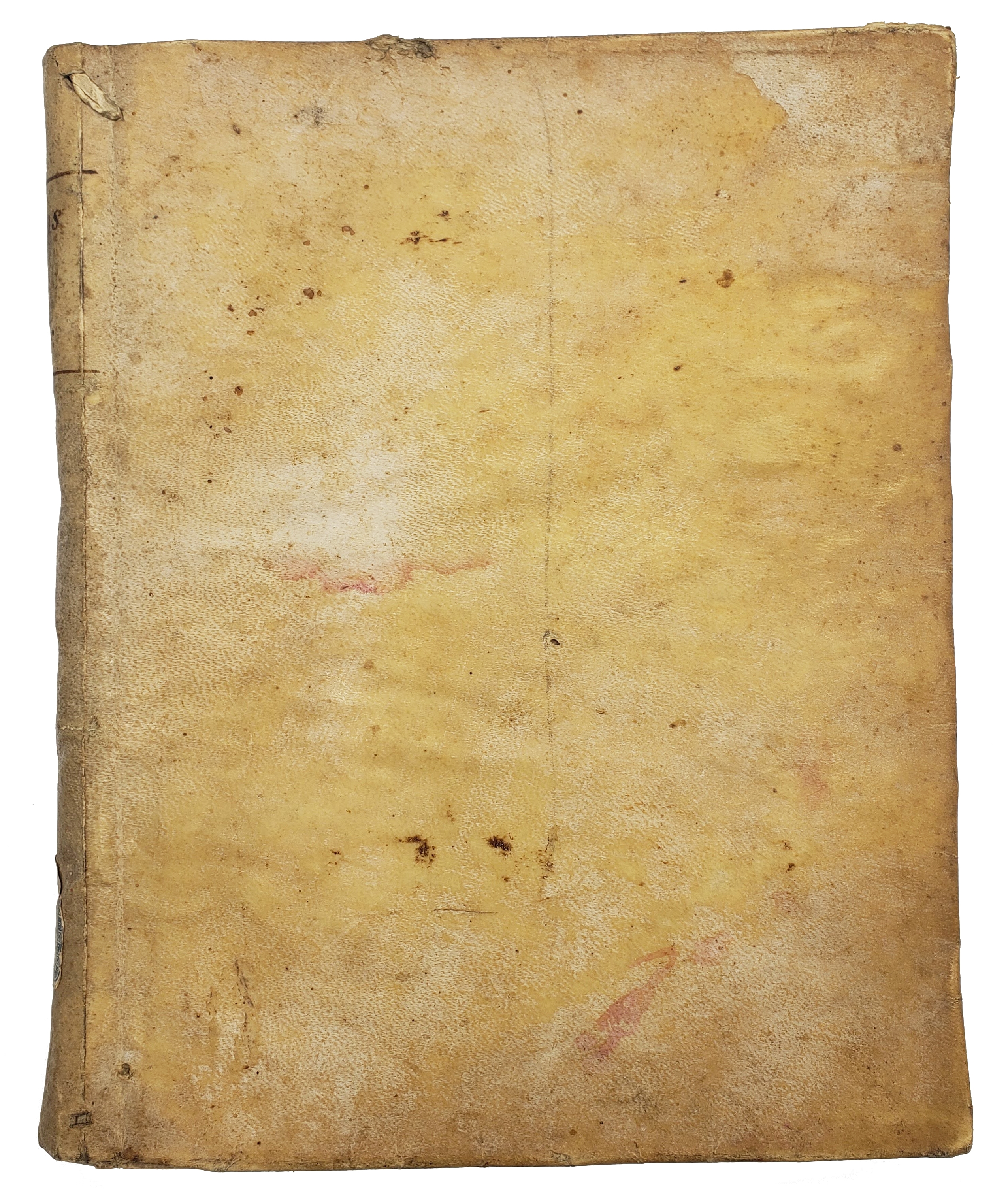
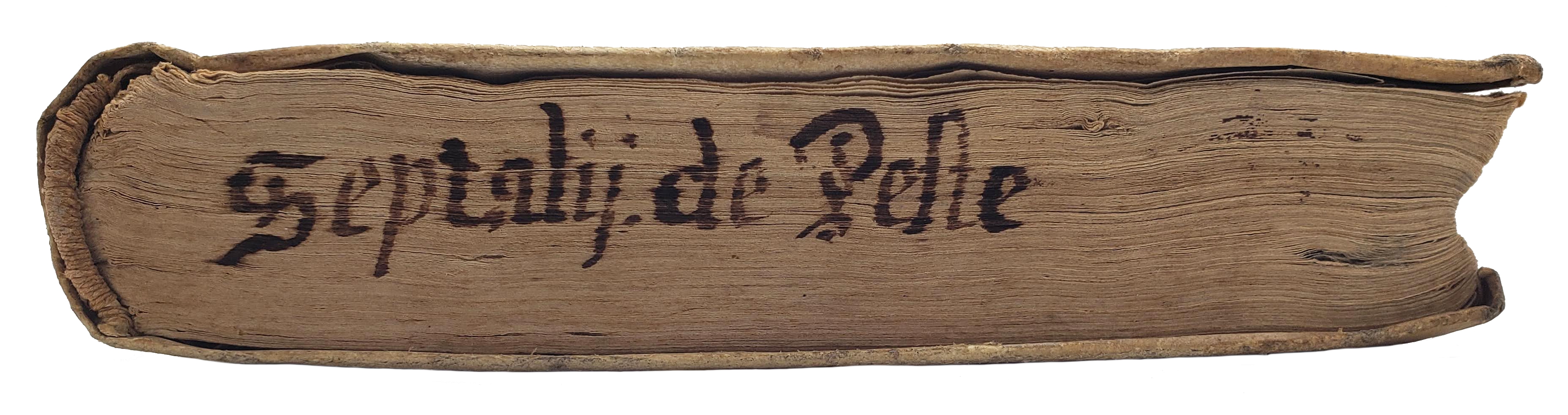
FIRST EDITION. 4to. pp. (xvi) 343 (xvii). Roman letter. Engraved printer’s device to t-p, woodcut initials and tailpieces, typographical headpieces. First 90 pp. with light waterstain to lower corner, diminishing, from p. 169 little light waterstain to outer edge, extending but still marginal towards end. A few ll. with slight age yellowing, a good copy in original vellum, small wormhole to head of lower joint. Late C17 or early C18 autograph to t-p of Girolamo Doria, early marginal manicule to preface.
First edition of this academic treatise on plague by the Italian physician Ludovico Settala (1550-1633), who worked on outbreaks of plague in Milan in 1576 and 1628-30, the latter being the plague described in Manzoni’s The Betrothed, in which Settala features. He is also known for accumulating a cabinet of wonders through his Jesuit contacts in Brazil, including a full parrot feather cloak, now in the Pinoteca Ambrosiana.
Settala’s work is notable for the variety of causes that he notes for the plague as well as the variety of plagues that he observes, indeed he sees variety as the defining feature of plague as a disease. Chiefly following Galen he describes the characteristics and symptoms of plague, as well as its epidemic qualities. Discussing the causes of plague, he attributes it to God’s wrath or the operation of demons – these kinds of plagues can take place without fevers or contagion – the influence of stars, bad air, unhealthy air or corrupt vapours, consuming rotten food, and simple contagion. Settala posits why man is especially prone to the plague, noting that close proximity in unclean and unhealthy surroundings is clearly the cause of significant outbreaks. He keeps an open mind when discussing preventatives and cures, debating the relative benefits of diet, fresh air or enclosure, sleeping or keeping awake, exercising or keeping still, treatments including bleeding and purging, for example by piercing the scrotum, the use of drugs such as arsenic and alexipharmaca, etc. The final book is a catalogue of cures for the plague including drugs, herbal treatments and cures using animal parts, precious stones, etc. At the end of the work is reprinted Francisco II Sforzia’s 1534 edict the Erectio Magistratus Sanitatis, describing the officers and buildings of a ministry of public health, with rules for the quarantine of plague victims, etc., which Settala presumably felt needed reviving.
The previous owner is possibly Girolamo Doria Pamphili (1678-1760), last male inheritor of the male Pamphili line, who died without issue.
Wellcome 5947. Not in NLM, Osler or Heirs of Hippocrates. BM STC It. C17, p. 846.