
RAMELLI, Agostino
MOST IMPORTANT BOOK OF MACHINES OF THE C16
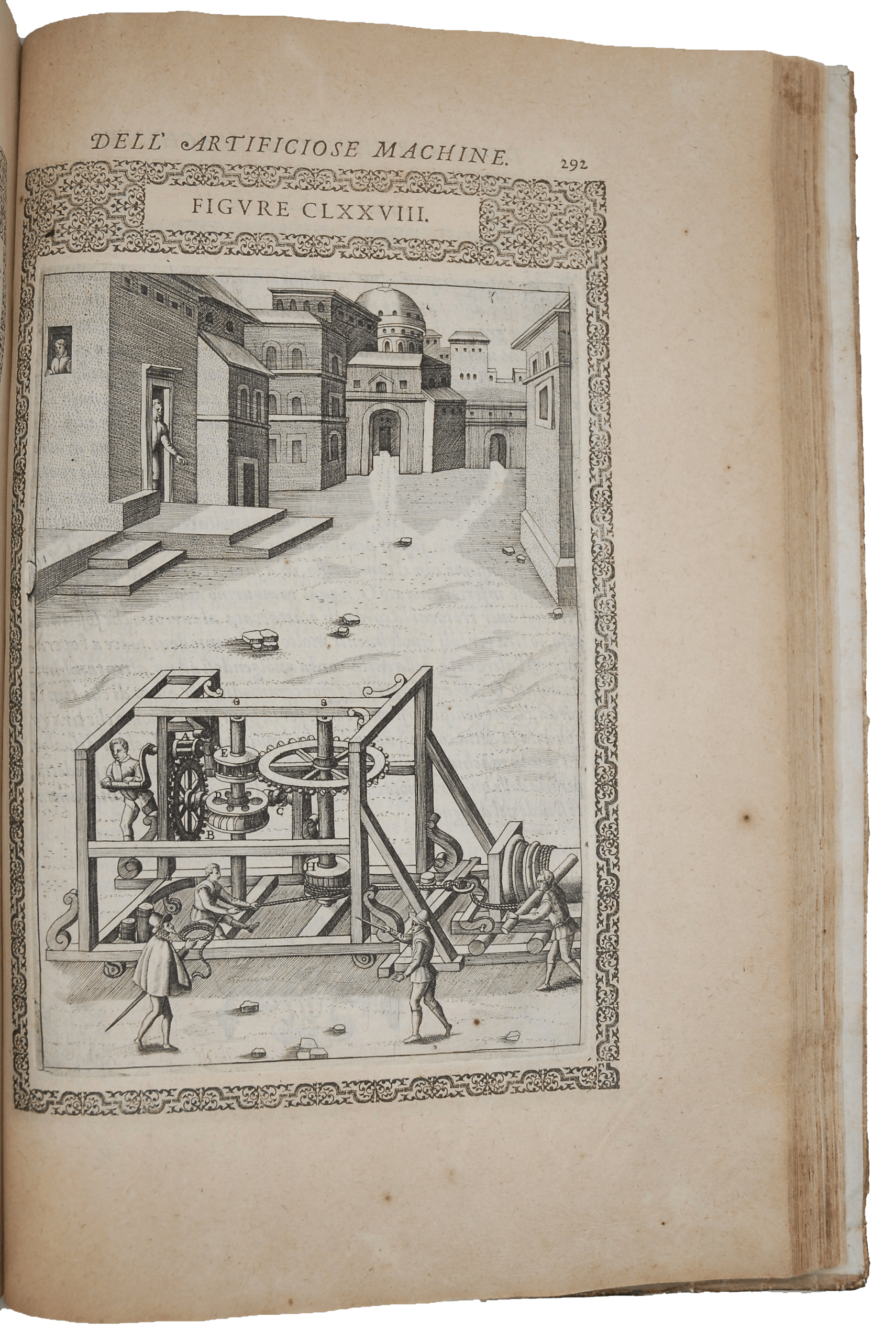
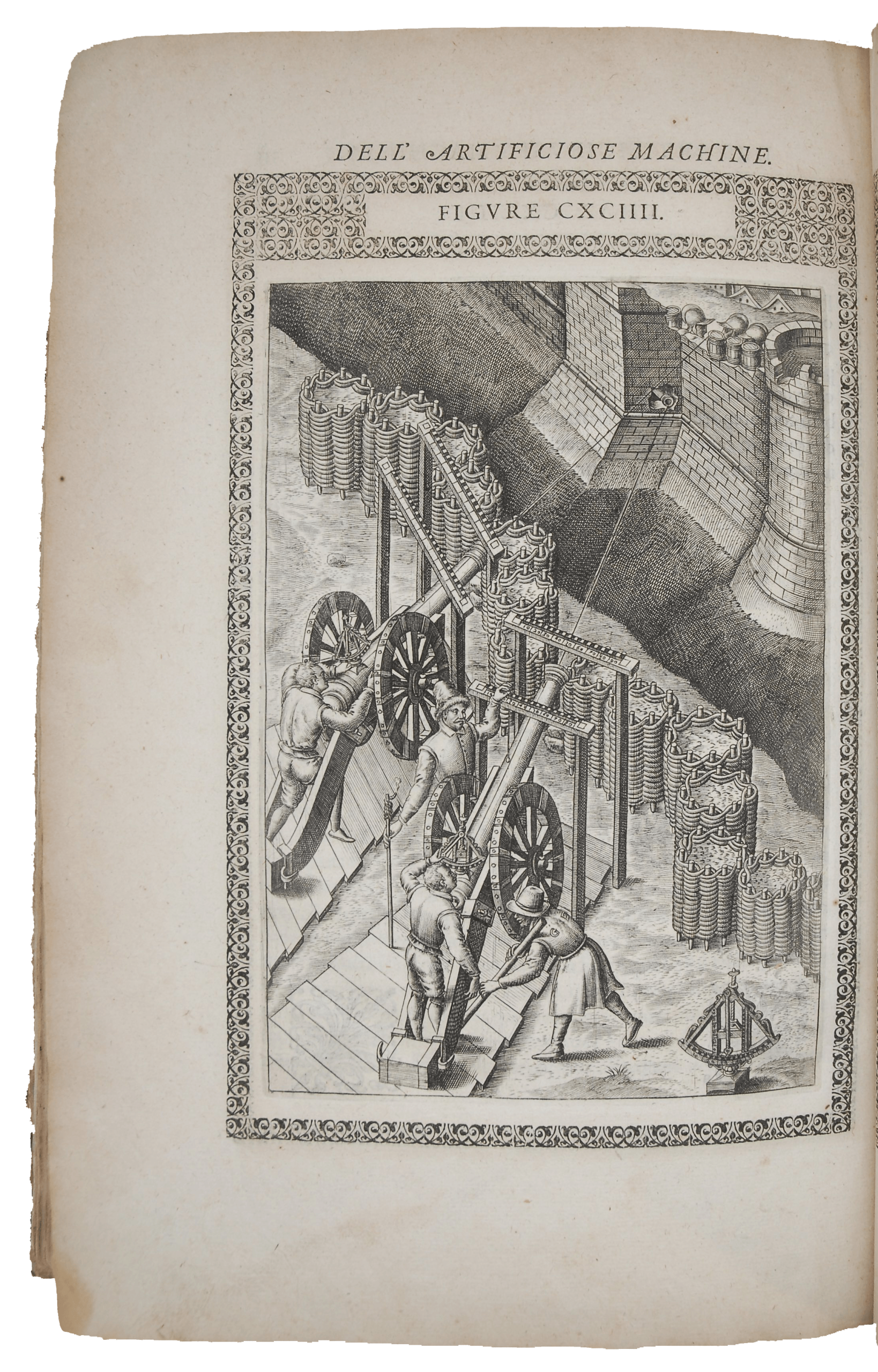
Le diuerse et artificiose machine..
Paris, in casa dell\\\\\\\'autore, 1588£27,500.00
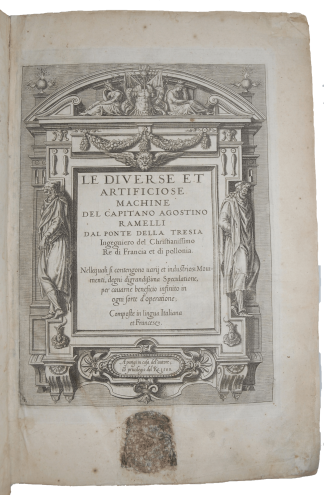
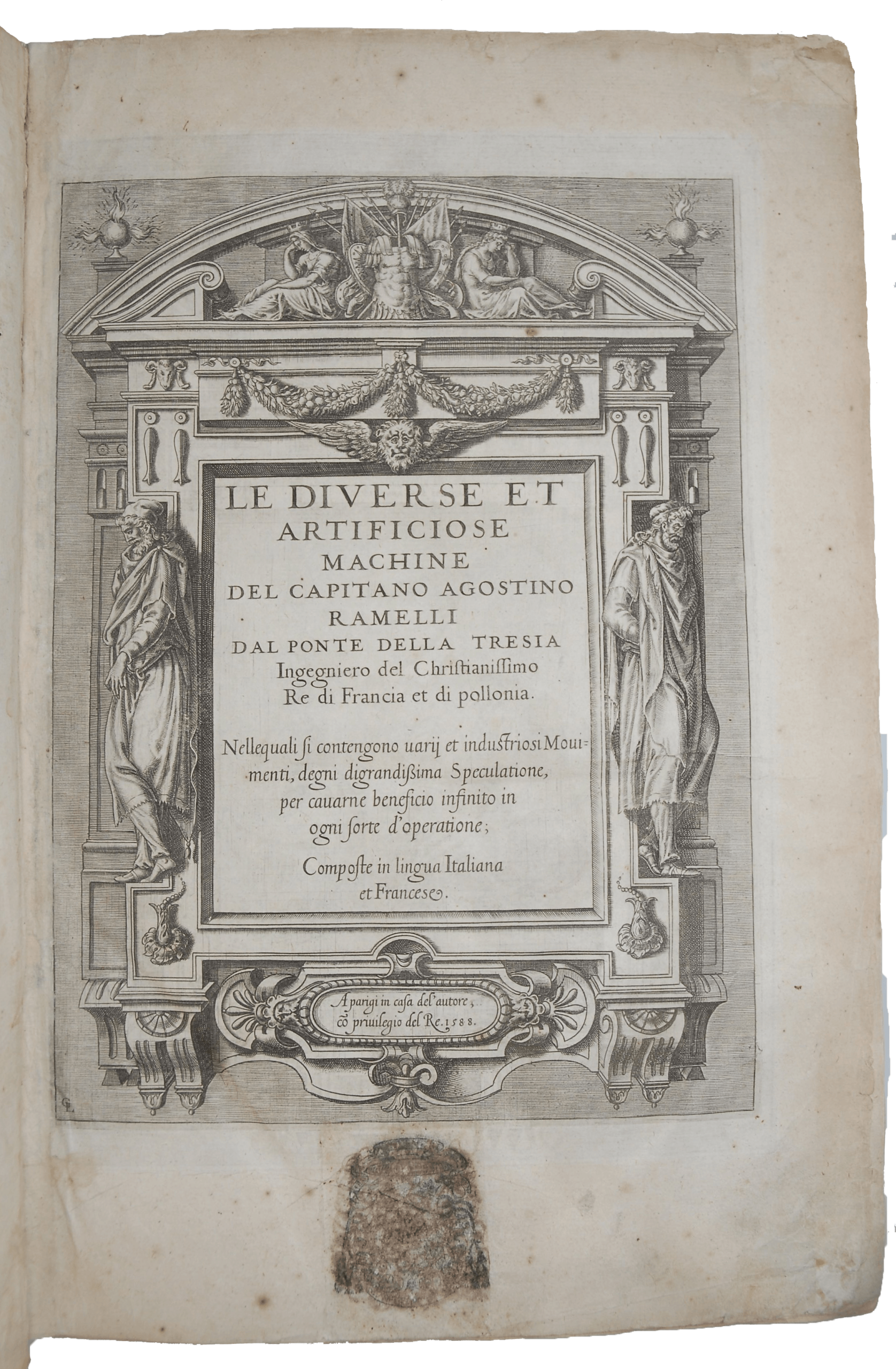
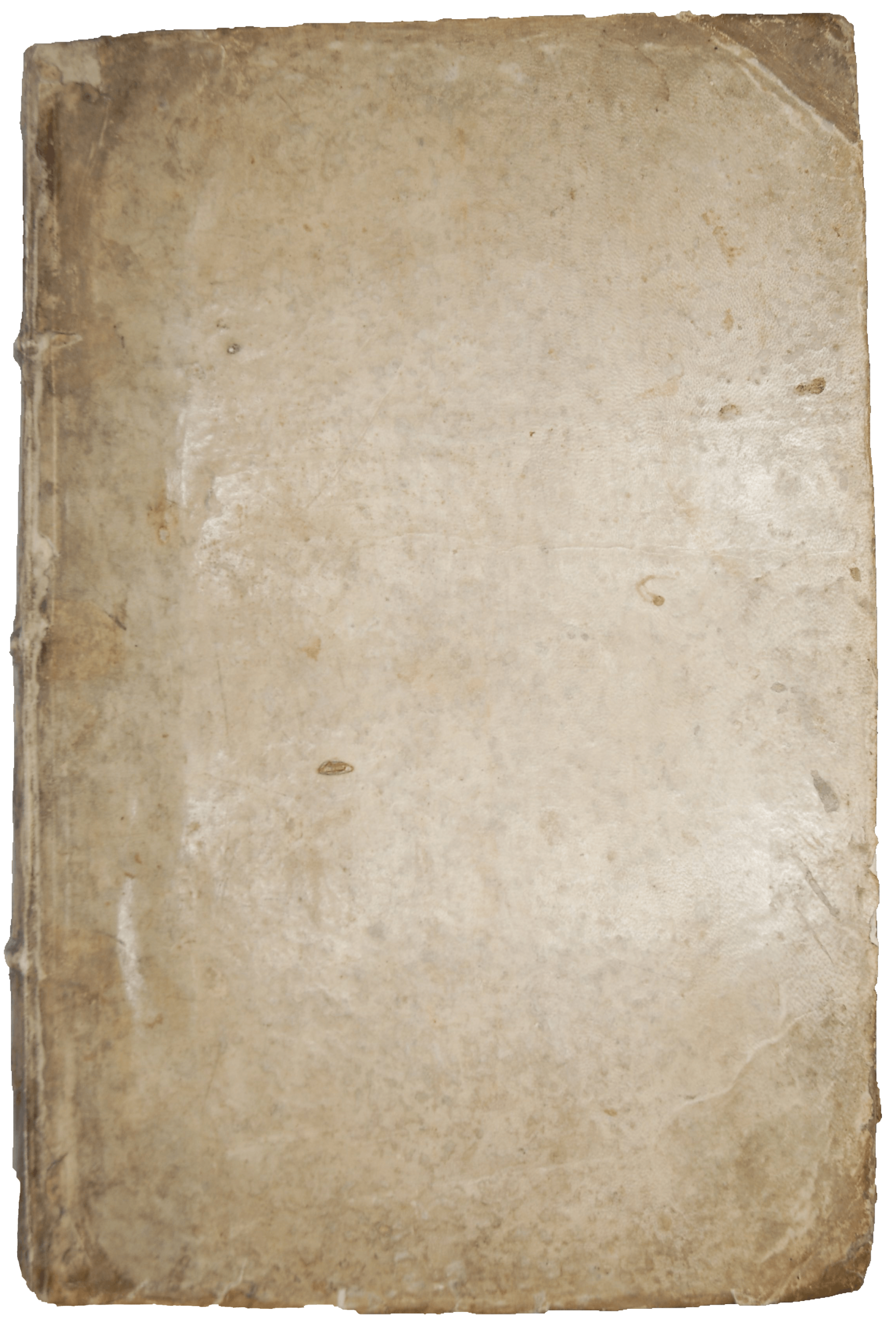
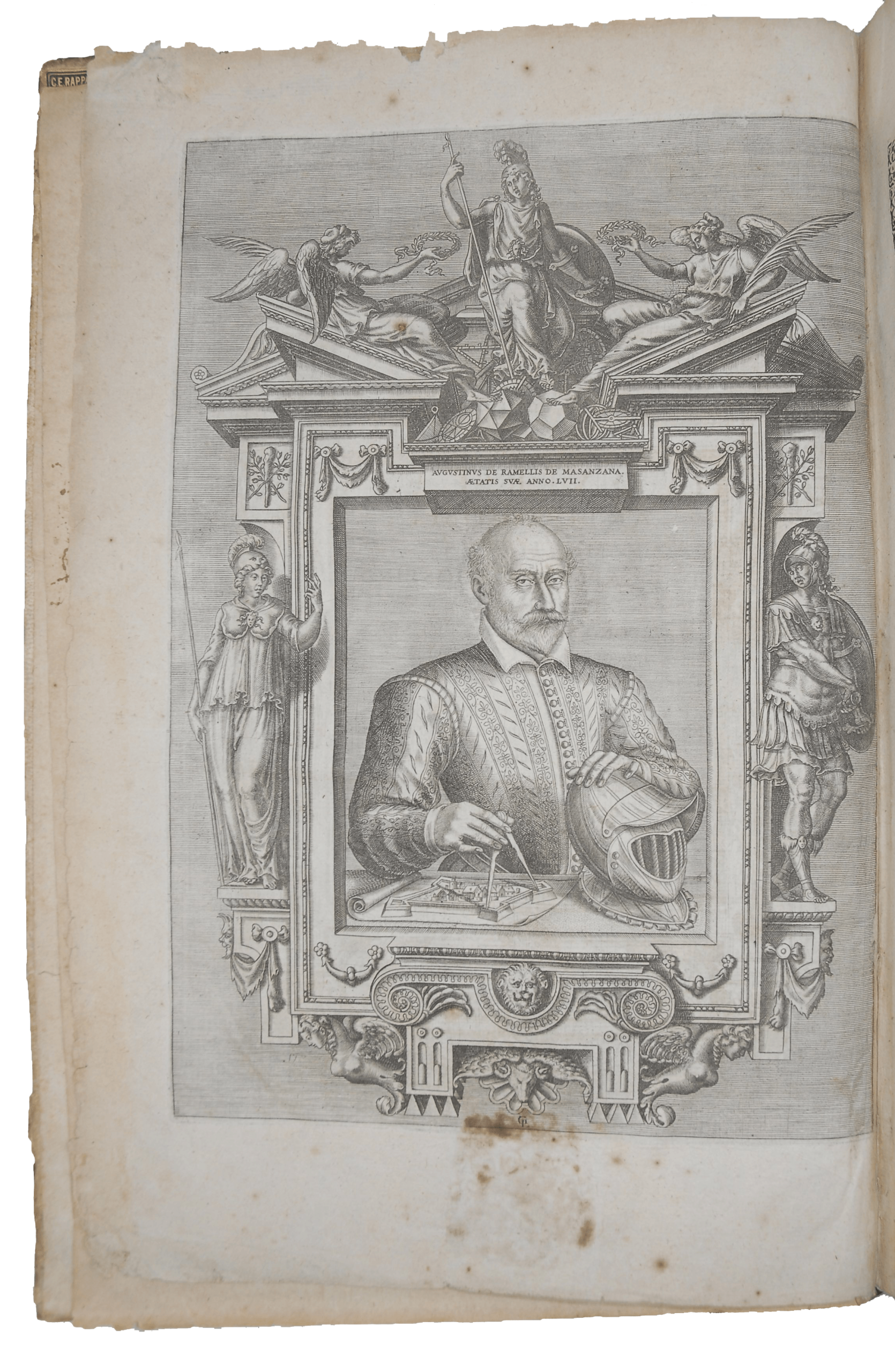
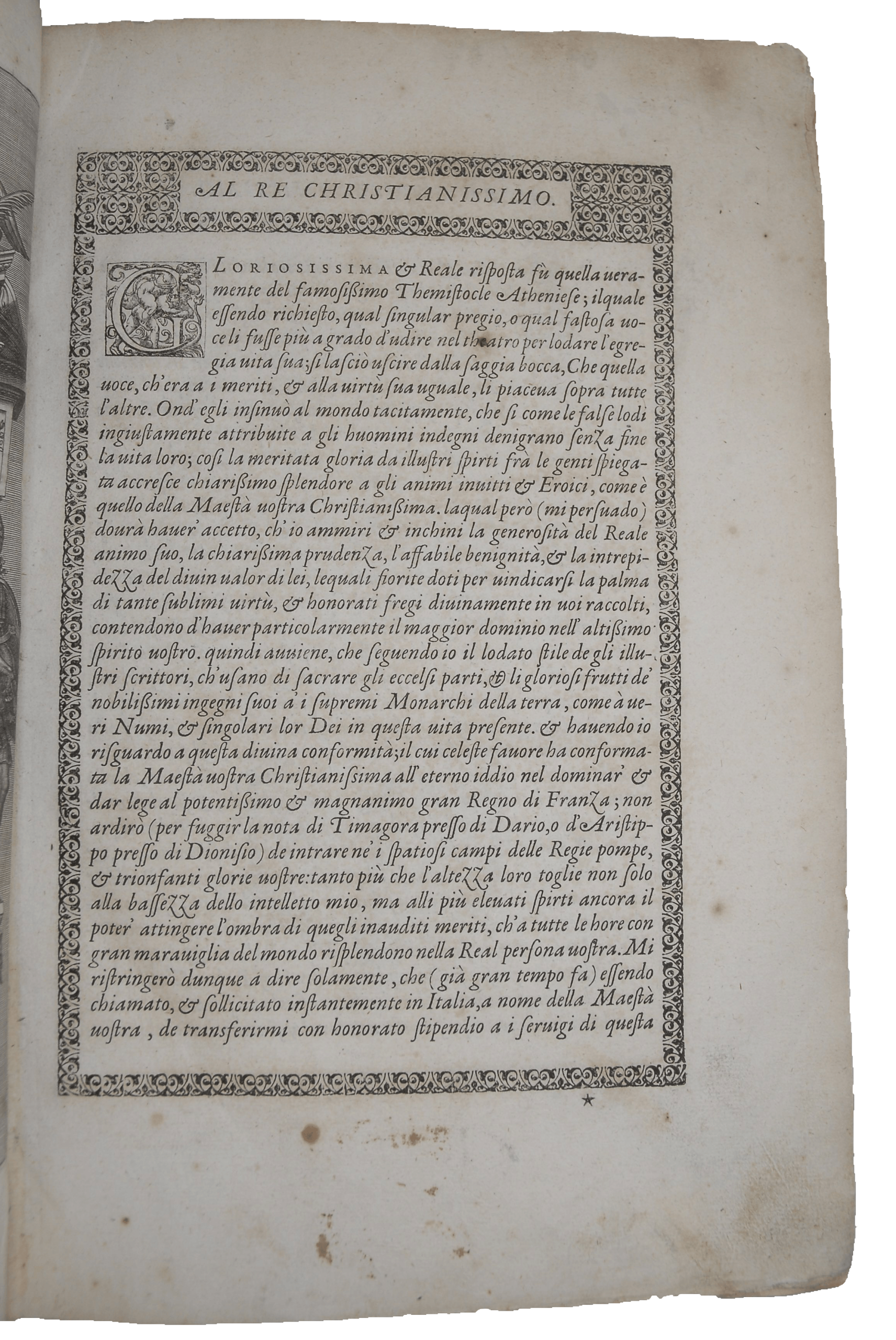
FIRST EDITION. Folio. ff. [xvi], 338. *1, **7, a-s8, t6, u-z8, A-D8, E-K4-2, L6, M-Q4-2, R-X8, Y4, Z2, Aa2, Bb8, Cc-Ff4-2, Gg-Kk6-2. French text in Roman, Italian in italic. Engraved title within architectural border, full page engraved portrait of the author on verso within architectural frame, both by Léonard Gaultier, 194 engravings, of which are 174 full-page and 20 double-page, numbered to 195, numbers 148–9 combined as one illustration, three signed with the monogram “JG”, text and engravings printed within borders of floral typographic ornaments, historiated and floriated woodcut initials in various sizes, woodcut tailpieces and corner ornaments. Discreet library stamp of “Schmidt József pesti molnár” on title, repeated on a few blank margins of plates. Age yellowing with marginal browning, minor spotting in places, autograph pasted over in lower blank margin of title with small repairs to outer margin on recto and verso, tear restored in blank margin of ff16, the occasional marginal thumb mark or ink spot, small oil stain in blank lower corner on last few leaves. A good copy, with excellent dark impressions of the engravings, in contemporary vellum over thick boards, old reback with original spine remounted, a little soiled, corners bumped.
First edition of the most important and most impressive ‘book of machines’ of the C16th, an outstanding example of French book production; illustrated with 195 full-page engravings, it is one of the earliest and most elaborate pictorial technical works to be printed. “This volume is dedicated to the King and special care was taken to make it appropriate as an expression of gratitude for Royal favor and protection. There is also a second factor governing the circumstances of publication. In his address to the reader, Ramelli complains of piracy of his designs which resulted in their publication in corrupt and mutilated forms destroying the original accuracy of his inventions. As a result of this experience, Ramelli planned this work as a particularly handsome volume, difficult to counterfeit, strictly supervised by the author himself and published with the imprint, ‘in casa del’ autore'” – Mortimer.
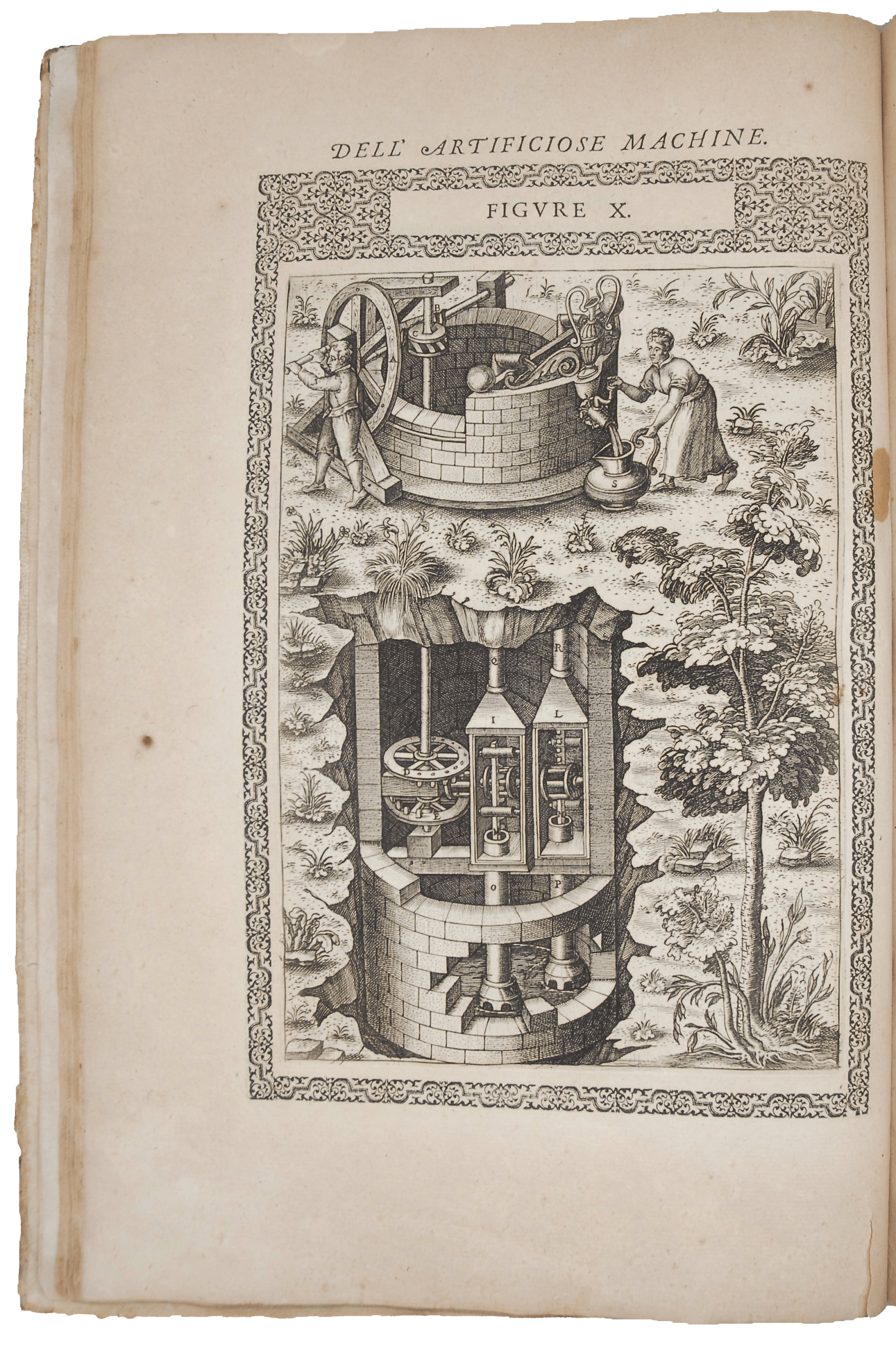
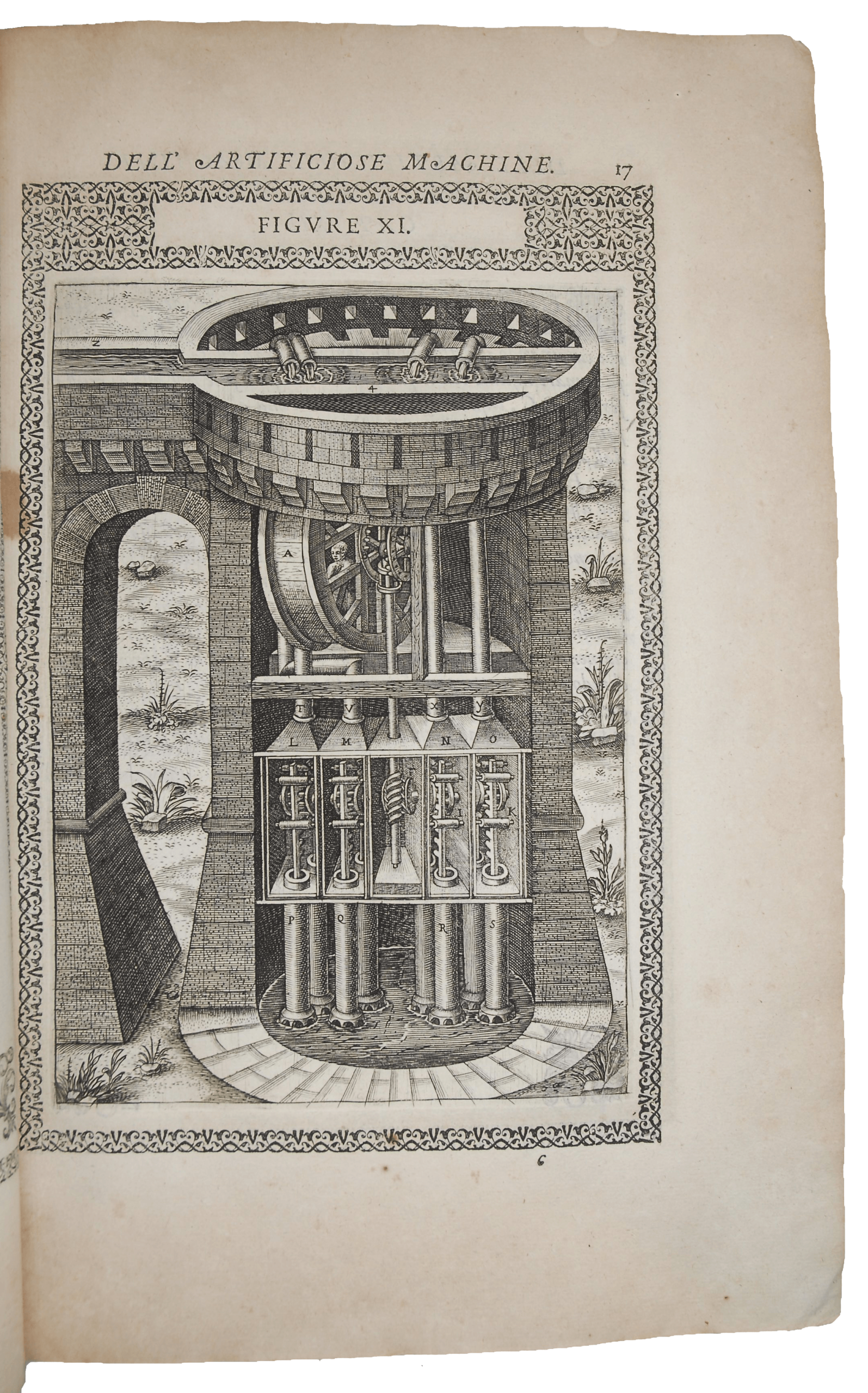
The Ramelli machines are concerned especially with hydraulics or mechanisms of warfare. The superb illustrations show the machines in use with their parts indicated by letters explained in the accompanying text. They are extremely finely worked and detailed, with great care taken to present the machine in landscape settings with figures employed in demonstrating them. Ramelli’s designs cover water-raising devices, wells, mills, mobile bridges, machines for breaking through doors and metal bars, cranes, excavating equipment, fountains, and projectile devices. He described and illustrated for the first time the rotary pump, mechanical details of windmills, and a coffer-dam of interlocking piles, and like other writers of the period he designed biological automata in the form of hydraulically operated singing birds. including one notable departure into the world of domestic gadgetry, a revolving bookcase designed to enable a reader to peruse multiple volumes without having to leave his seat. Ramelli was greatly influenced by the increasing importance placed on mathematics and geometry as an important tool for engineers and artists, and particularly by the writings of Guidobaldo del Monte (1545-1607) and Petrus Ramus (1515-1572).
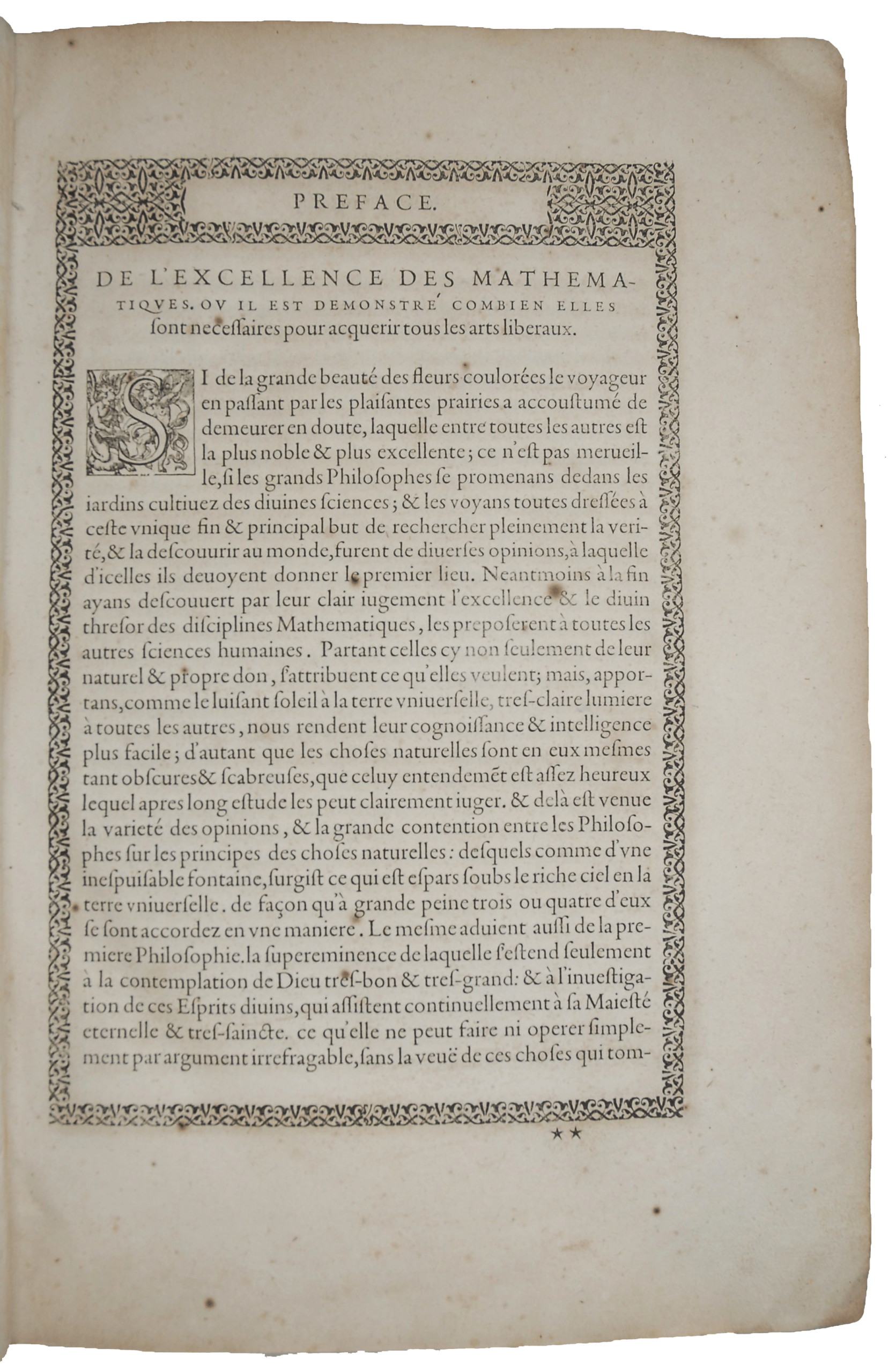
Ramelli’s interest in mathematics is demonstrated in the preface, ‘On the excellence of mathematics in which is shown how necessary mathematics are for learning all the liberal arts.’ “Ramelli also wanted to make his book accessible to many engineers so, as an Italian living in France, he produced both Italian and French descriptions of the machines. Ramelli’s bilingual descriptions are much more detailed than those found in previous illustrated books of machines by Jacques Besson and Jean Errard de Bar-le-Duc. Ramelli’s book had a great influence on future mechanical engineering; Georg Andreas Böckler’s, Theatrum machinarum novum, 1662, copied eighteen of Ramelli’s plates. “Ramelli’s influence can also be seen in the well-known works of Grollier de Servière (Recueil d’ouvrages curieux de mathematique et de mecanique, 1719) and Jacob Leupold (the multi-volume set Theatrum machinarum, 1724-1739). Leupold’s work helped pass along Ramelli’s ideas to a large population of eighteenth-century engineers. Only the one edition of the book was issued during Ramelli’s lifetime. In 1620, a German translation appeared in Leipzig as Schatzkammer, mechanischer Künste…, published by Henning Grossen den Jüngern with the illustrations re-engraved by Andreas Bretschneider.” Ronald Brashear, Smithsonian libraries.
BM STC C16th Fr. Dibner, Heralds of Science, 173. Adams R-52. Brunet IV:1095. Mortimer Harvard Fr. 452. Norman 1777. Riccardi I:341. “Opere rarissima ed assai apprezzata”In stock