
MARGARITHA, Anton.
EARLIEST PRINTED DEPICTIONS OF JEWISH CEREMONIES
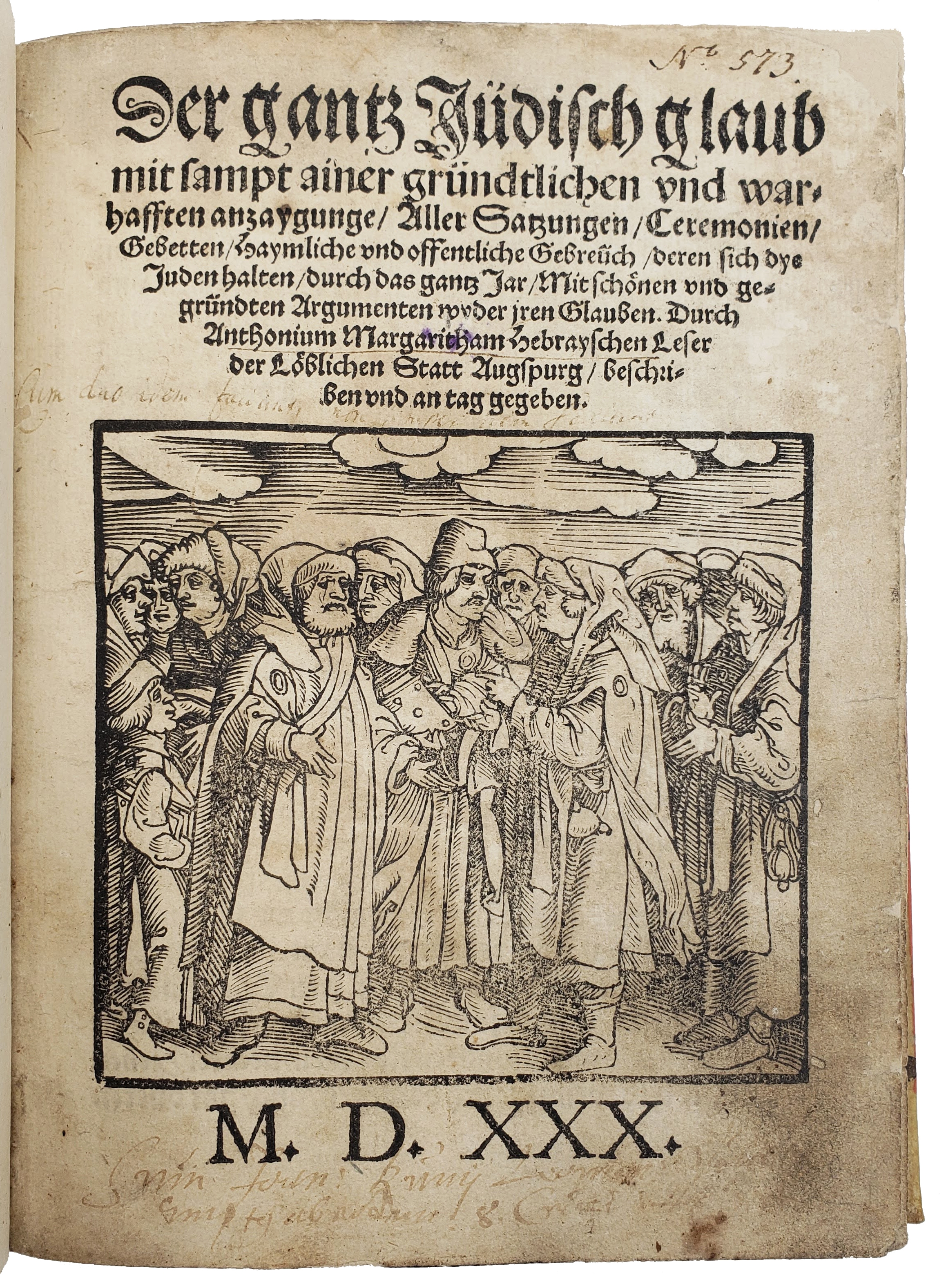
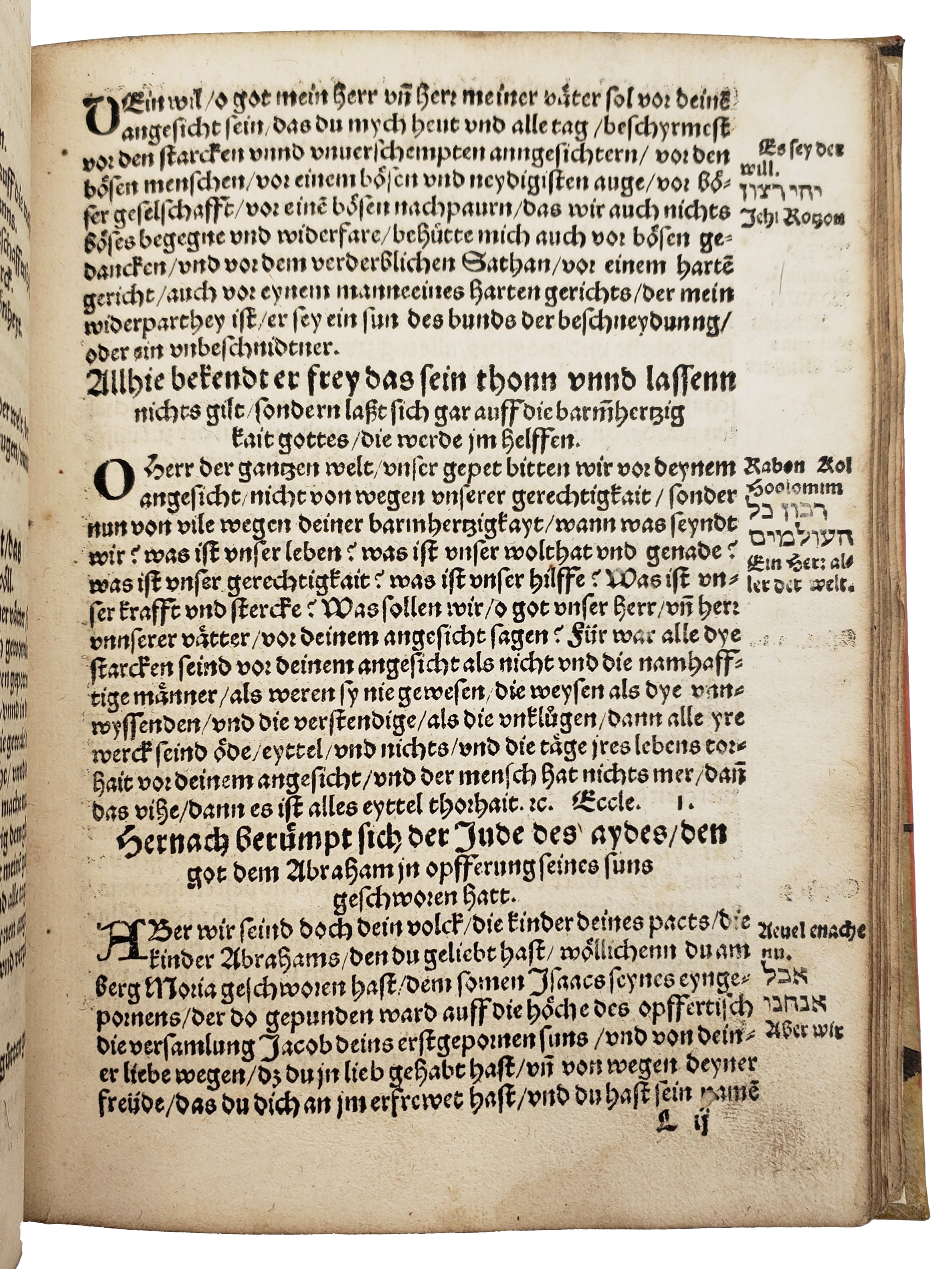
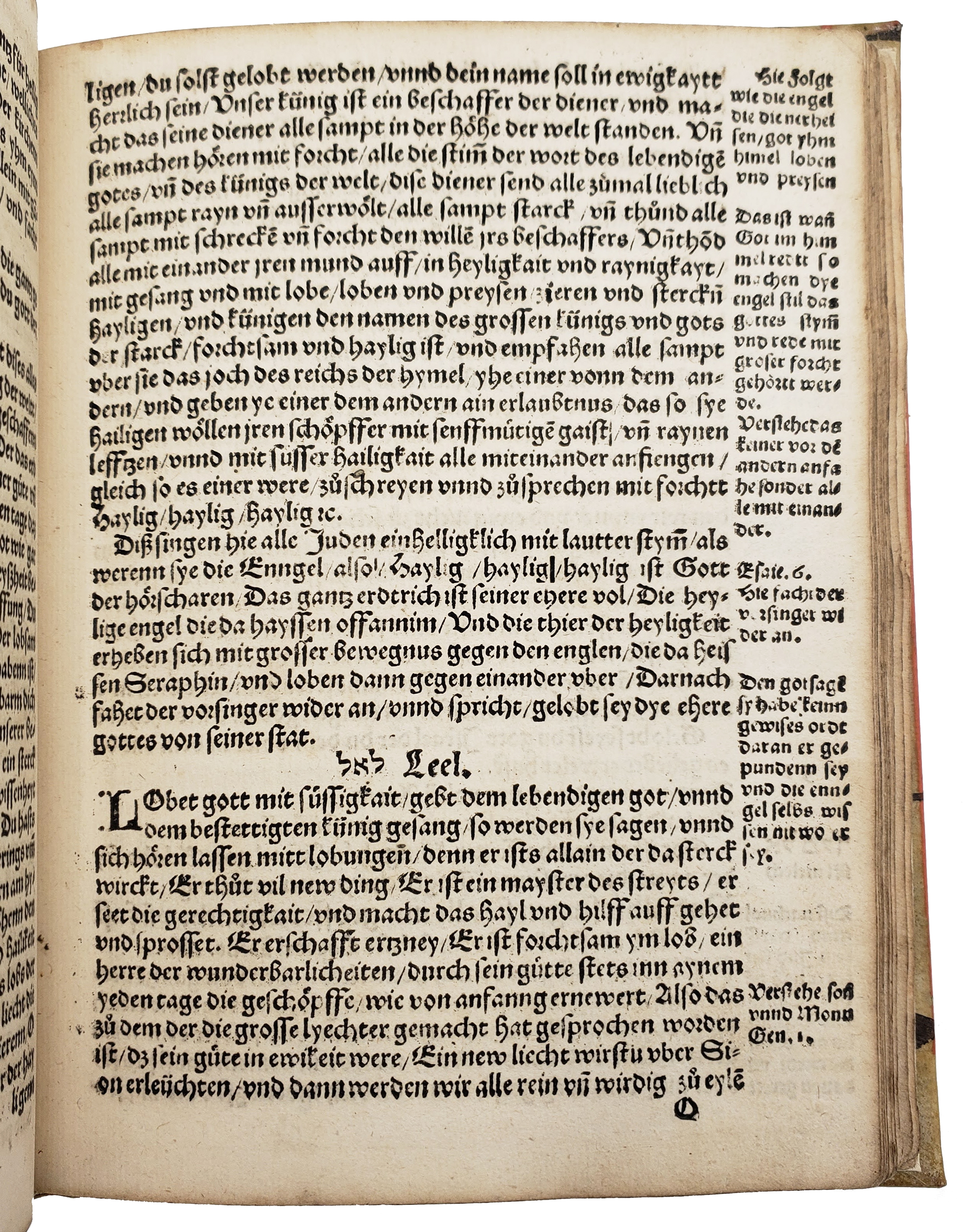
Der gantz Jüdisch glaub.
Augsburg, Durch Heinrich Steyner, 1530£7,500.00
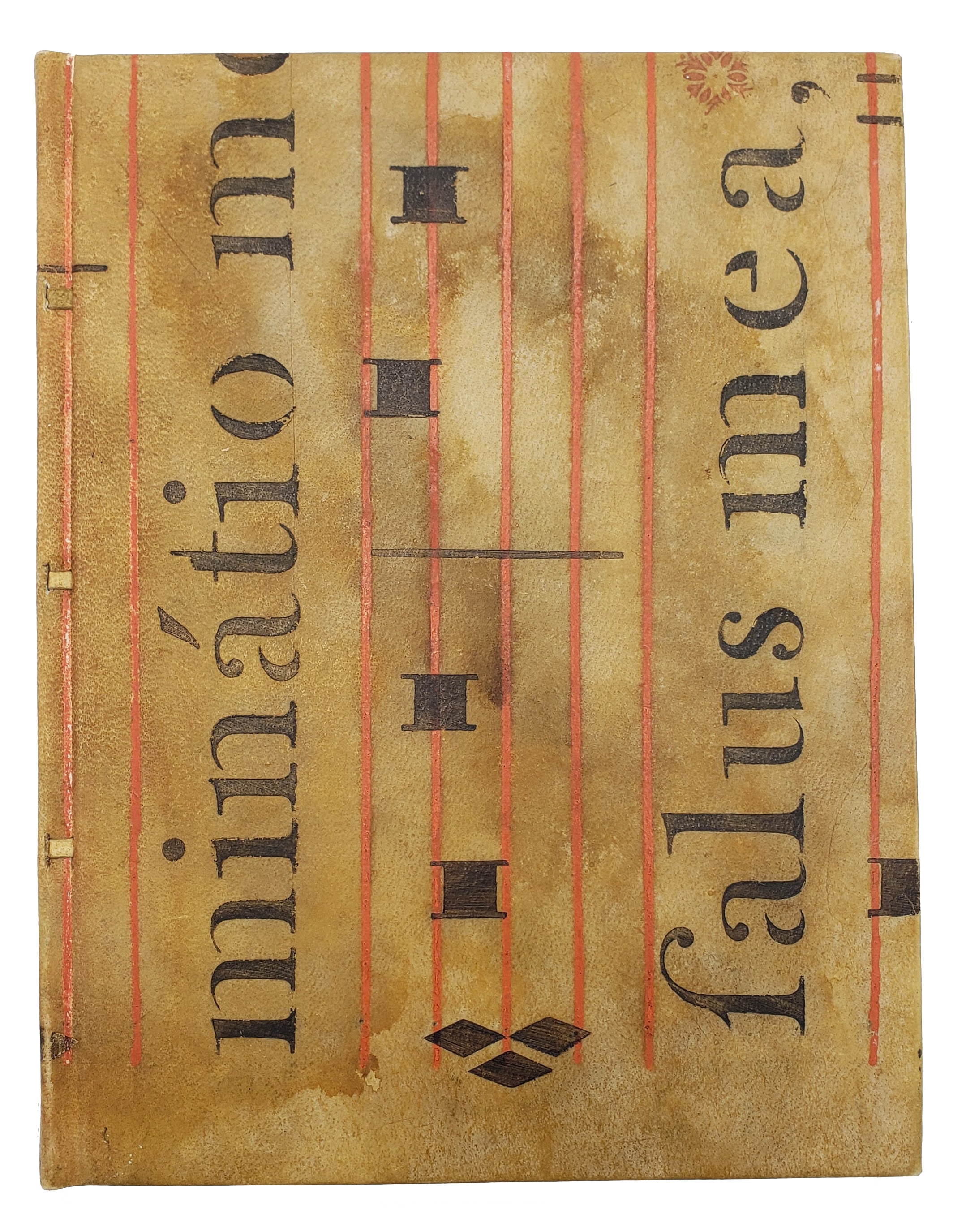
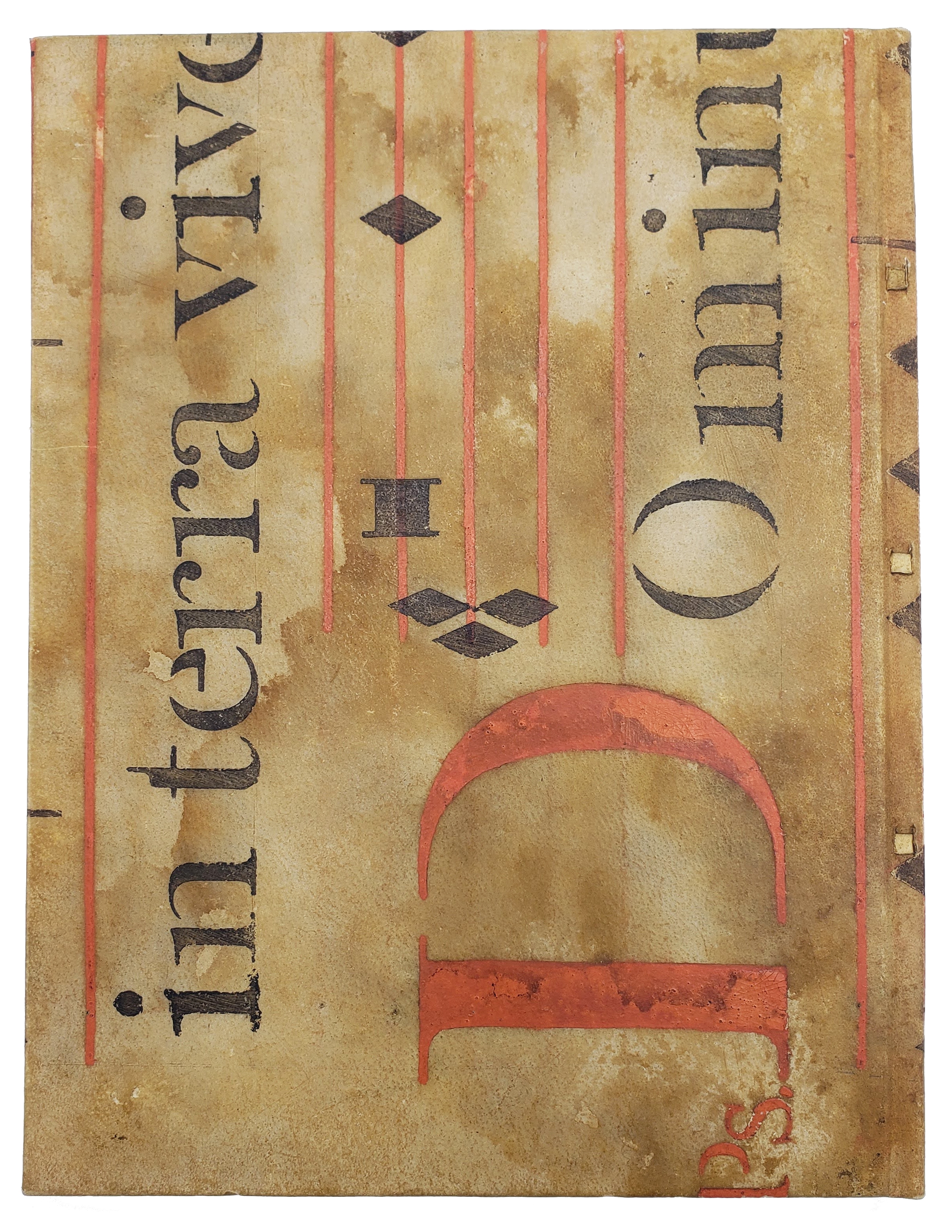
4to. 92 unnumbered ll. Gothic and Hebrew letter. T-p with woodcut depicting Jews debating, five further woodcuts showing a service in a synagogue, women bringing a child to a river for ritual washing, woman bathing and with chickens for ritual slaughter, flagellation before Yom Kippur, and a Jewish altar and ark. Woodcut initials attributed to Holbein. T-p with small repair to upper corner and one or two very small closed tears to outer edge, repair to blank lower corner of E1r, single wormhole to blank lower outer corner from start to M2, just touching one or two letters and woodcuts, occasionally repaired. Light waterstain to blank outer edge of last few ll., to occasional upper corner and blank lower corner, age-toning, small repair to blank outer edge of last, occasional mark or dustiness, mostly marginal, a good copy in modern rebind using C17 Italian liturgical ms. with music. Contemp. acquisition note to t-p, ‘Sum Joan. Rimi[n]i(?) [etc.],’ further inscription in same hand. C18(?) addition in German to preface, contemp. addition in Hebrew copied from text.
Rare second edition, with colophon dated 7 April, of this guide to Jewish life, culture and religious ceremonies by the C16th Jewish convert Anton Margaritha, the son of a rabbi in Augsburg, first published the same year on 16 March. The fascinating woodcuts, which are the earliest printed visual depictions of Jewish ceremonies, many of them showing Jewish women in traditional dress, were copied (traced and reversed) from a work of 1508 by another German convert, Johann Pfefferkorn (1469-1523), though the title-page woodcut was designed separately, attributed to Jörg Breu the Elder (c.1475-1537).
Much of the book consists of the German translation of the Jewish liturgy and prayers, with details of the observances of the Sabbath, Passover, Yom Kippur, circumcision, etc. It also contains Margaritha’s criticism of rabbinic authority and the practice of usury, and shows the Jewish faith to be based on ritual and superstition. The book influenced Martin Luther, who read, praised and recommended it. ‘One of the fundamental factors determining Protestant policy towards the Jews during the 1530s … it confirmed [Luther’s] belief that, like the ‘papists,’ the Jews were completely focused on gaining salvation by virtue of specific religious acts in themselves … [which] was idolatry’ (Thomas Kaufmann, Luther’s Jews (Oxford: 2017), p. 79). It was after this that Luther moved from a position of toleration to one of hostility, penning a series of venomous denunciations of Judaism. Margaritha’s attack on Judaism caused significant controversy in Augsburg and he was banned from the city. His work ‘was to remain one of the most important sources of information about Jewish religious ceremonies and practices into the eighteenth century’ (Kaufmann), as well as a source of everyday Jewish life and customs.