
EYNATTEN, Maximilian
EXORCISTS SHOULD CONSULT DOCTORS
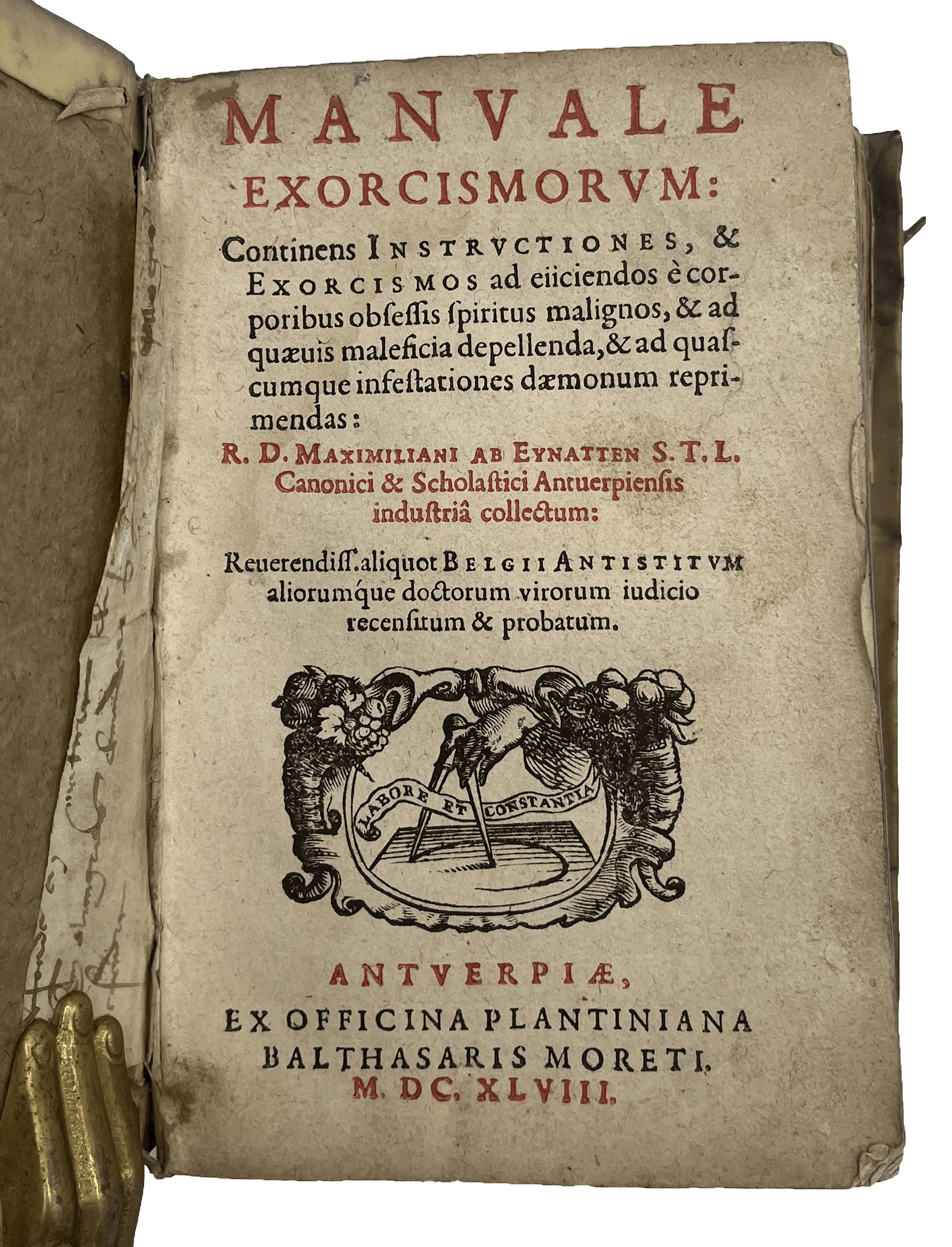
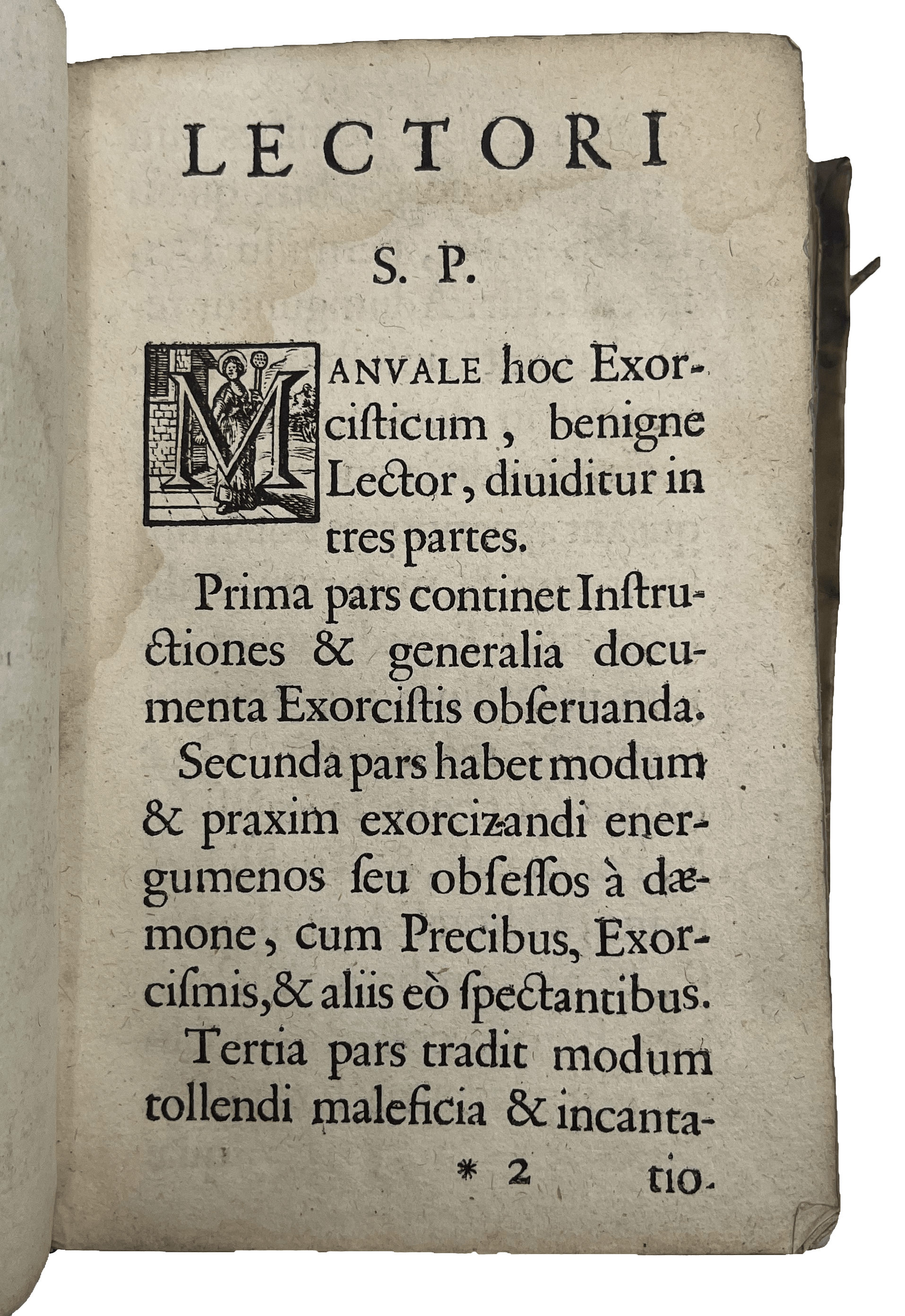
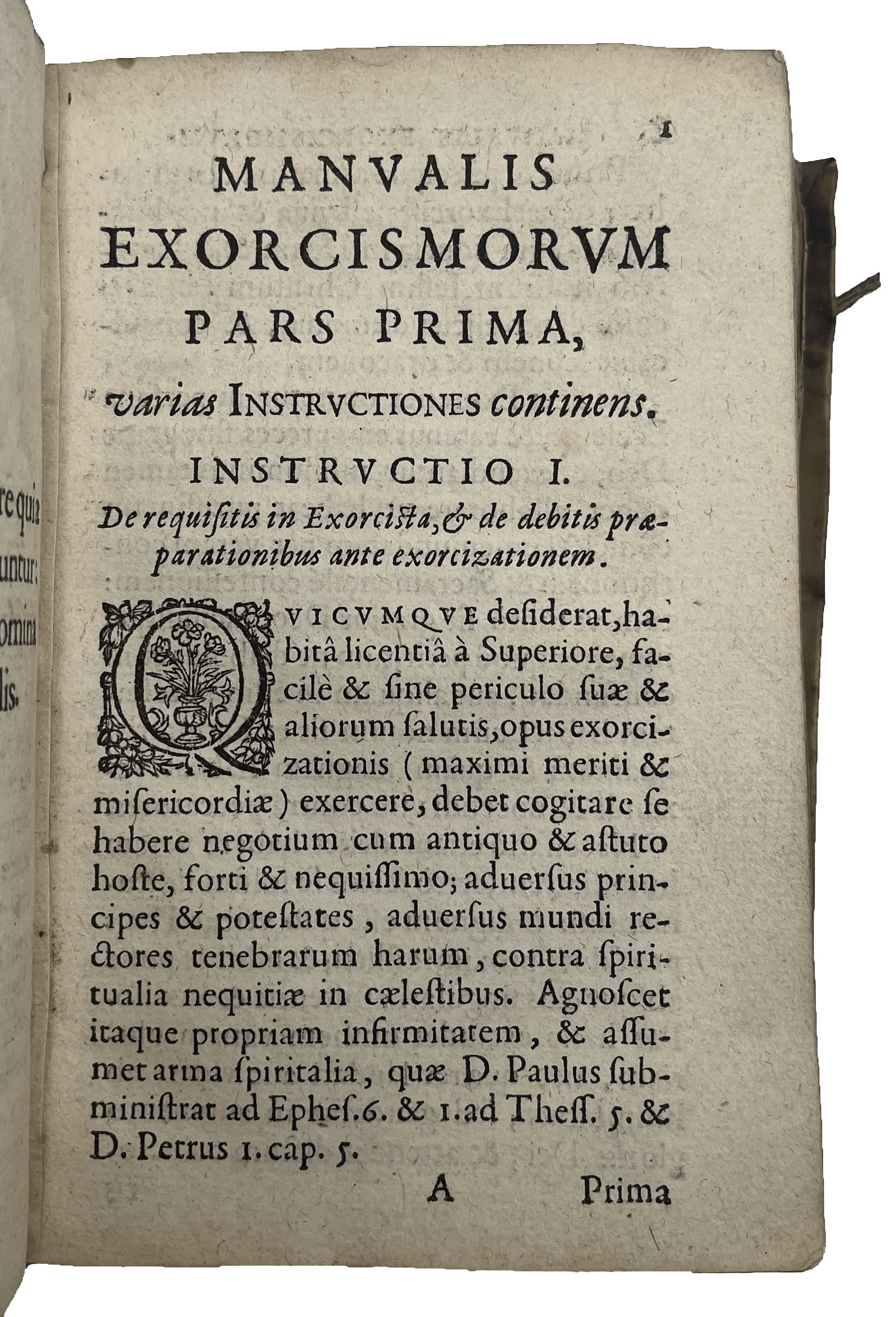
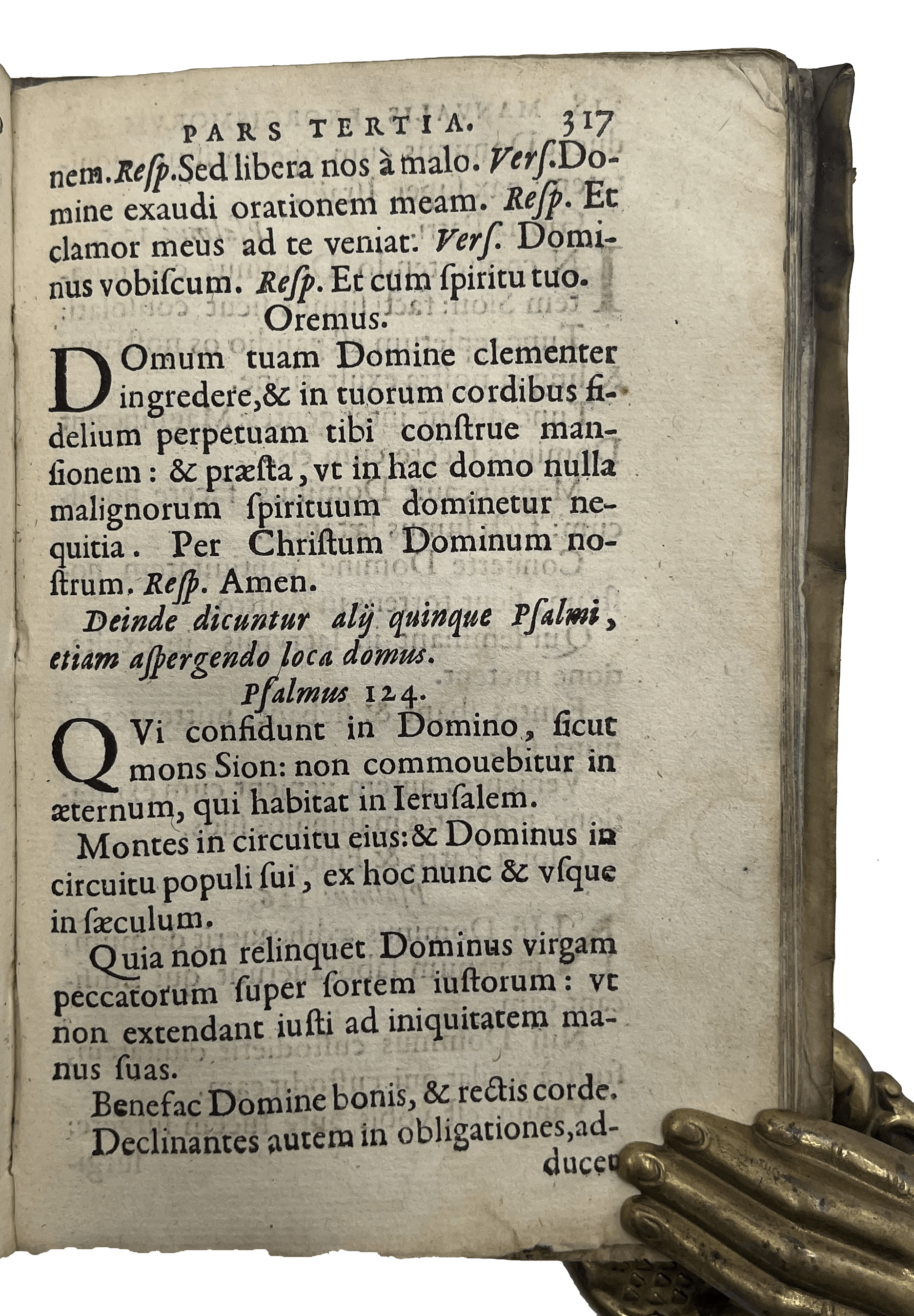
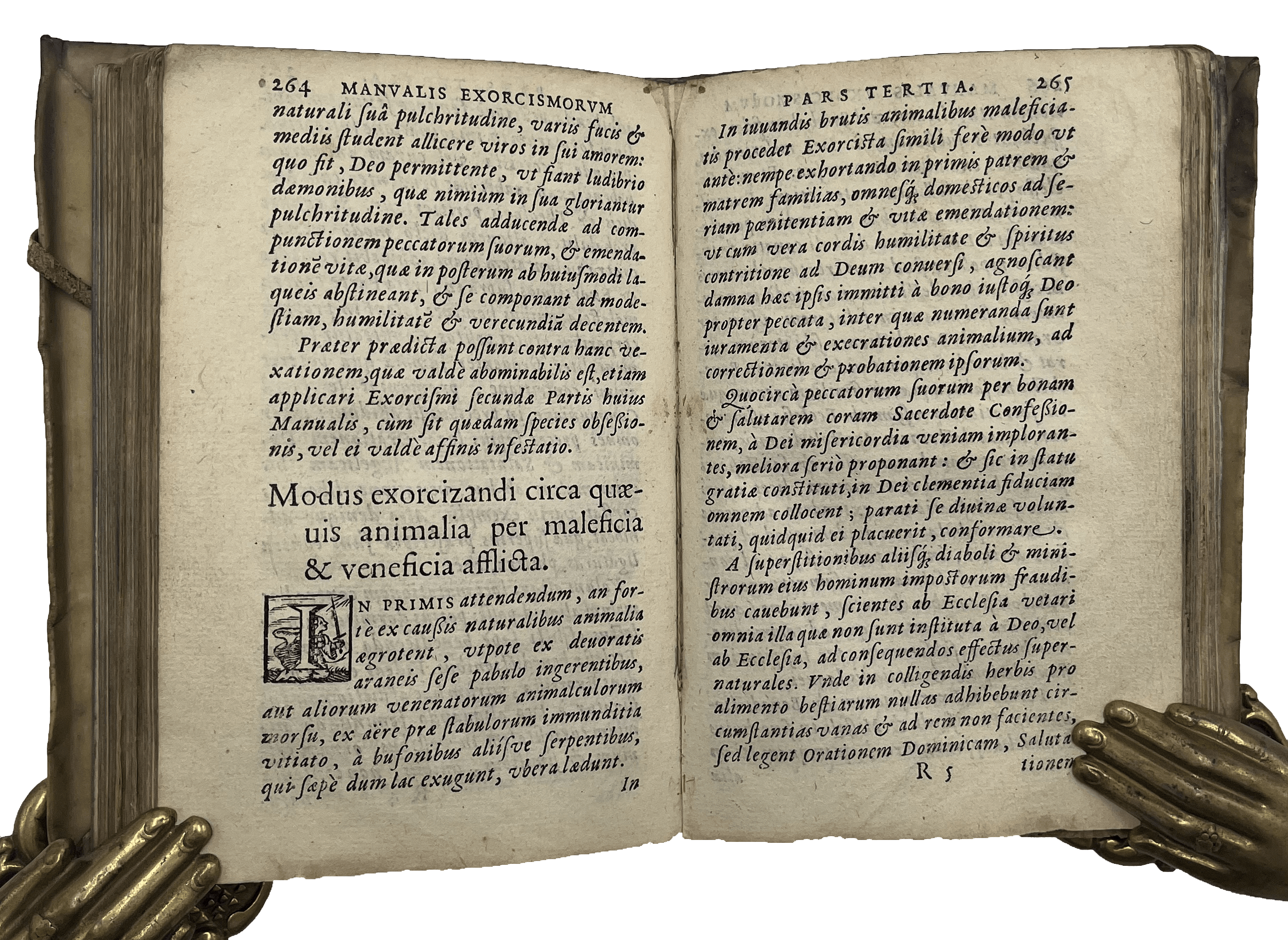
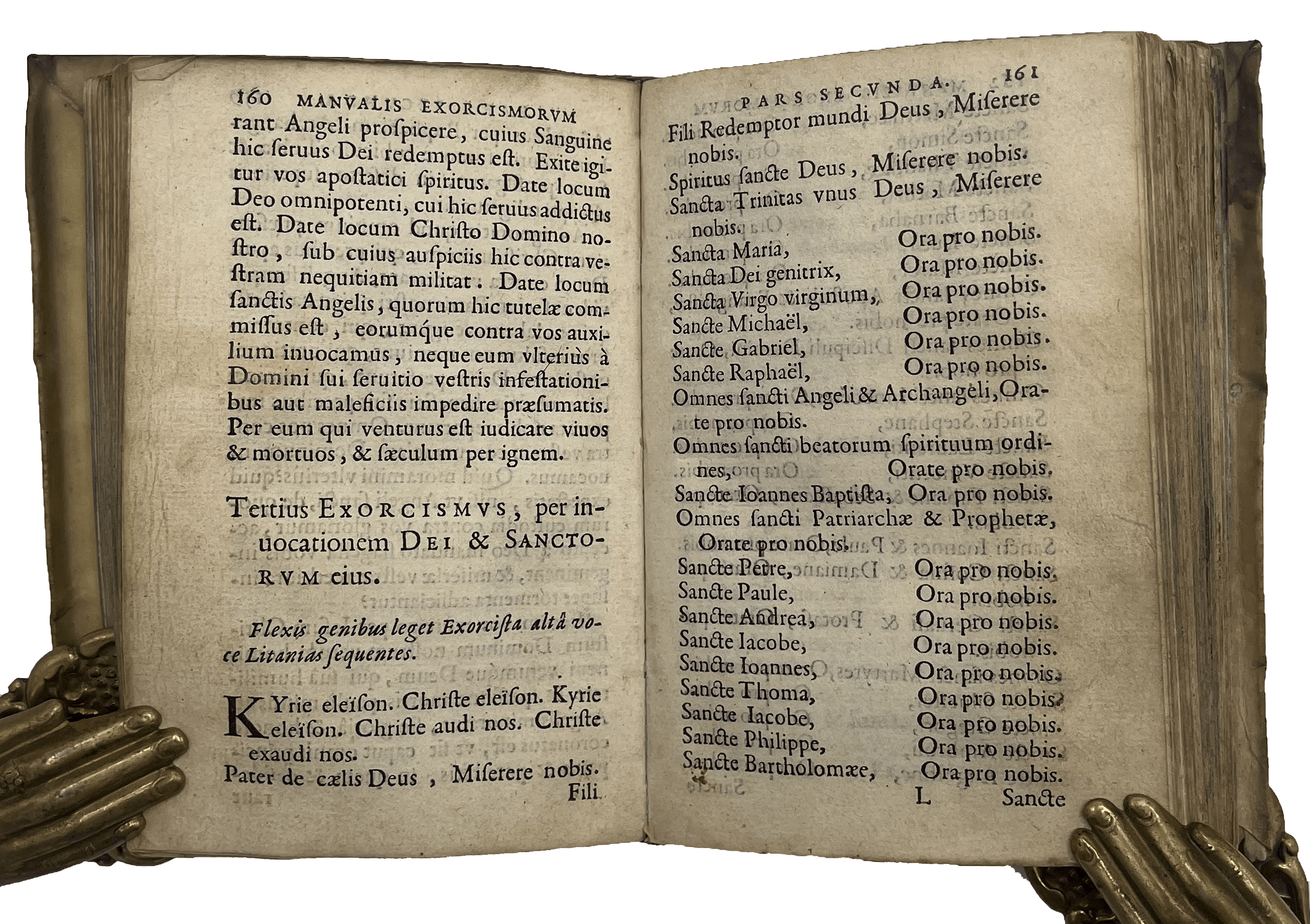
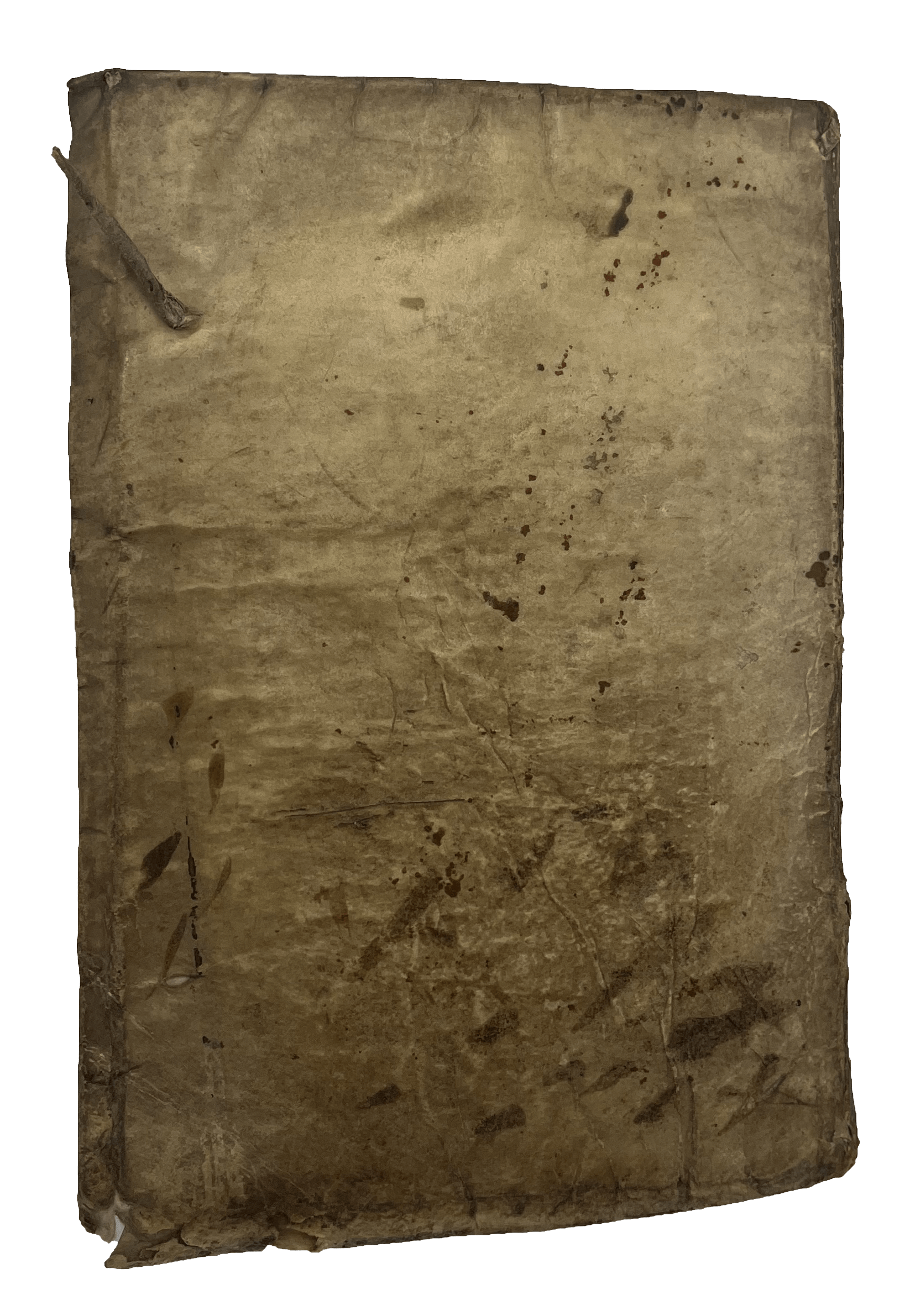
Manuale exorcismorum.
Antwerp, Ex Officina Plantiniana Balthasaris Moreti, 1648£1,750.00
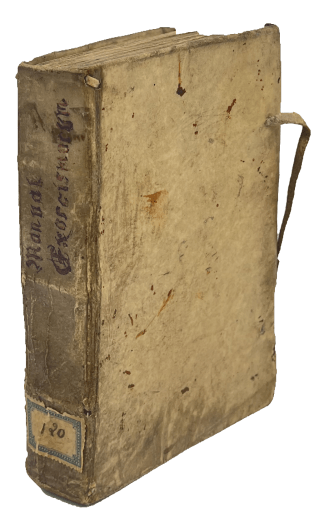
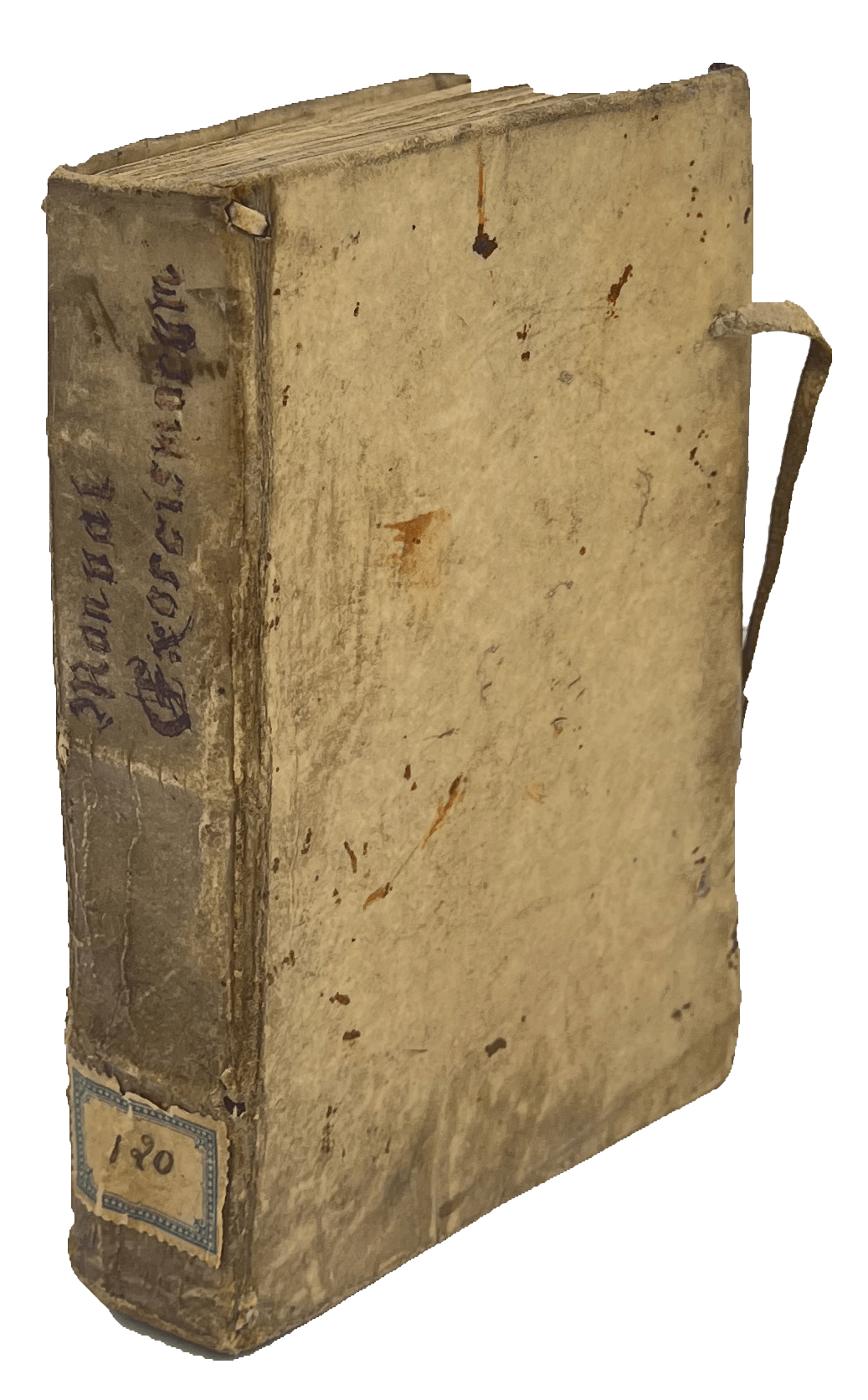
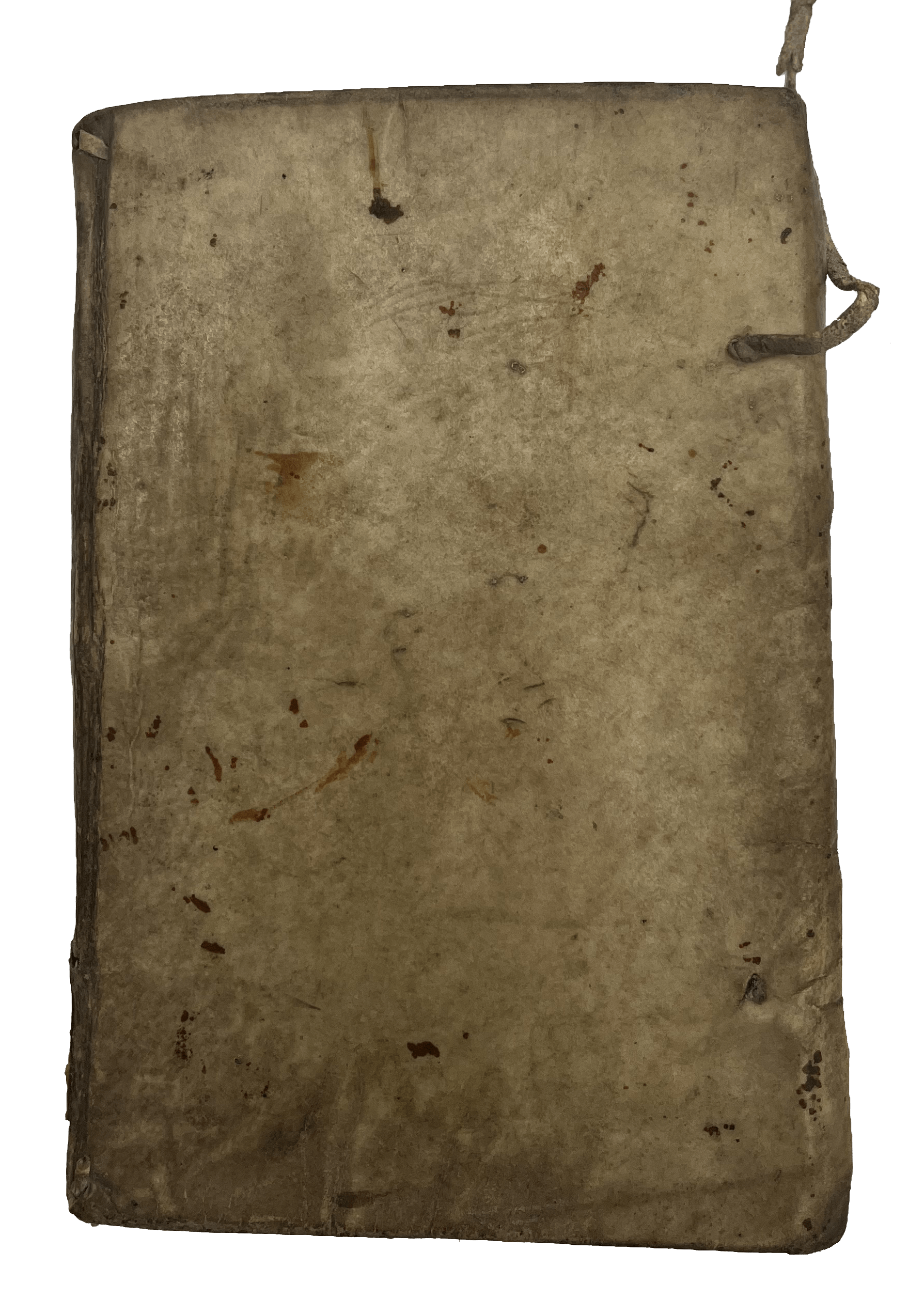
8vo. pp. (xvi) 359 [i]. Roman and italic letter. T-p in red and black, woodcut printer’s device. Woodcut initials and tail-pieces. Original limp vellum wrappers, slight loss from lower rear corner, lightly soiled, remains of ties, later ms. inscription and label to spine, without eps. Occasional light marginal staining or dustiness. First quire with very light waterstain towards head, final three quires with inkstain to upper corner and some slight loss from lower edge, S2 and Y1 with ink stains, marginal tear to V2, a good copy.
A popular and practical manual of exorcism, first published 1619. The first part, a general preparation for putative exorcists, encourages them to work closely with doctors. Indeed, the first sign of a possession is that a doctor has been unable to identify the source of an illness and that their cure is not working. Exorcists are instructed to look for signs of demonic possession that are identical with many of the symptoms of natural diseases; because demons are created by God and have only been traduced into hating him, it makes sense that they should try to hide behind symptoms of illnesses that are likewise part of His creation. It is therefore incumbent upon exorcists to study both medical and theological works to identify when symptoms are natural or otherwise, something Eynatten admits is very difficult. Bewitched people often exhibit the signs of common fevers, for example, or the kinds of seizures suffered by epileptics. He goes on to say that doctors will very rarely attribute symptoms to the ‘poison’ of demonic possession, believing most illnesses to be caused by noxious imbalances in the body, but that the exorcist must nonetheless follow advice given by doctors.
There are, however, specific signs of possession: aversion to the scriptures; extraordinary thrashing about; being unable to enter churches; extreme perturbation when in contact with the eucharistic wafer, relics or holy water. Before entering, many demons will appear to their victims in nightmares, in horrible forms or with lacerated bodies. Some will cause the victim to feel that they are being touched by fish, or that there are ants crawling on their bodies and in their hair, or that they are being pricked with needles. Demons will also make their victims speak in strange languages and loud, disembodied voices, or imitate animal noises.
The second part contains the methodology of exorcism, consisting of prayers, biblical readings and invocations to demons to depart. The third and final part continues in this format, though focuses on those whose bodies are afflicted through witchcraft or incantations, as well as bewitchment through evil spirits or demons. This allows Eynatten to contradict his advice given in the first part, i.e. that natural conditions should be separated from those caused by possessions, and to provide cures by prayer for those afflicted by fevers, plagues and other natural infirmities, as well as advice for healing animals poisoned or harmed through witchcraft.
Additional material in this third part includes cures for those afflicted by love potions and, conversely, by fear of matrimony; for milk, fruit and other foods that have been bewitched; dealing with infestations of spirits in houses, especially where these manifest as ghosts or apparitions, including advice on how to tell if spirits are good or bad; and countering infestations of poisonous animals, worms, snakes or mice in fields and waterways. Finally, Eynatten offers a series of formulas for sacramental benedictions to be used against possession and witchcraft, including for specific rooms, medicines, and ‘comestibles of any sort,’ but specifically salt, bread, lamb (and other meats), eggs, fruit, wine, beer and oil.
Caillet 3746. Not in Wellcome, Heirs of Hippocrates, NLM or Osler. USTC 1009479.