

Description
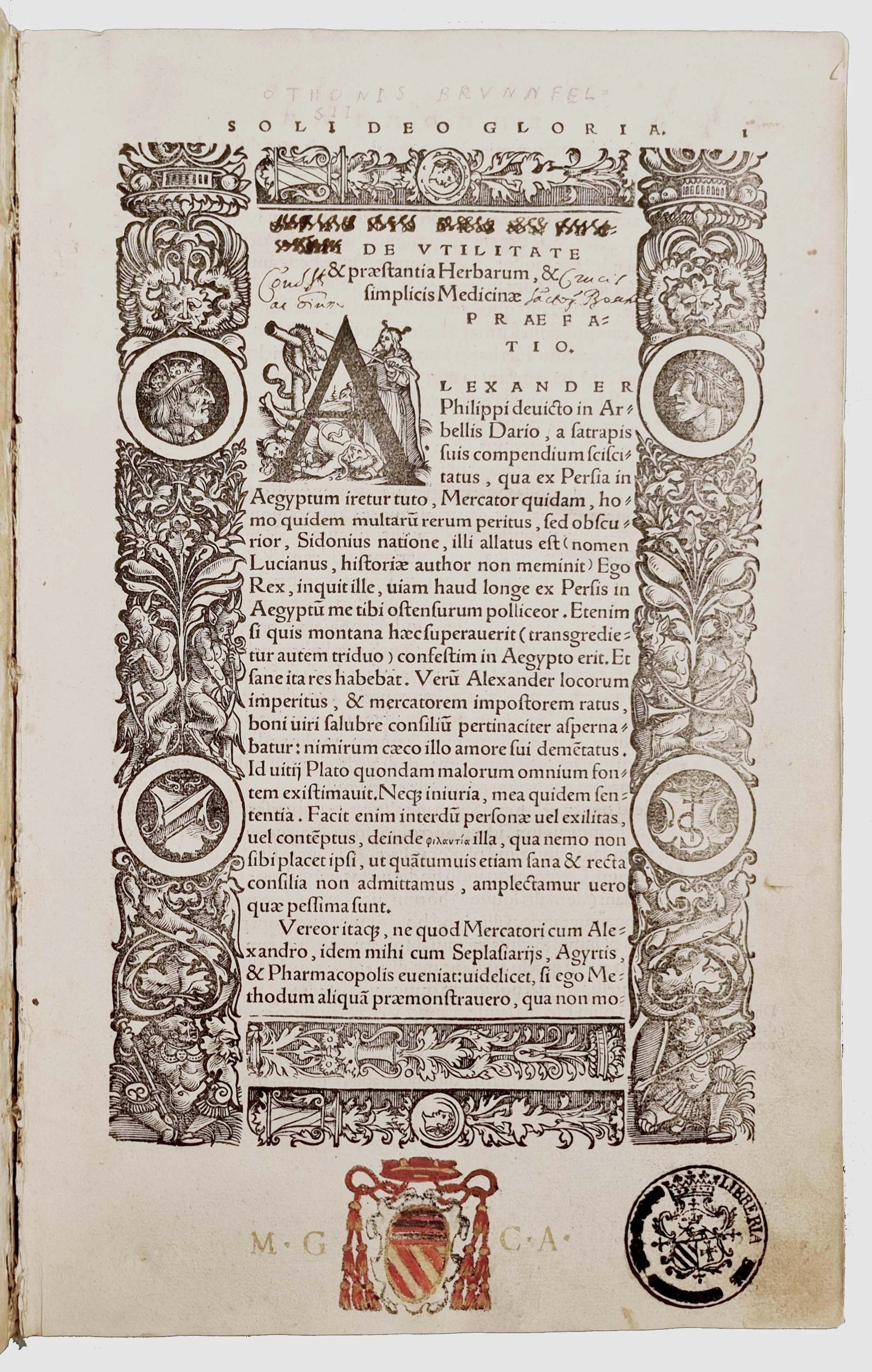
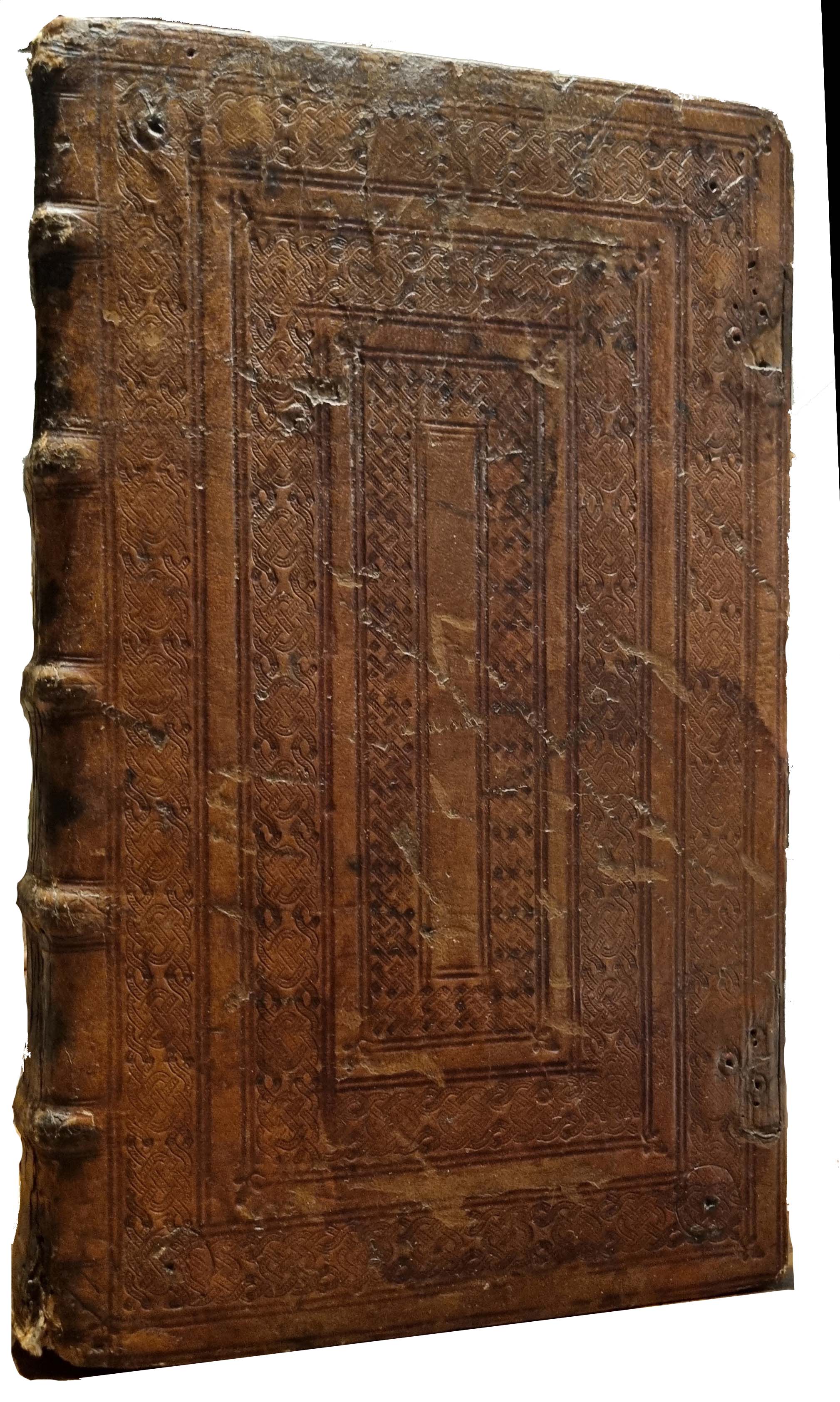
This copy was part of the private library of Cardinal Michele Ghisleri (1504-72), who used the arms of the Ghisleri-Carafa between 1557 and 1566. In 1566, he was elected by the Conclave as Pius V, and famously excommunicated Queen Elizabeth I in 1570. His heroic efforts in Europe against the Turks were rewarded by the victory of Lepanto. The institutional stamp was that of the Convent of Santa Croce e Tutti i Santi established in 1566 by Pius V in Bosco Marengo, Piedmont, his hometown, which was closed in the C19. The opening page bears a ms ex-libris from that convent, and the arms include the shield of the Ghisleri and the Dominicans. Brunfels’ name is censored throughout the volume; he was put on the Index of 1559. In the C19, this copy belonged to the bibliophile, patriot and minister Count Giacomo Manzoni (1816-89), whose library was sold in 1893.
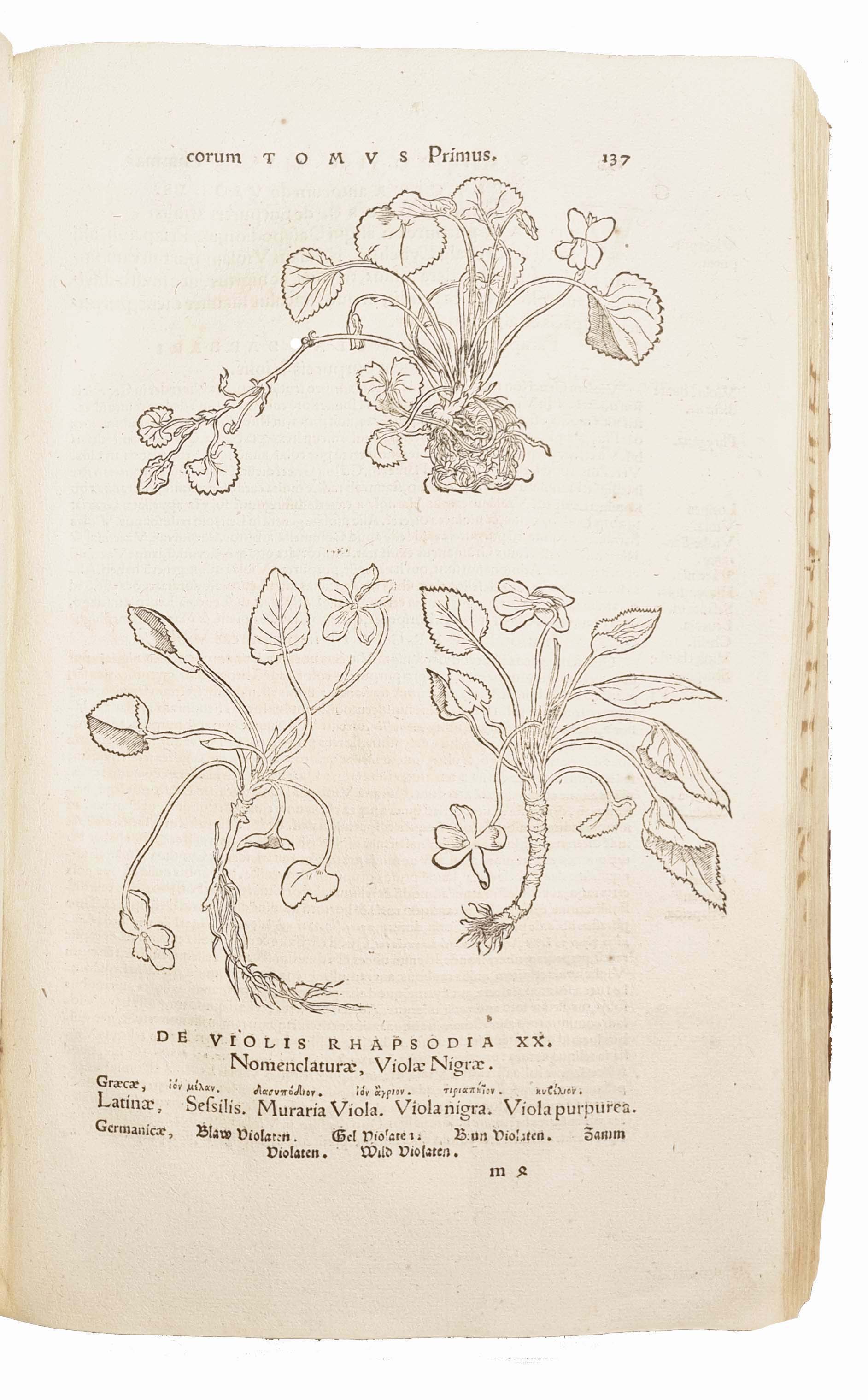
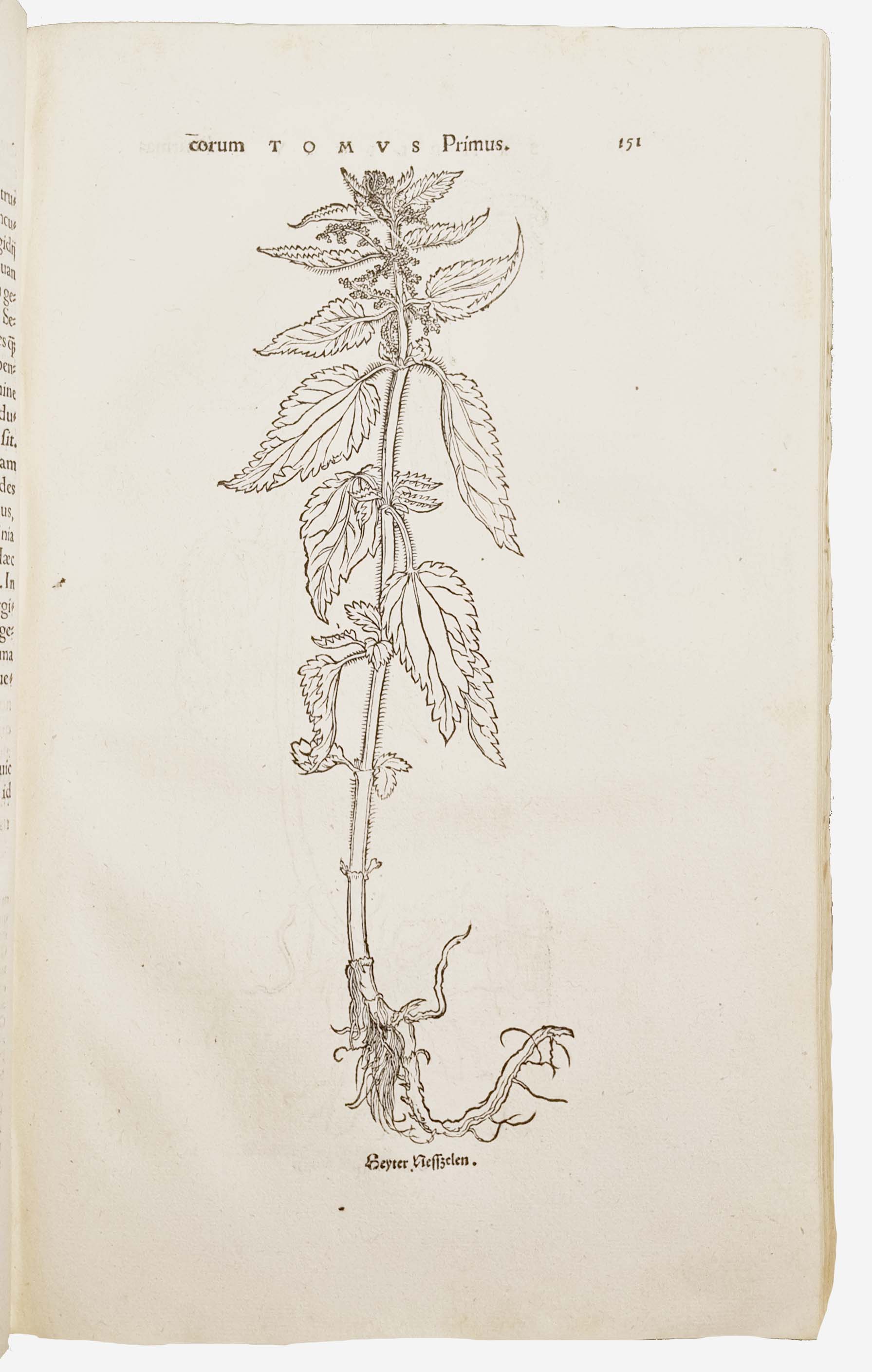
Very good copies of the first and second parts (a third was published in 1539), both in the second edition, of ‘this celebrated herbal which marks an epoch in the history of botanic illustration’ (Becher). ‘It was the first herbal illustrated with drawings which are throughout both beautiful and true to nature. The plants are represented as they are and in the greatest possible artistic perfection by one of the best German illustrators […] Johann Weiditz. […] The title indicates the most distinctive feature of the book, namely that the artist went direct to nature, instead of regarding the plant world through the eyes of previous draughtsmen’ (Becher).
Otto Brunfels (1488-1534) was a Reformed humanist and physician, trained at Basel. Whilst he also wrote in theology, linguistics and pedagogy, his herbals made him one of the ‘fathers of botany’ for their accuracy and great attention to naturalistic representation. First published in 1530, with two subsequent parts printed in 1532 and posthumously, ‘Herbarum vivae eicones’ illustrates, in the first vol., several dozen plants, each accompanied by their Latin, German and sometimes Greek names, and by quotations from ancient sources (e.g., Dioscorides, Aetius, Pliny, Razes, Avicenna) and later (e.g., Hermolaus Barbaro, Fuchs), as well as a description of the plant, its medical properties (e.g., limits menstruation, stops the shingles), with short recipes for the preparation of their roots, seed or juice, and its potential harmful effects. Plants include the narcissus, orchid, bugloss, verbena, germander, violet, sassafras, lily, scrophularia, and so on. On p.15, there are mentions of Guaiacum and Ulrich von Hutten (for his 1519 work on syphilis and Guaiacum) (Alden). Vol.2 includes fewer woodcuts but many more descriptions, including origanum persicum, herba syriaca, sanguinaria and helleborus. A final appendix provides German names for all the plants mentioned in the book, for easier consultation. Brunfels’ herbals are ‘a treasury of select quotations. […] He shows a preference for wild growths before those that have undergone domestication’ (Green, Landmarks, pp.169ff). A very handsome copy, of illustrious provenance, of this important herbal. A similarly censured copy appears to be at the Bibliotheca Comunale Manfrediana.

![[BOOK OF COMMON PRAYER]](https://sokol.co.uk/wp-content/uploads/2019/02/IMG_20191018_143158-scaled-324x432.jpg)
![[CARMINA] [with] PINDAR](https://sokol.co.uk/wp-content/uploads/2018/10/L2682-1-324x503.jpg)
![[DANEAU, Lambert.]](https://sokol.co.uk/wp-content/uploads/2019/07/IMG_20190718_154710-324x361.jpg)
![[HEGENDORFF, Cristoph]. ERASMUS, Desiderius.](https://sokol.co.uk/wp-content/uploads/2026/02/L4513-titlepage-324x470.png)