

Description
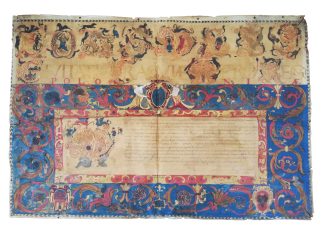
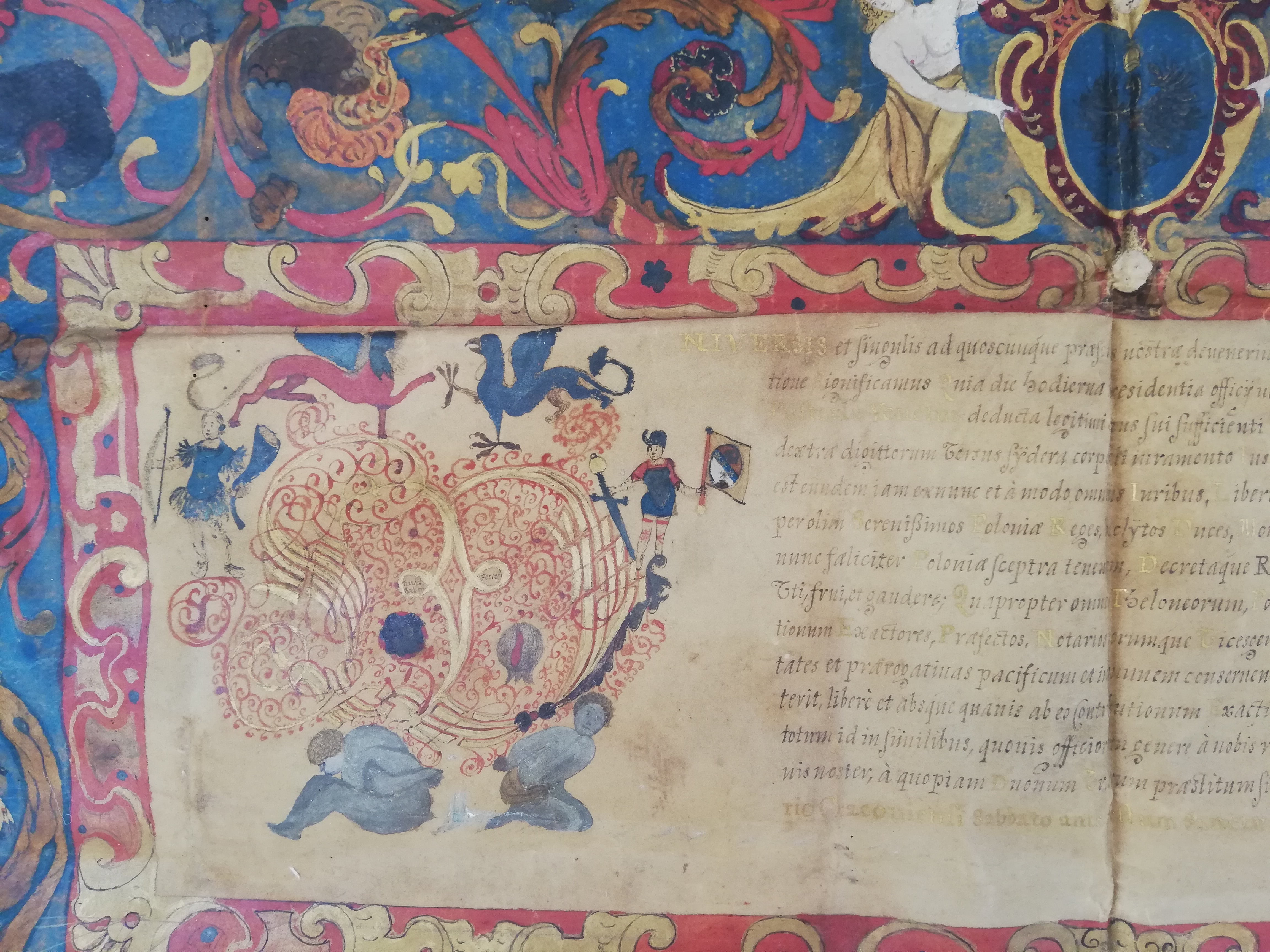
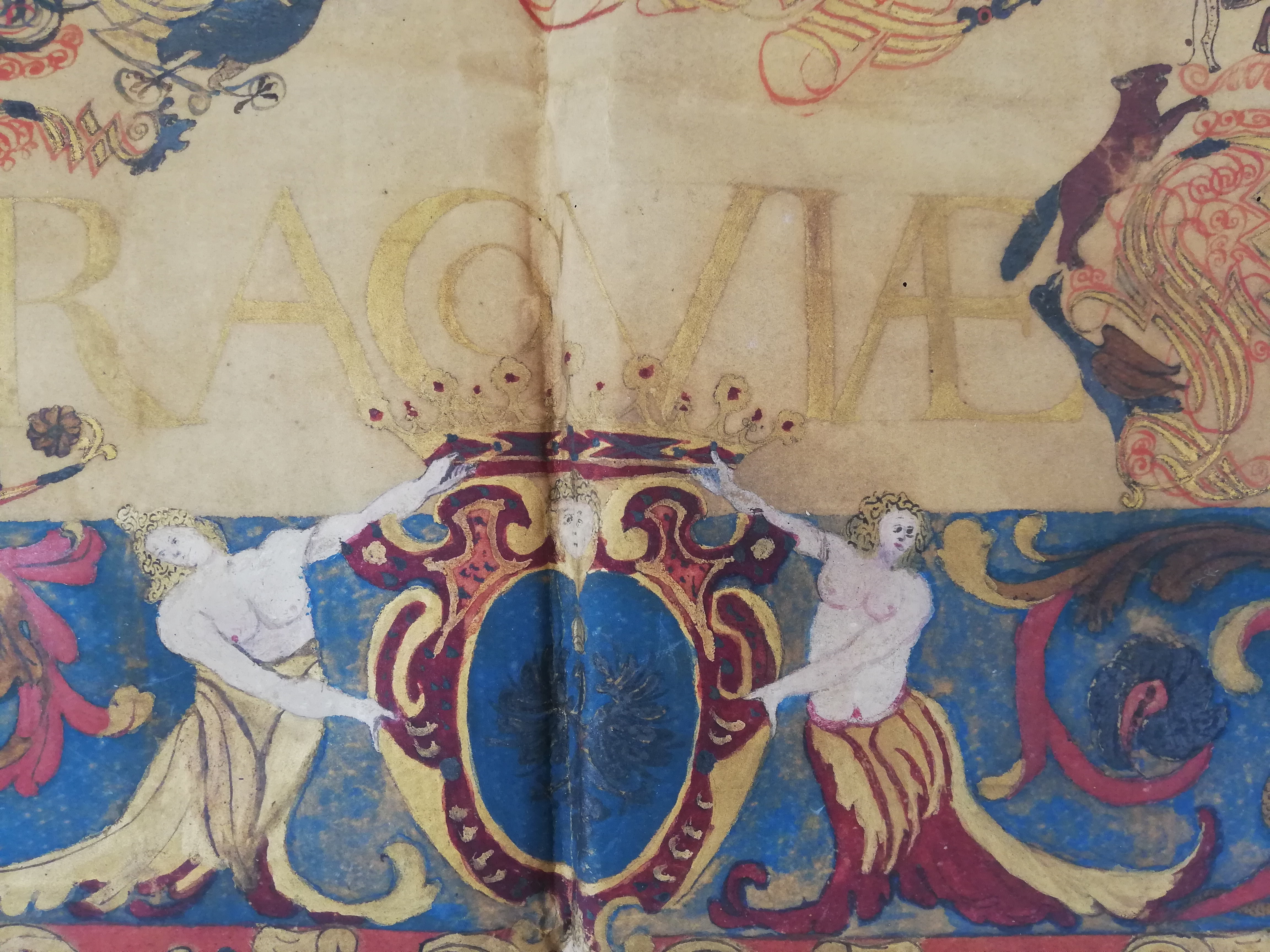
Stunning illuminated manuscript granting the citizenship of Kraków to Ioannis Stephanus Pusterla Venetus, i.e. the Italian Giovanni Stefano Pusterla Veneto. The text of the diploma states that he is ‘nobilis ac famatus’, meaning noble and famous, and that he provided sufficient evidence of his genealogy. The Pusterla family is an ancient and noble family of Milanese origin, related to the powerful Visconti: among its most notable members are four archbishops of Milan, several politicians, military leaders and benefactors. In the 13th century, the family obtained from Emperor Otto IV the right to have a black Imperial Eagle on their coat of arms, depicted in beautiful detail on this document. Giovanni Stefano, however, is ‘Venetus’, meaning that he comes from the Veneto region in the north-east of Italy. The Italian historian Giambattista Pagliarino (1415-1506) records branches of the Pusterla family in Vicenza, a city not far from Venice, at least from the 14th century.
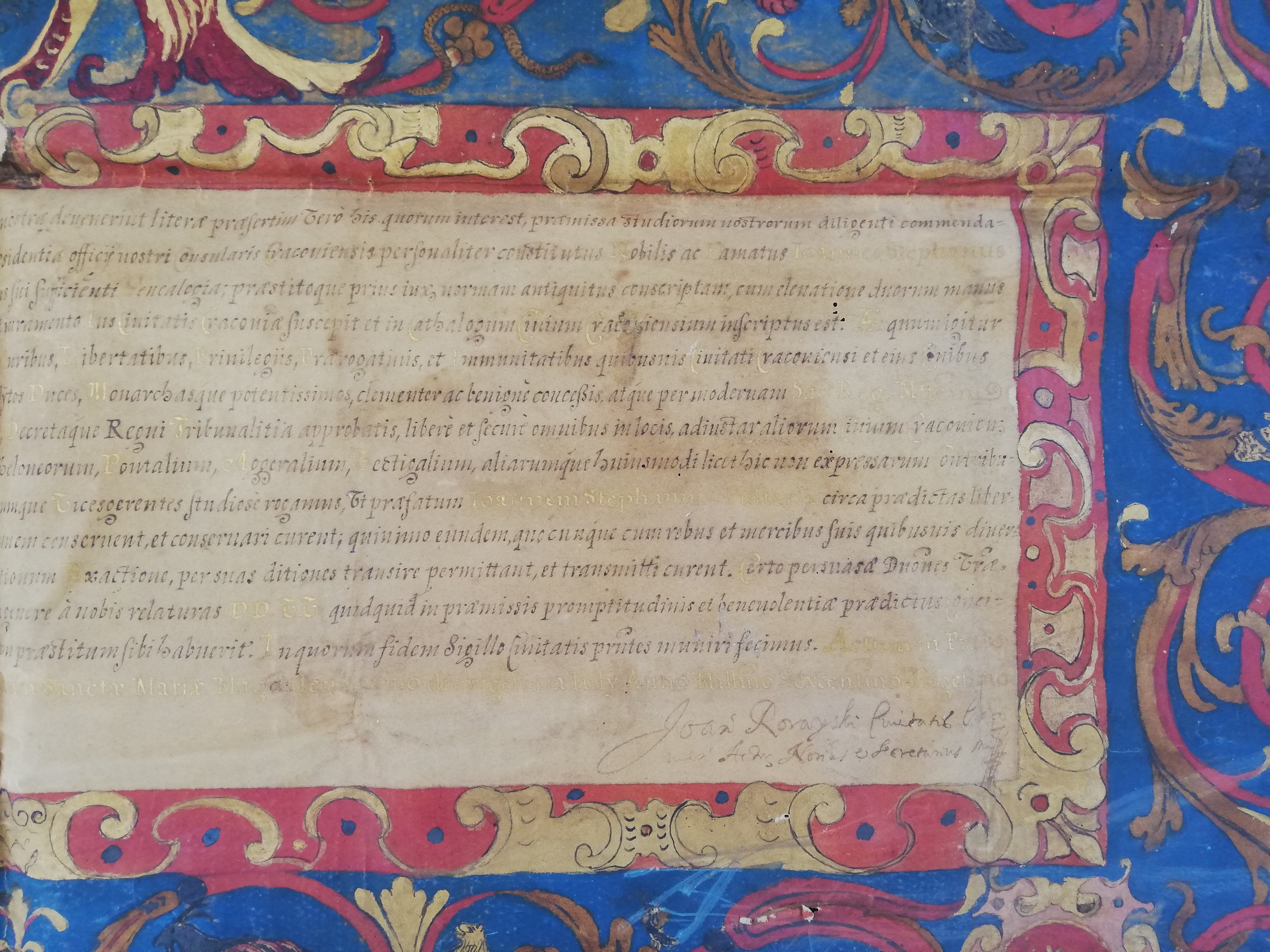
According to the grant, Giovanni Stefano is now entitled to “use, enjoy and benefit from” all the “laws, privileges, freedoms, prerogatives and immunities” of the citizens of Kraków, and that he also must preserve and respect them. Most interestingly, he is officially allowed to “trade goods freely and without customs duties”. In the 17th century, several members of the noble families of Vicenza were merchants. The ‘Bianchi-Pusterla Company’, led by Ludovico Bianchi and Carlo Pusterla, was one of the biggest Venetian companies based in Kraków. Giovanni Stefano was Carlo’s brother, and we know from various sources that he continued to trade in Poland even after his brother’s company failed in 1629. The text is signed by Ioannes Rorayski, a ‘secretarius’ (secretary) of Kraków whose name is attested in other contemporary documents issued by the city (Piekosinski).
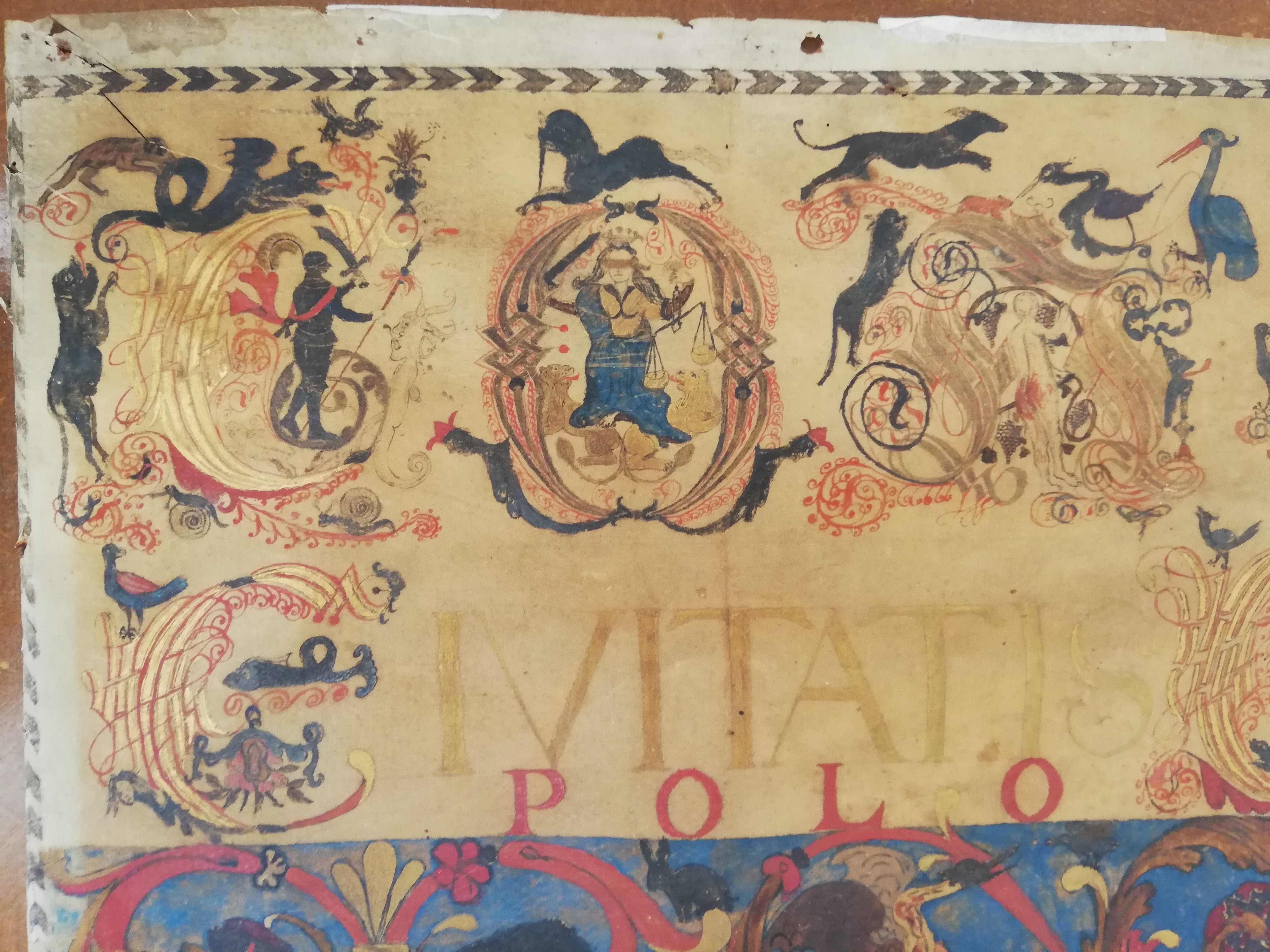
The illumination of diplomas, certificates and official documents was optional, and usually requested by wealthy persons as a way to emphasize the value of the document. This example has small holes on the upper edge, suggesting that it was displayed on a wall for everyone to see. Illuminated citizenship diplomas are very rare compared to degree certificates and official decrees, and this one was decorated by a skilled illustrator. His name appears, signed in a small and neat hand, in the middle of the calligraphic initial: Daniel Rode. In this period, zoomorphic and floral elements began to appear – as here, where grapes, foliage, different species of birds, dogs hunting, fishes, goats, deers, snails and other small animals are rendered with fresh vividness. These realistic elements interact with charming human characters (including prisoners, a knight, a philosopher and a bagpipe player), symbolic objects and fanciful mythological creatures such as chimeras and dragons.
This document is not only an outstanding work of art, but also an extremely interesting witness of the political and commercial relations between Italy and Poland in the 17th century.

![[PIUS IV]](https://sokol.co.uk/wp-content/uploads/2020/01/IMG_6641-scaled-324x432.jpg)