
Description
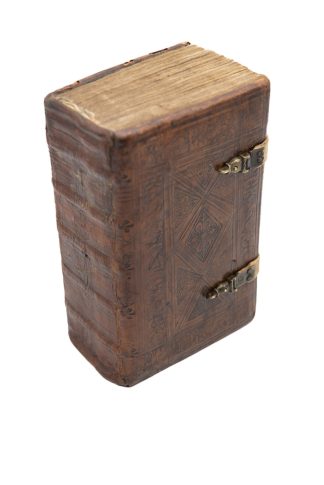
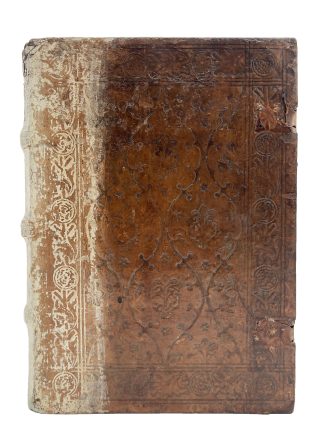
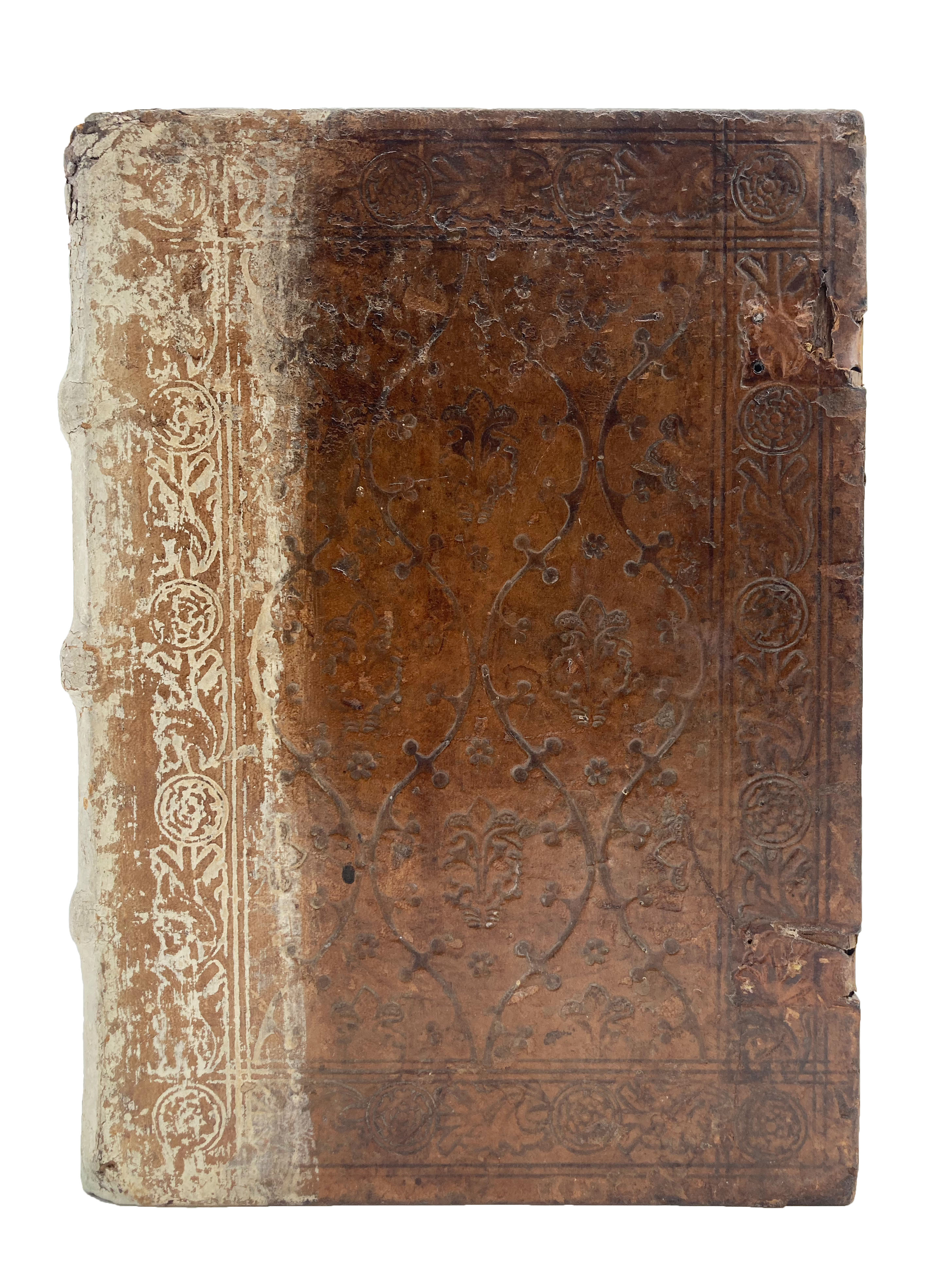
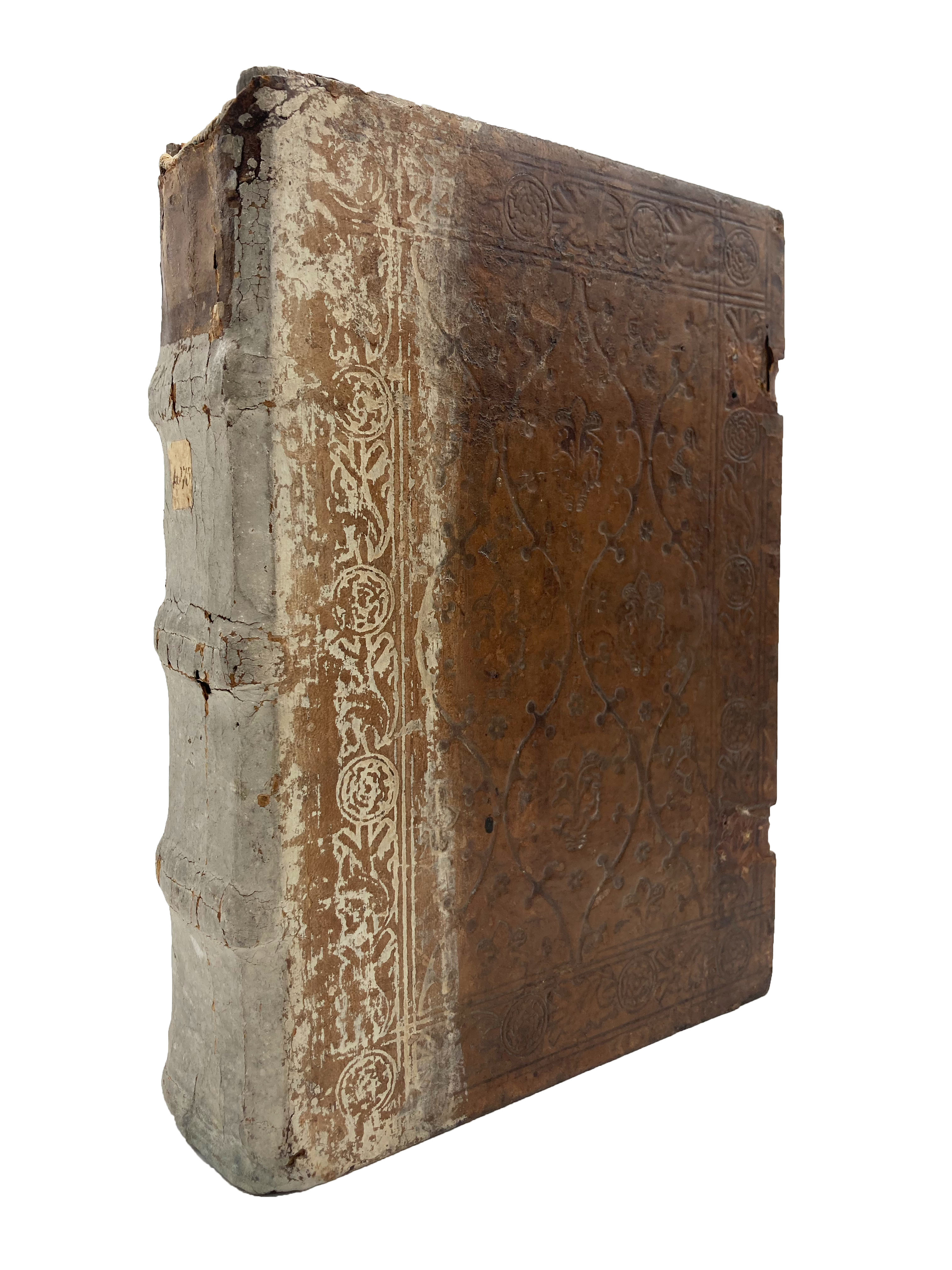
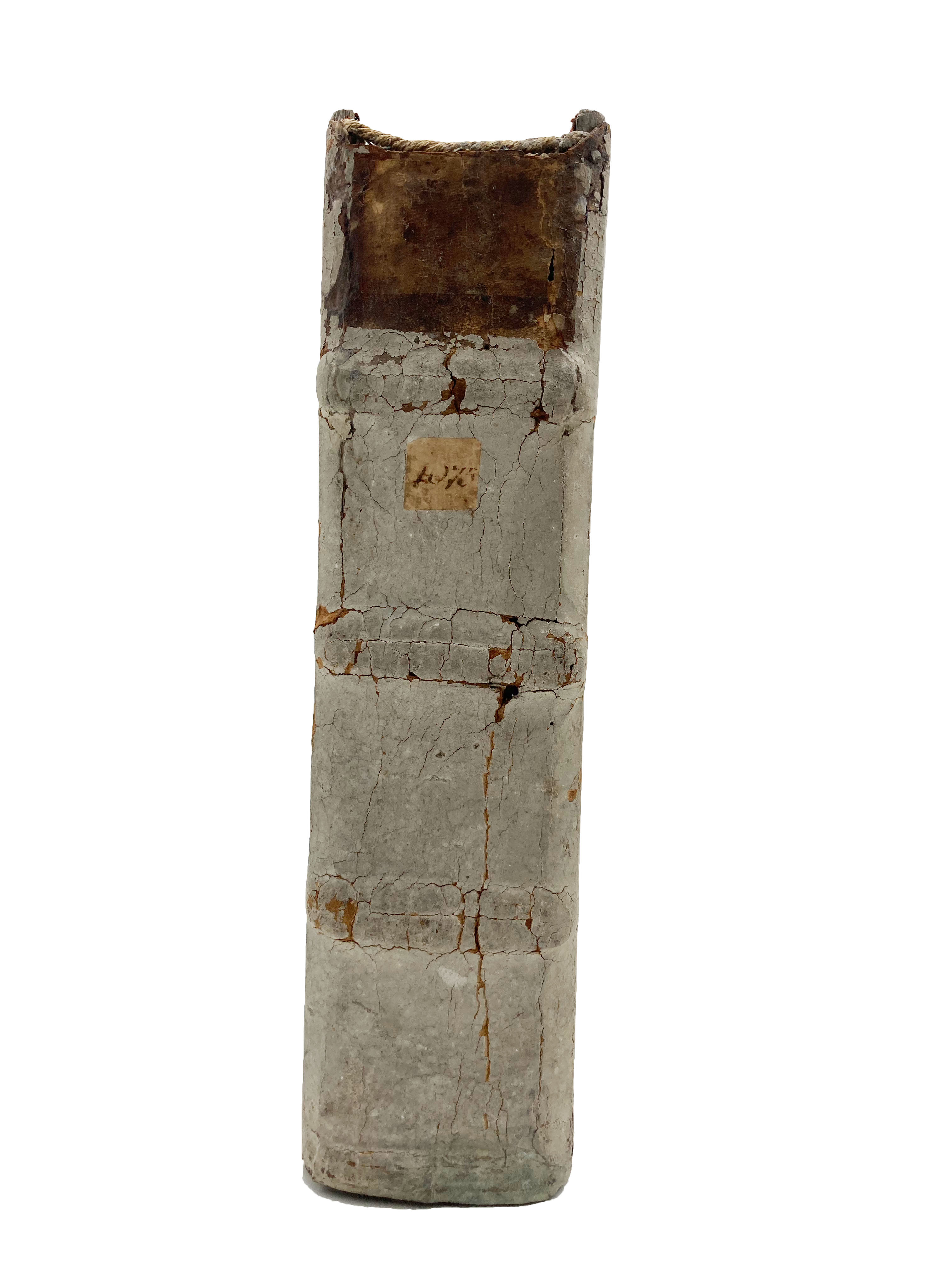
The handsome C15 binding, with floral diaper tools in blind, reprises a pattern found in Southern Germany from c.1500 (e.g., Goldschmidt II, 42).
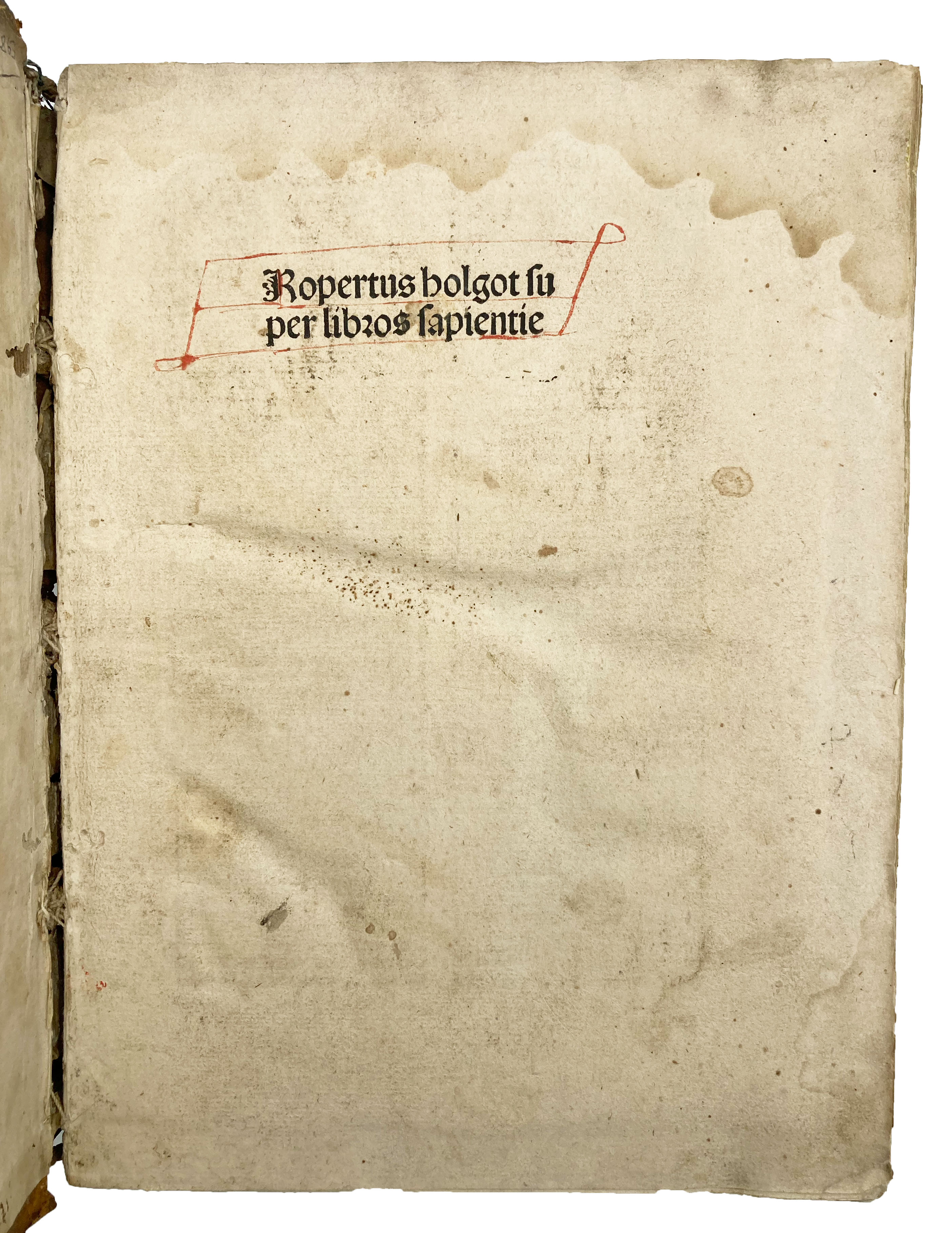
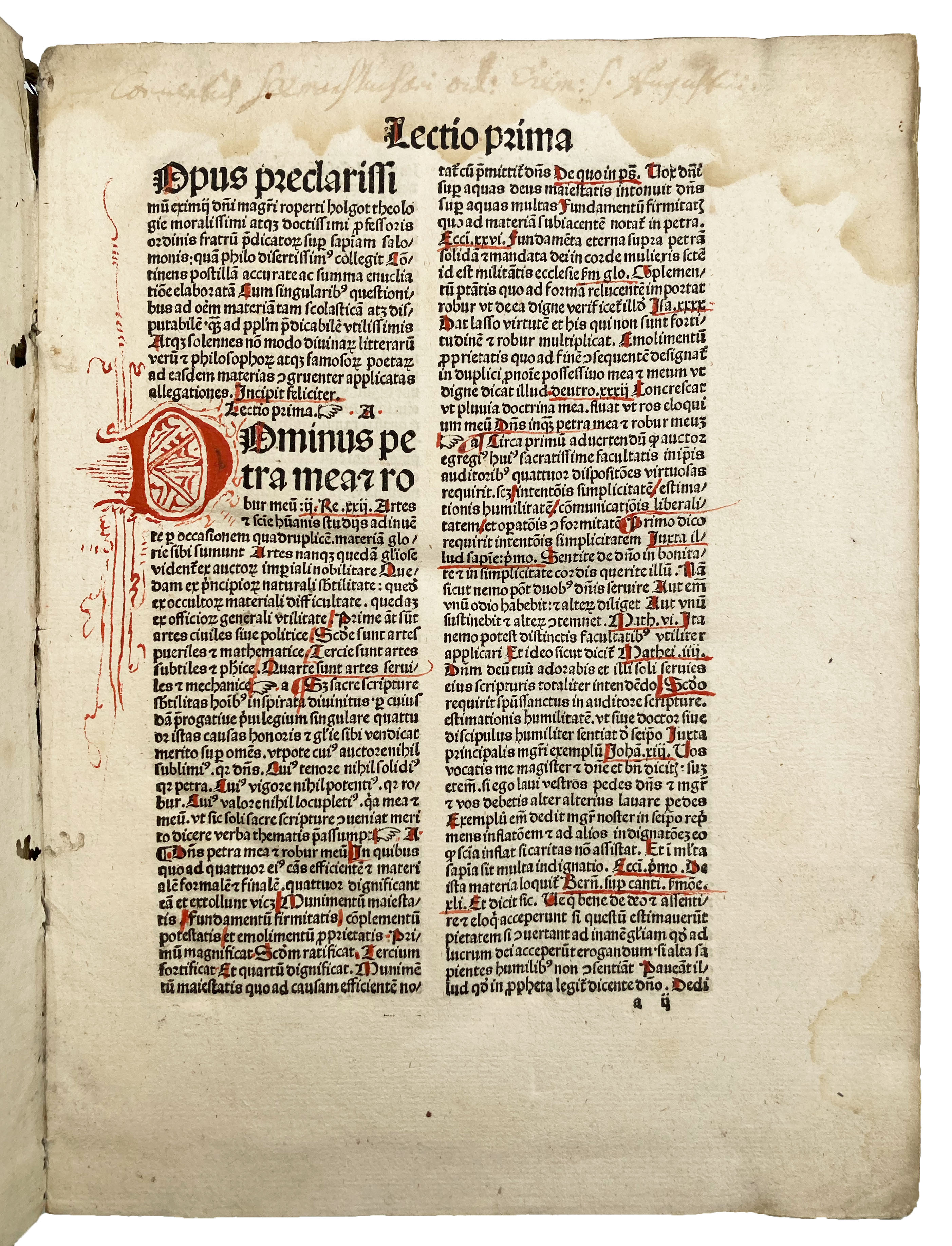
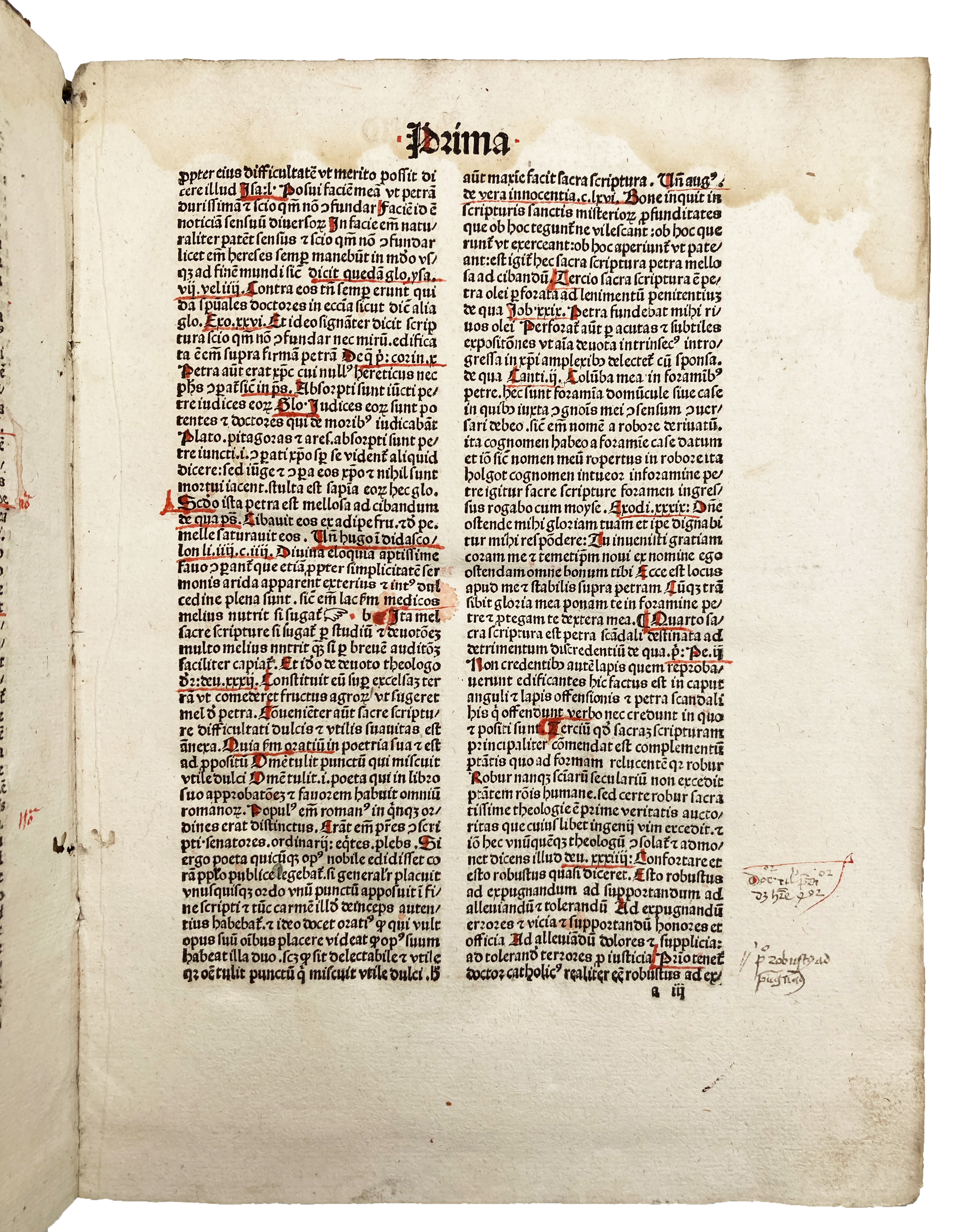
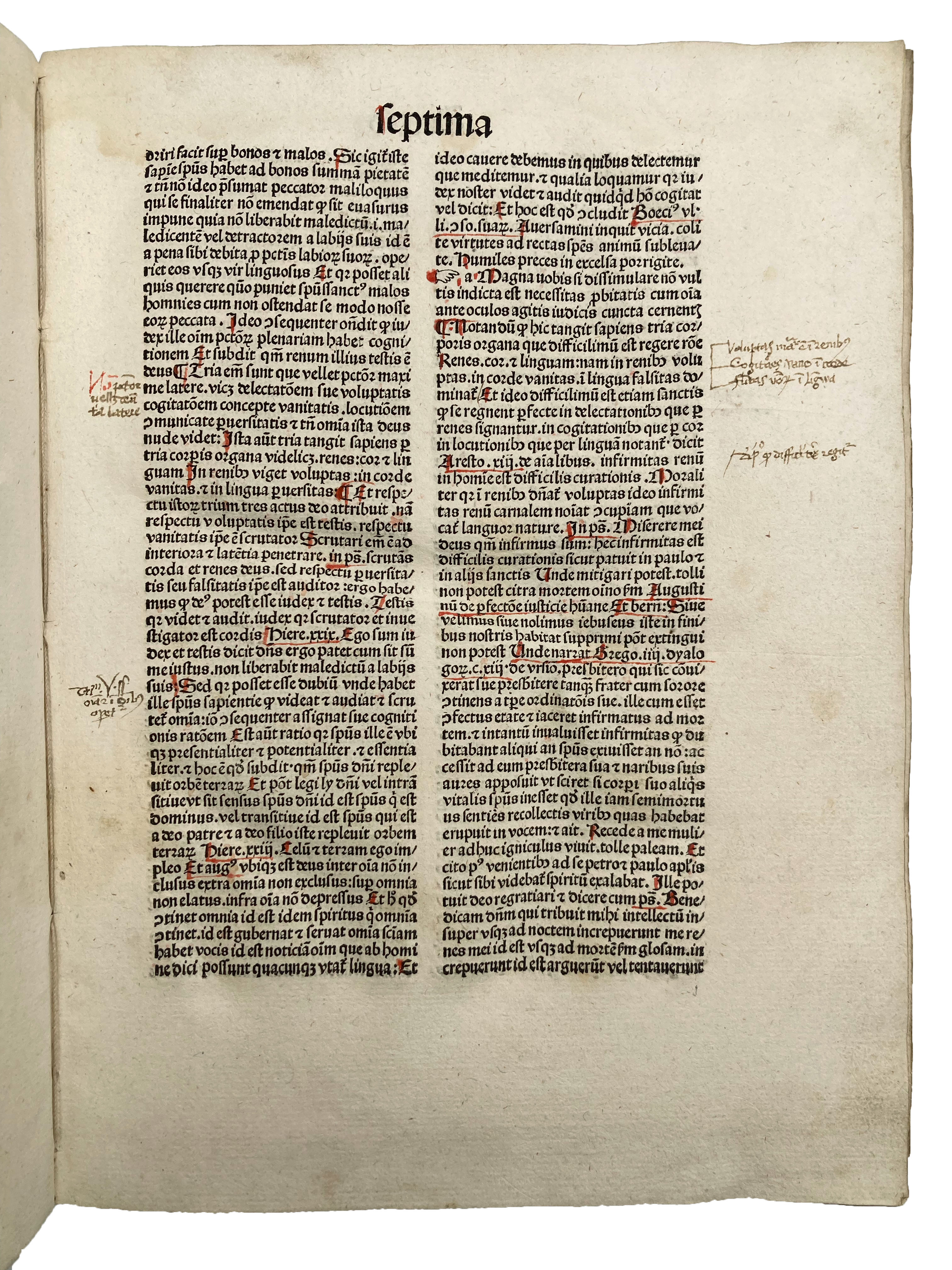
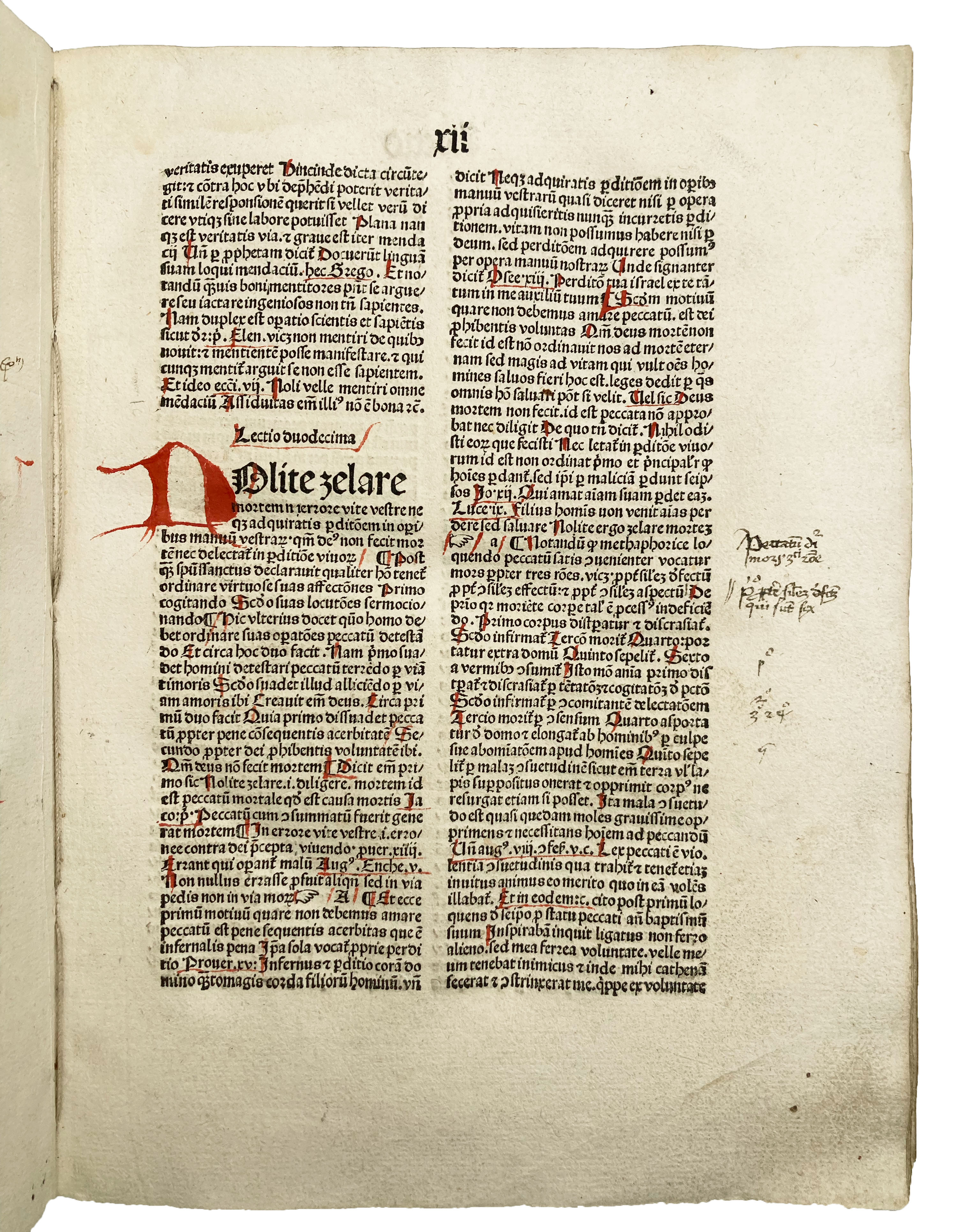
Fine copy of the fifth edition on this extremely influential medieval commentary on the ‘Book of Wisdom’. The English Dominican Robert Holkot (or Holcot, c.1290-1349) was a renowned philosopher and biblical exegete, professor of theology at Oxford and a follower of William of Ockham’s scholasticism. Intended as a manual for preachers, his ‘Supra sapientiam Salomonis’ features over 100 ‘lectiones’ which interpreted, illustrated, questioned, doubted and responded to specific theological ‘loci’, according to the Scholastic method. These included the meaning of ‘wisdom’, its acquisition, how it never ‘rottens away’ and is linked to justice, and—in keeping with Holkot’s interest in moral wisdom—why princes and magistrates should study to achieve it through piety and philosophy. Holkot made original use of his biblical, patristic and classical sources including Seneca and Lucan. He used anecdotes and fables on Greek gods and mythological figures drawn, for instance, from Ovid’s ‘Metamorphoses’, like the story of Echo, as well as vivid comparisons which preachers could use in their sermons: e.g., wisdom and falsity do not mix well in a person, like gold and tin in an alloy or syllables in a stammering mouth. Holkot’s commentary was possibly a source of Geoffrey Chaucer’s ‘Nun’s Priest’s Tale’; first printed in 1476, it went through five editions in less than twenty years.
The annotators were monks of the Order of Hermits of St Augustine in the Monastery of Seemannshausen in South Bavaria, where this copy was probably kept until the Secularisation of the early C19. The first wrote marginalia in black ink summarising key passages; in his ex-libris on the front pastedown he calls himself ‘lector’ and ‘praedicator’—hence he was probably a teacher of philosophy in a religious school—but also ‘exul’, his handwriting suggesting British origins. Another annotator, who may also be the rubricator, highlighted Holkot’s sources in red, particularly Ovid (whom he marked in red as ‘poe[ta]’). He was much offended by a passage, which he crossed out, concerning the foundation of the Augustinian monastic rule and the orders that followed it, including the Hermits of St Augustine. Holkot stated that, as a Manichaean youth, Augustine had been neither a monk nor a hermit, and he mocked the traditional origin of these orders who traced their foundation to the saint’s early adhesion to monasticism.